 FREE
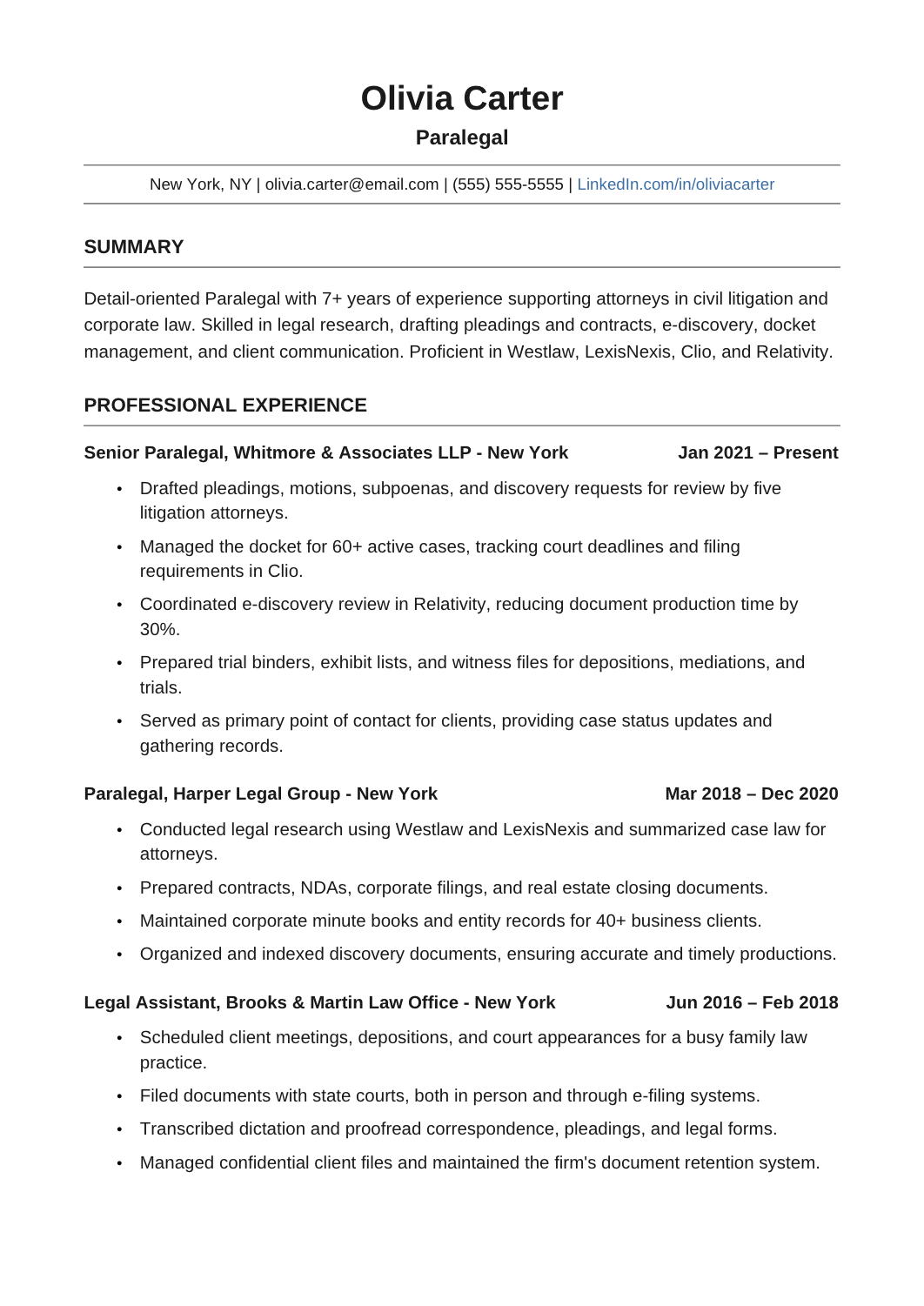
Minimalist ATS Resume
A plain two-page layout in Arial with one column, standard headings and thin rules.
 FREE
A plain two-page layout in Arial with one column, standard headings and thin rules.
 FREE
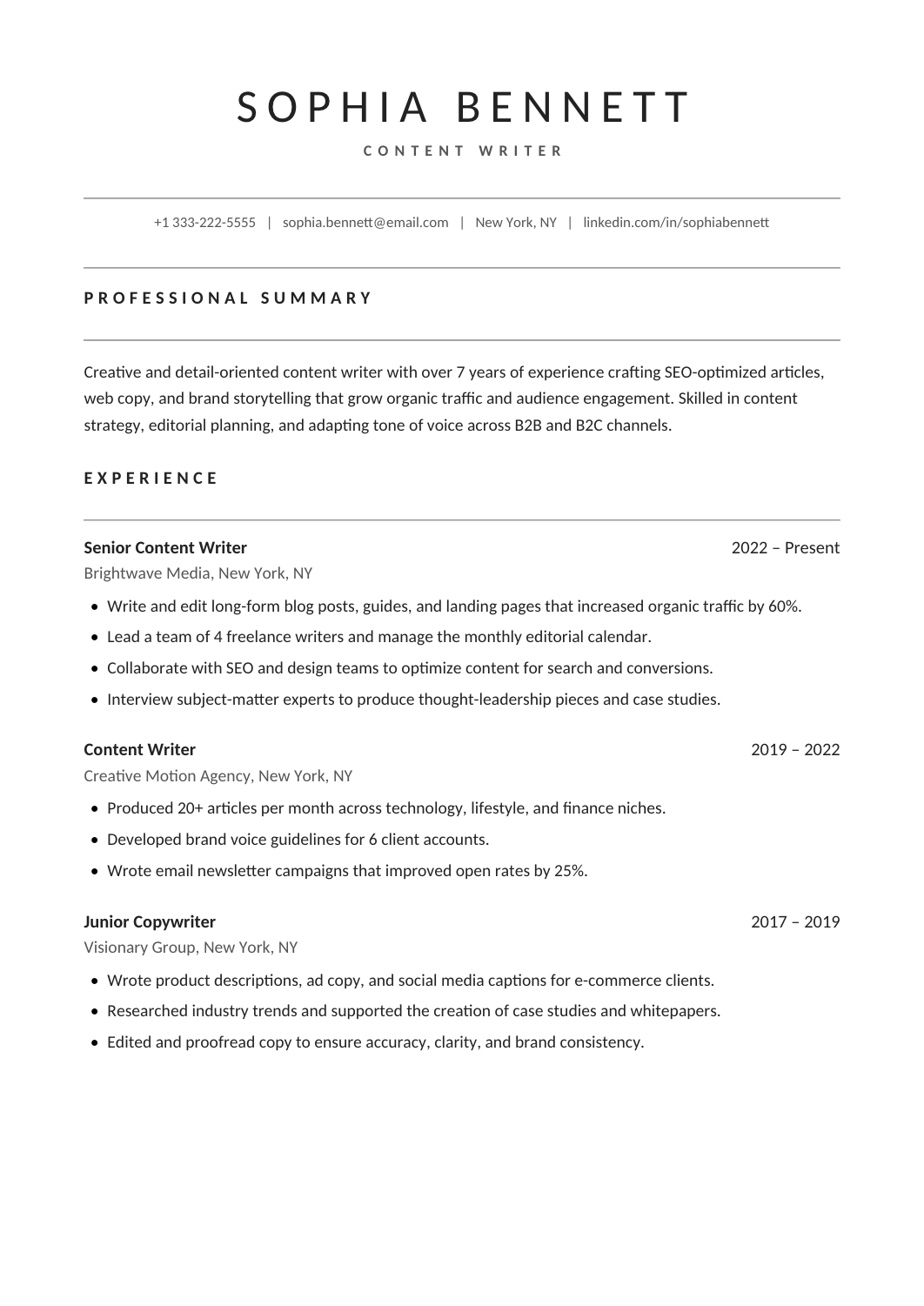
A clean two-page Calibri layout with a centered header and ruled headings, with room for experience, skills, awards and publications.
 FREE
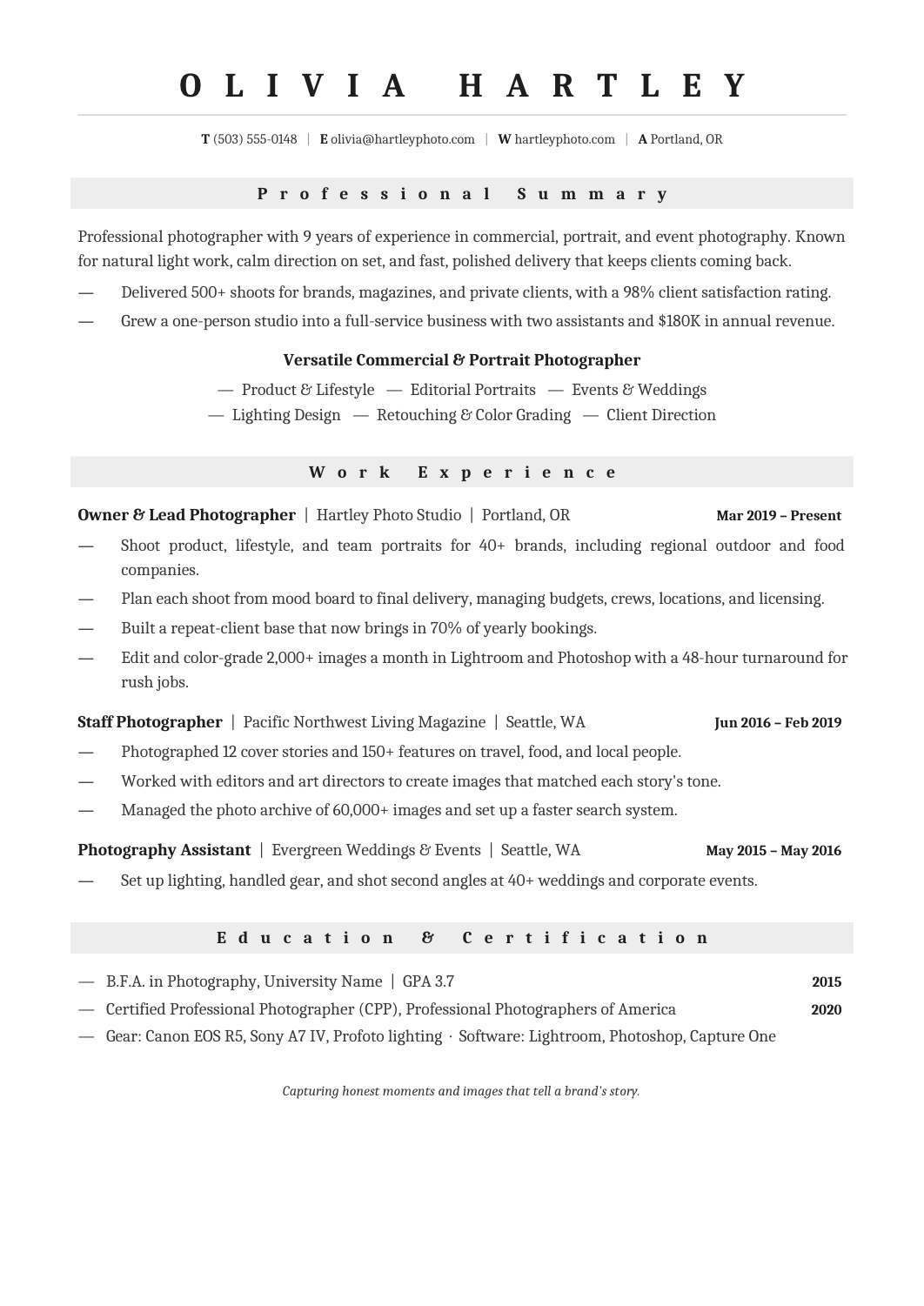
A Cambria one-column resume with centered headings, pale gray section bands and a compact credentials block.
 FREE
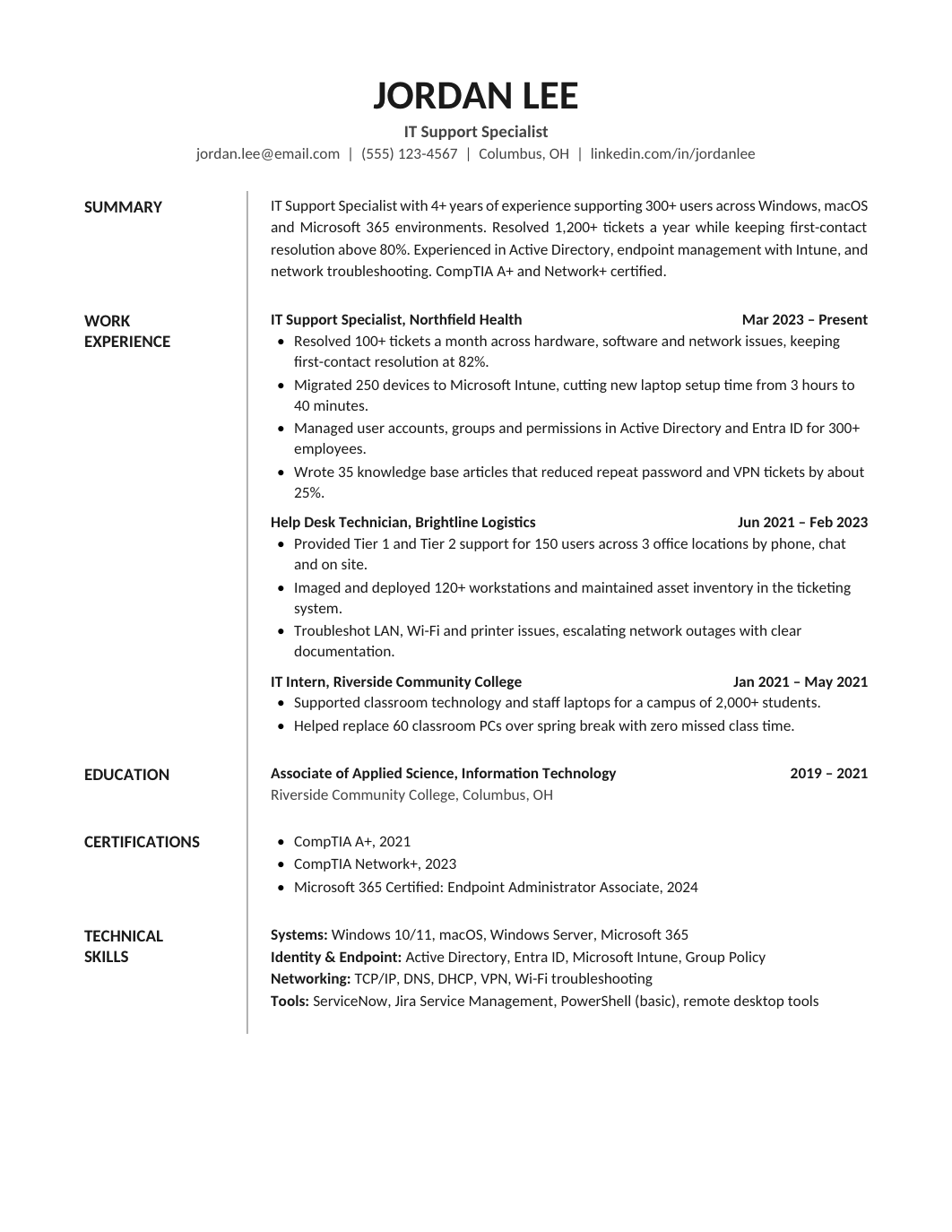
A structured one-page layout where section names sit in a narrow rail on the left and all content runs in one wide column beside them.
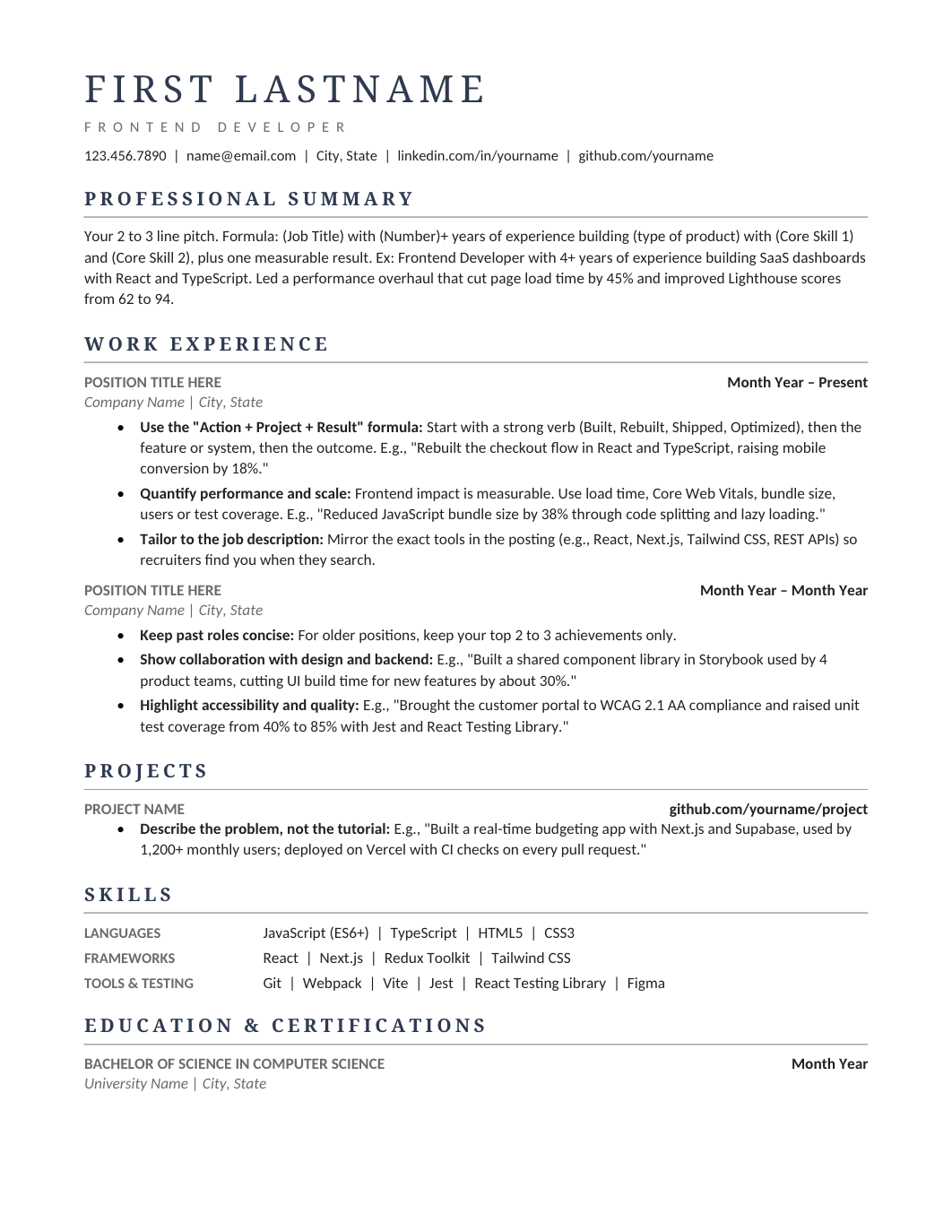 FREE
A typography-led one-column design with navy serif headings, thin rules and clear hierarchy, sitting between the plain professional layouts and the modern ones.
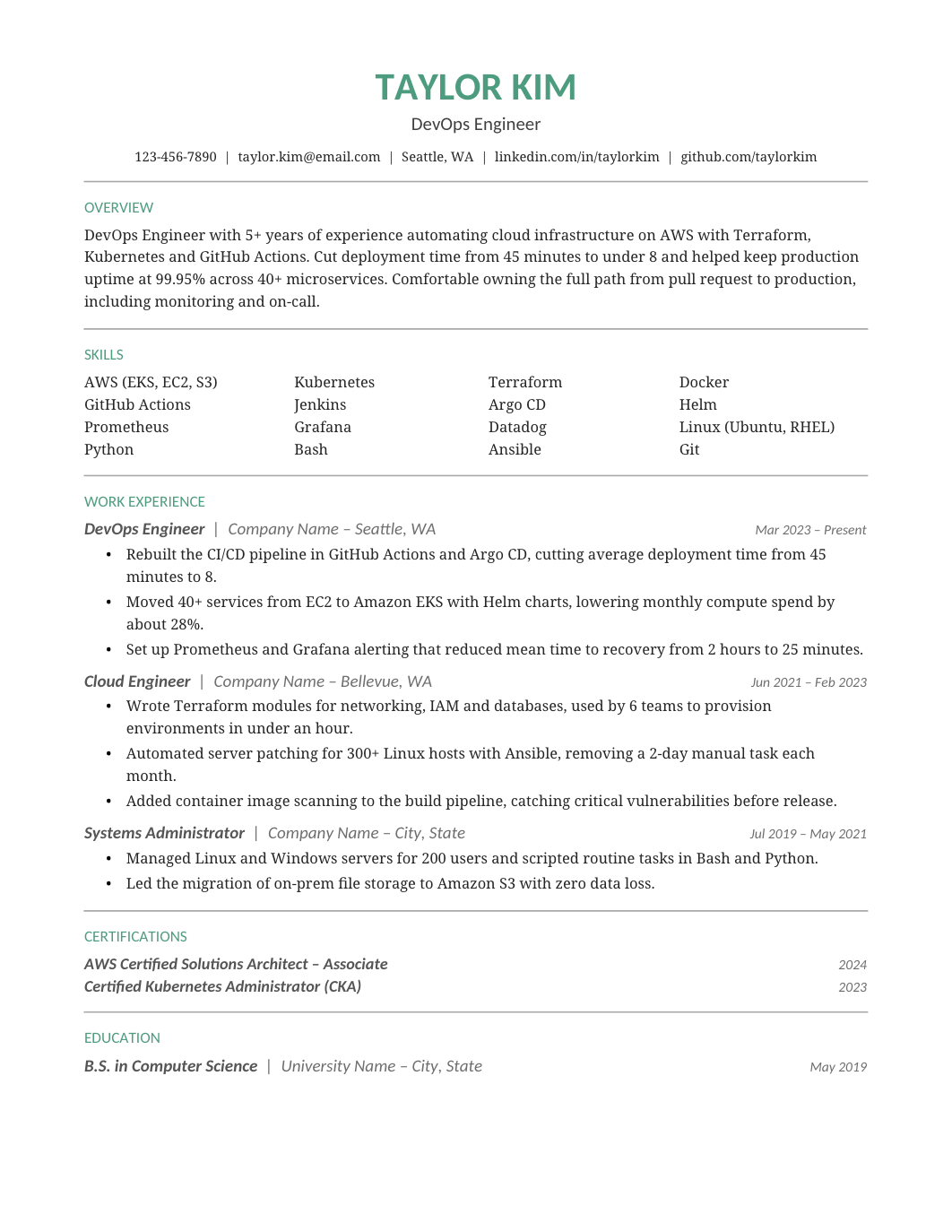 FREE
A green-accented one-column design with a compact skills grid and a clear chronology, for professionals who want one touch of color.
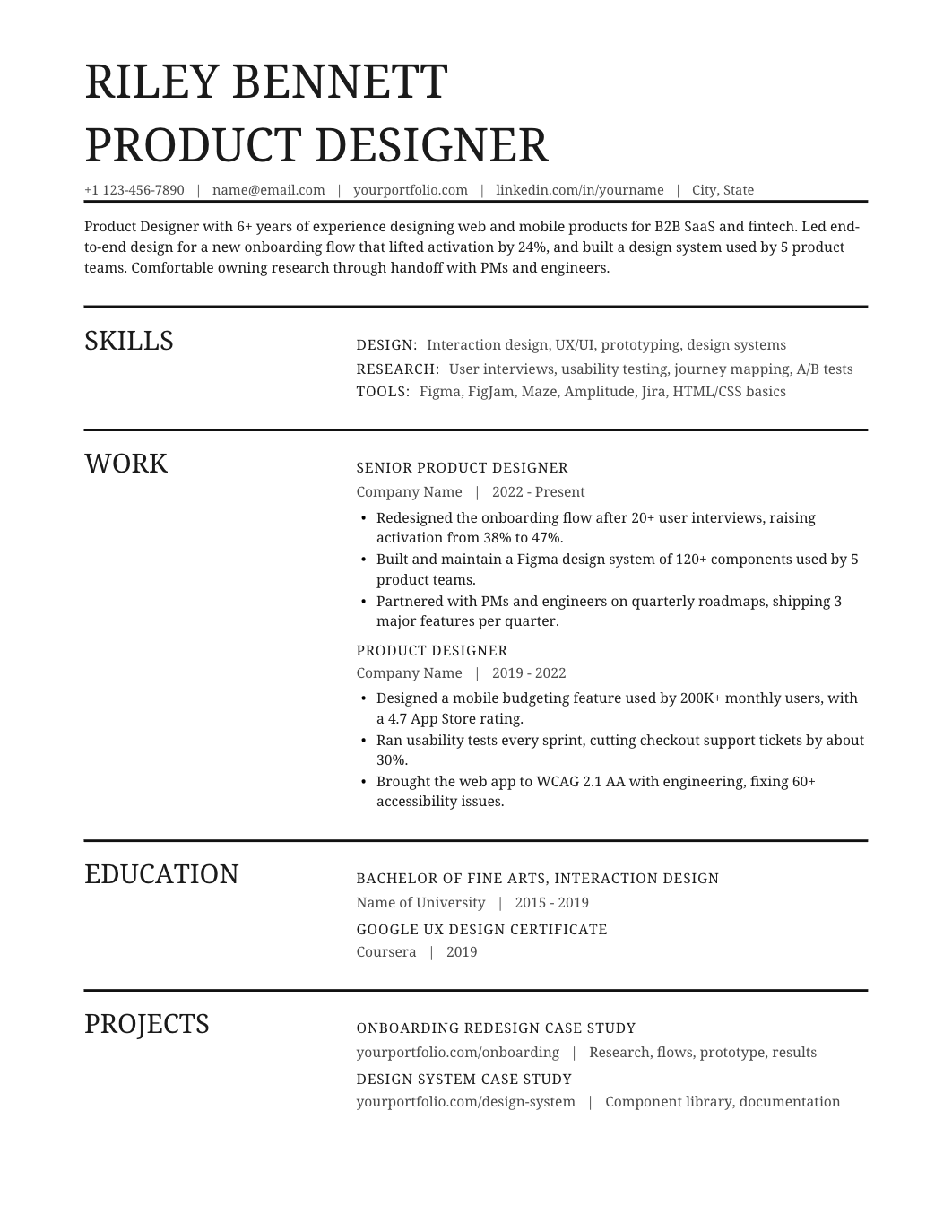 FREE
A monochrome one-column resume with bold rules, small section labels and wide rows for experience, structured without being busy.
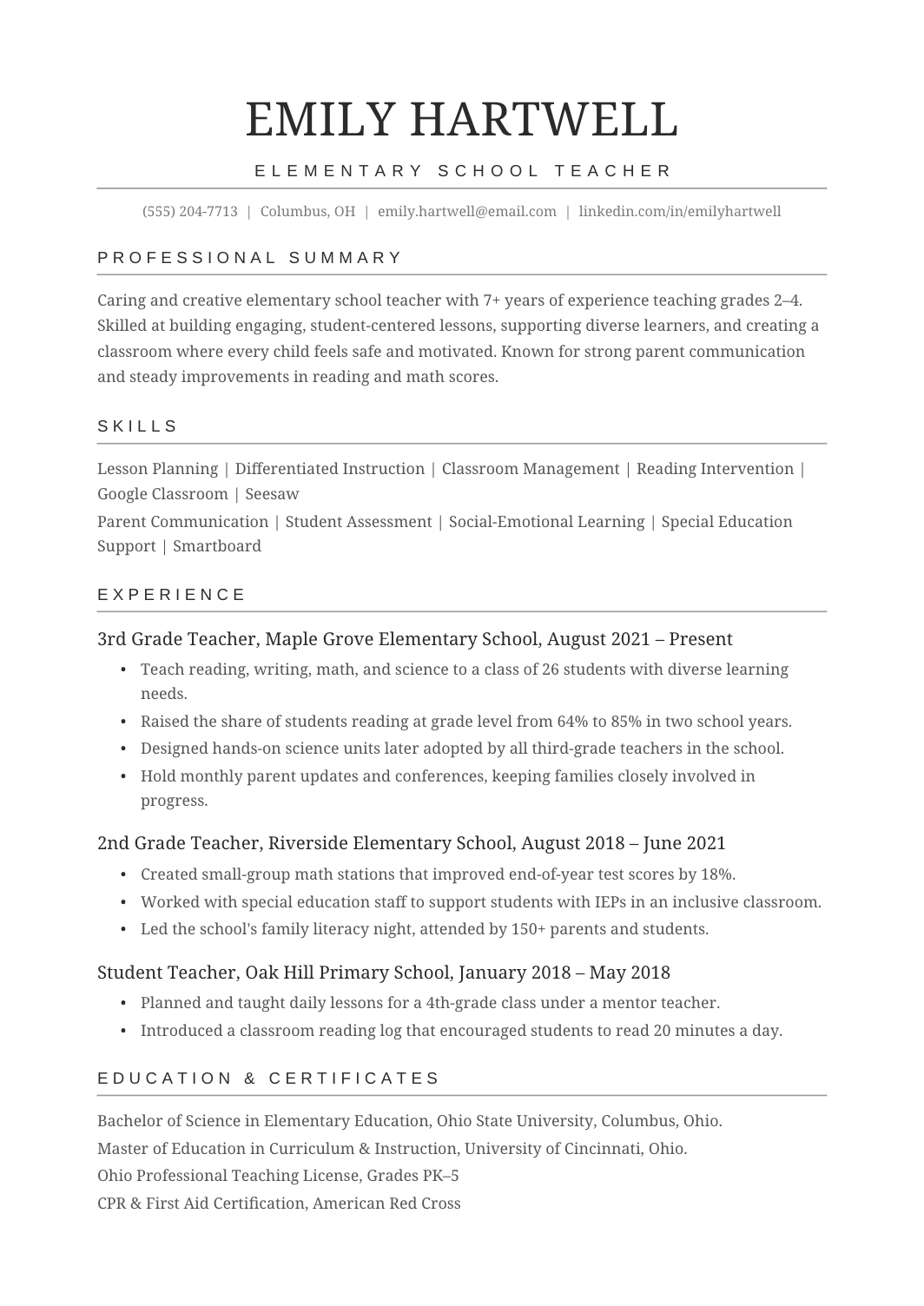 FREE
A straightforward one-column resume with the five sections almost every application needs and no styling decisions to make.
 FREE
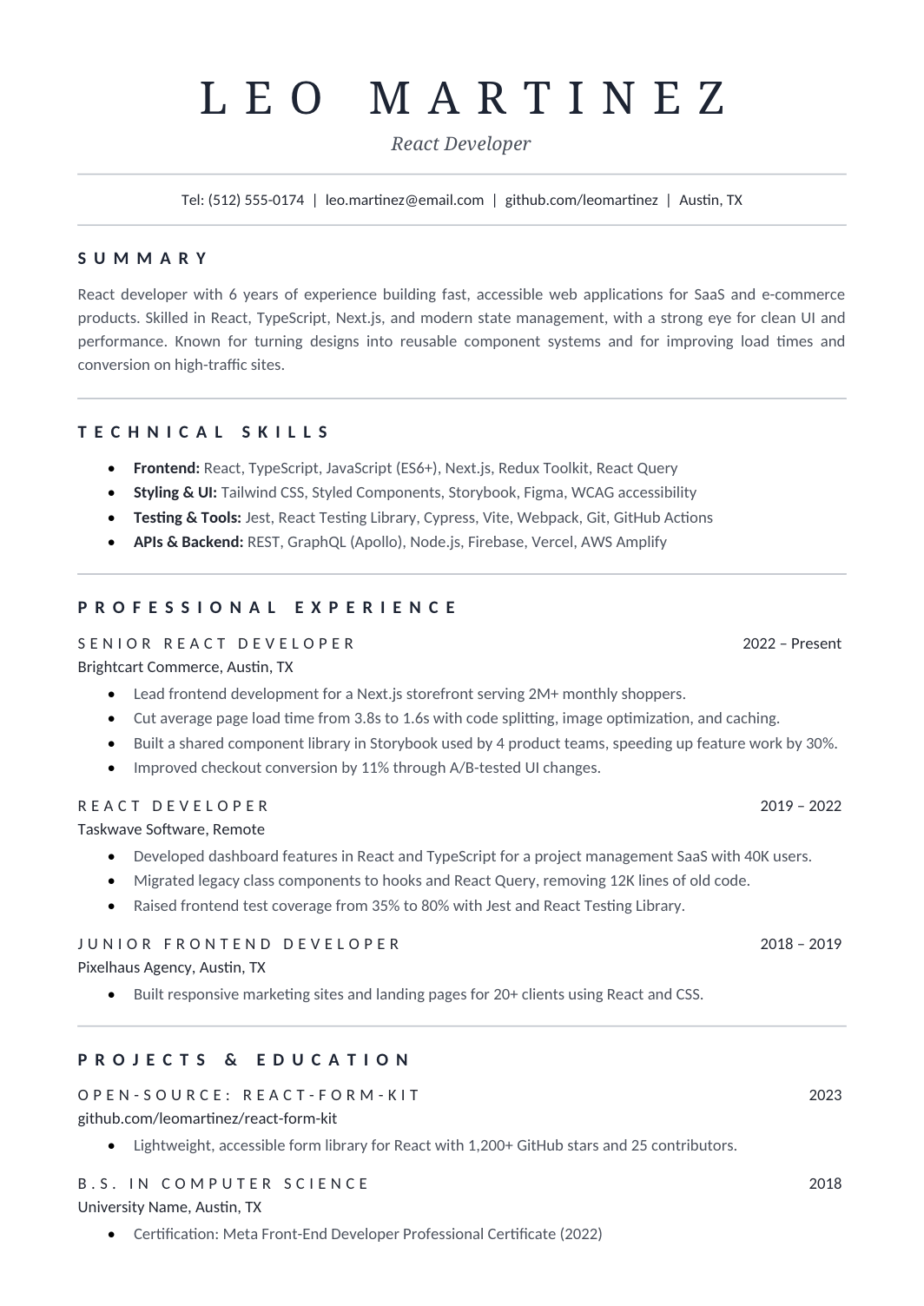
A refined one-column resume with a large serif name, thin gray rules and letter-spaced headings, for applicants who want typographic elegance without color.
 FREE
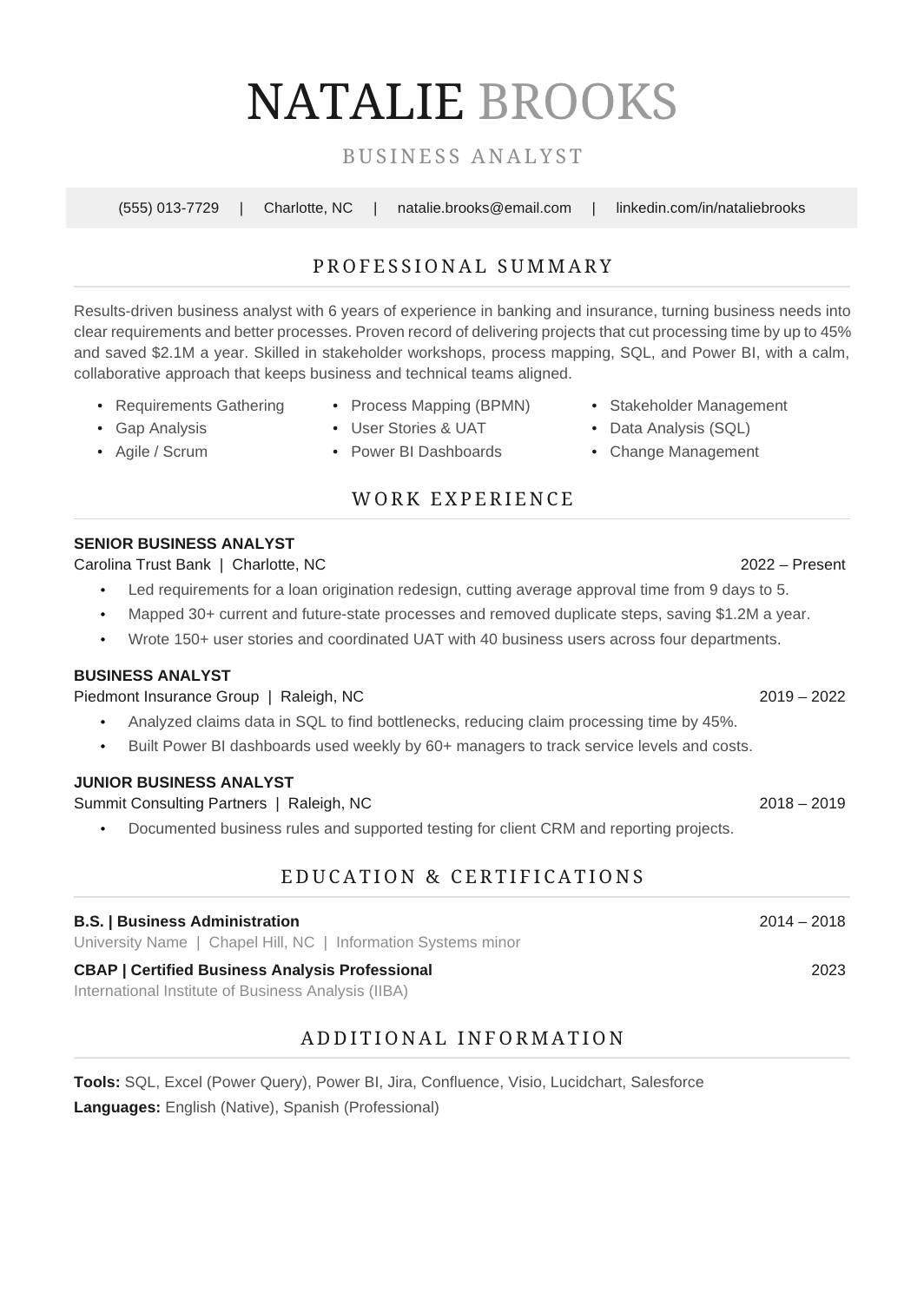
A polished one-column format with a two-tone name, a gray contact band, centered serif headings and grouped skills above a chronological history.
 FREE
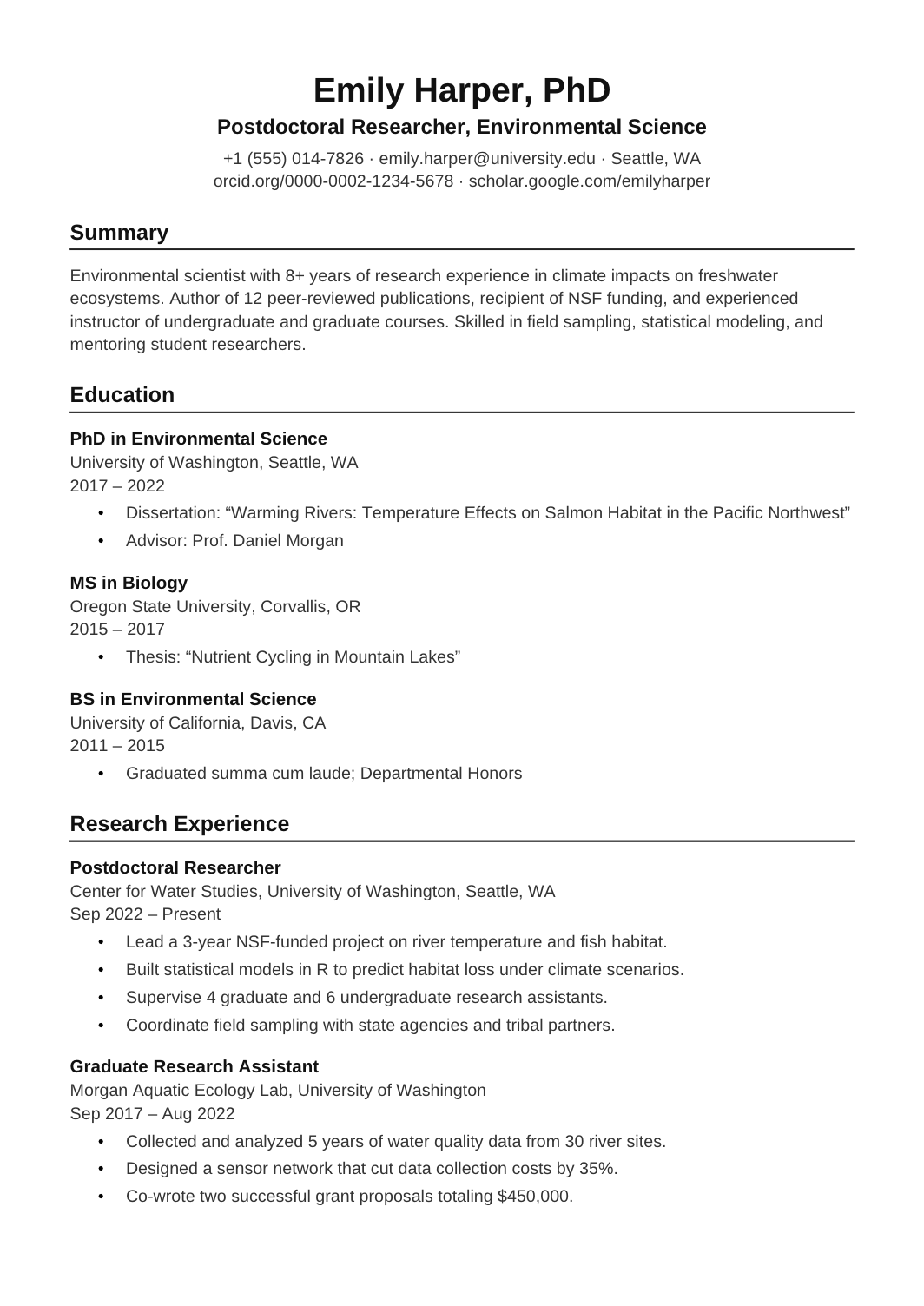
A long-form CV for faculty, postdoc and research applications, with no page limit and sections for education, positions, publications, presentations, grants, teaching, service and references.
 FREE
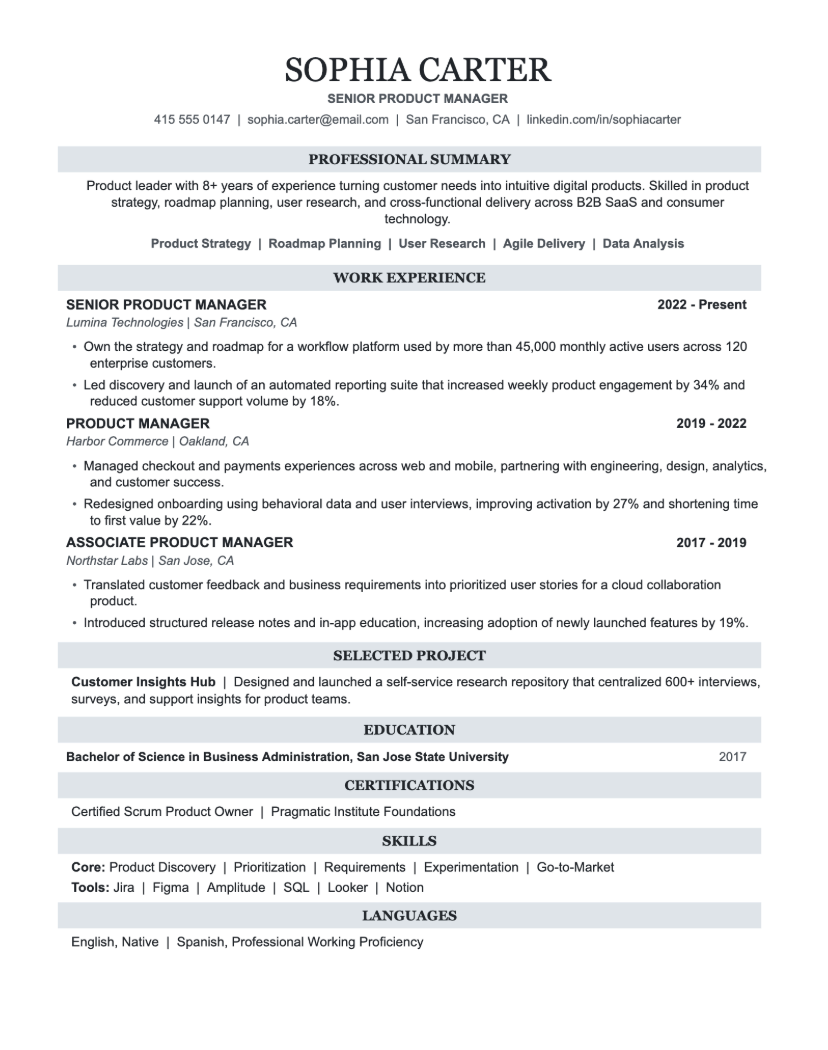
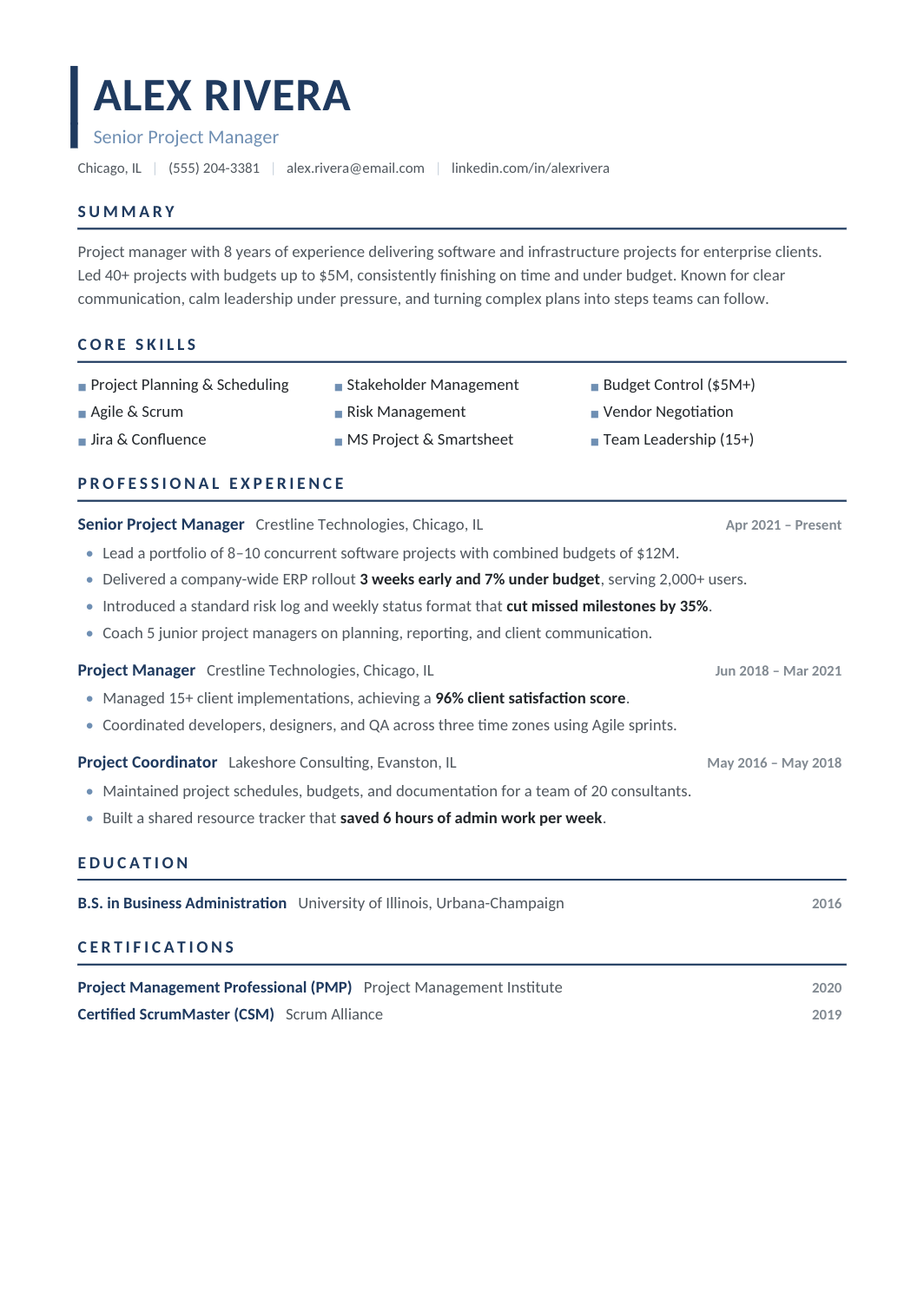
A professional one-column resume for PMs, with each role written around the product owned, the launches shipped and the metrics they moved.
 FREE
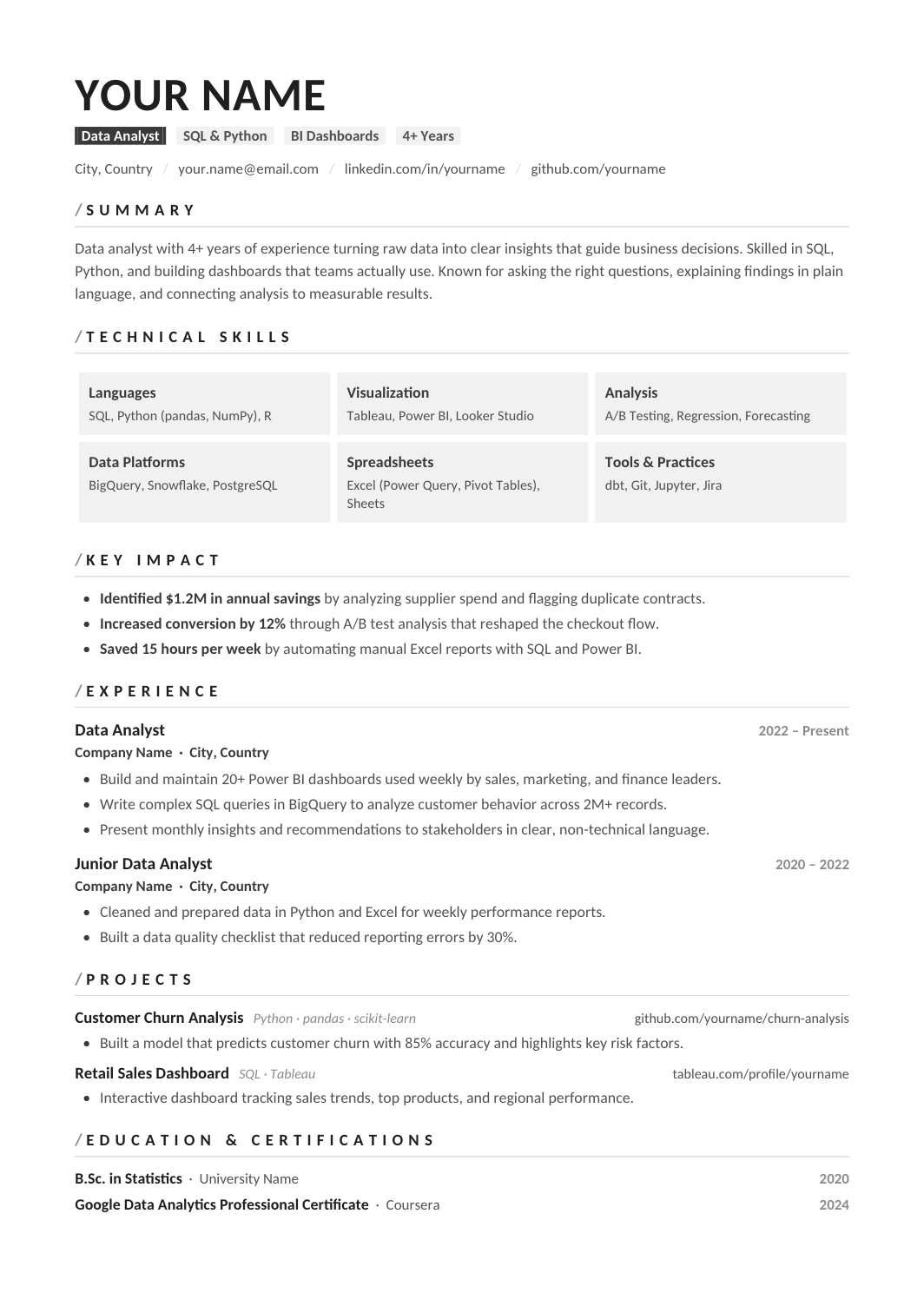
A one-column resume for analysts, with a compact tools line (SQL, Python or R, BI platform, spreadsheets) and experience bullets that connect each analysis to the decision it informed.
 FREE
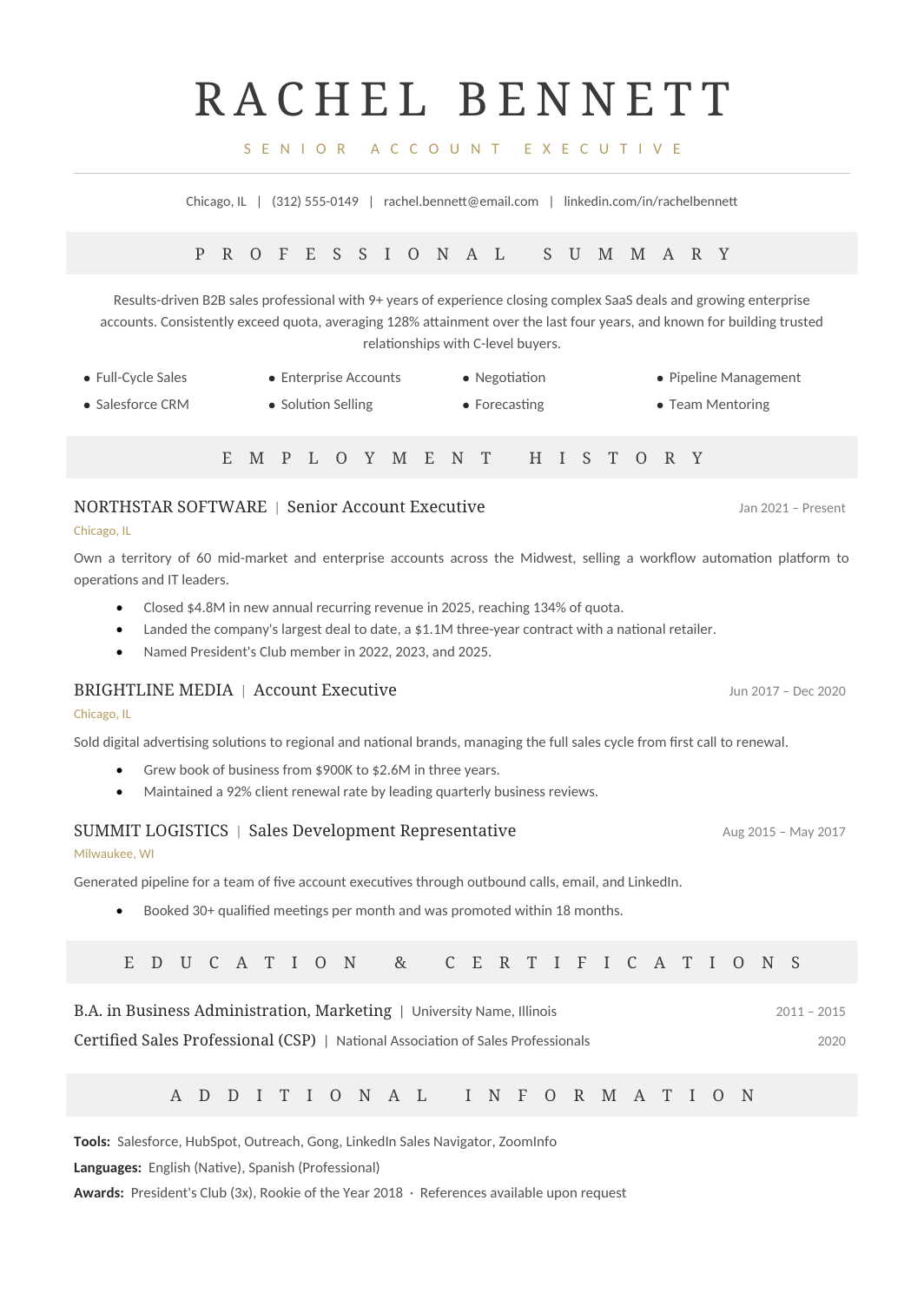
A one-column resume for sales professionals where the first bullet of every role is a number: quota attainment, revenue closed, rank on the team.
 FREE
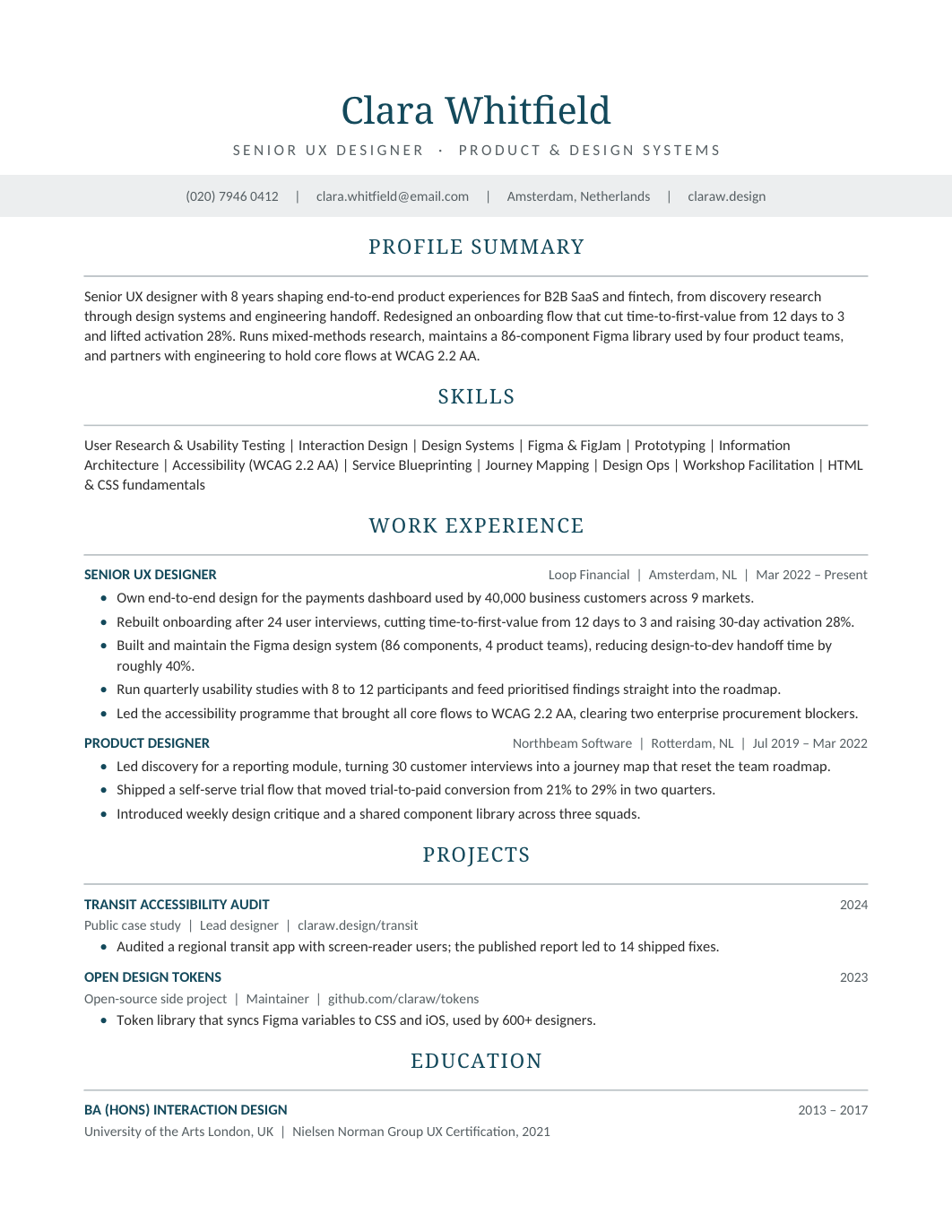
A clean resume for UX designers and researchers, with tools and methods in a skills block, a portfolio link in the header, and experience bullets that connect design work to product outcomes.
 FREE
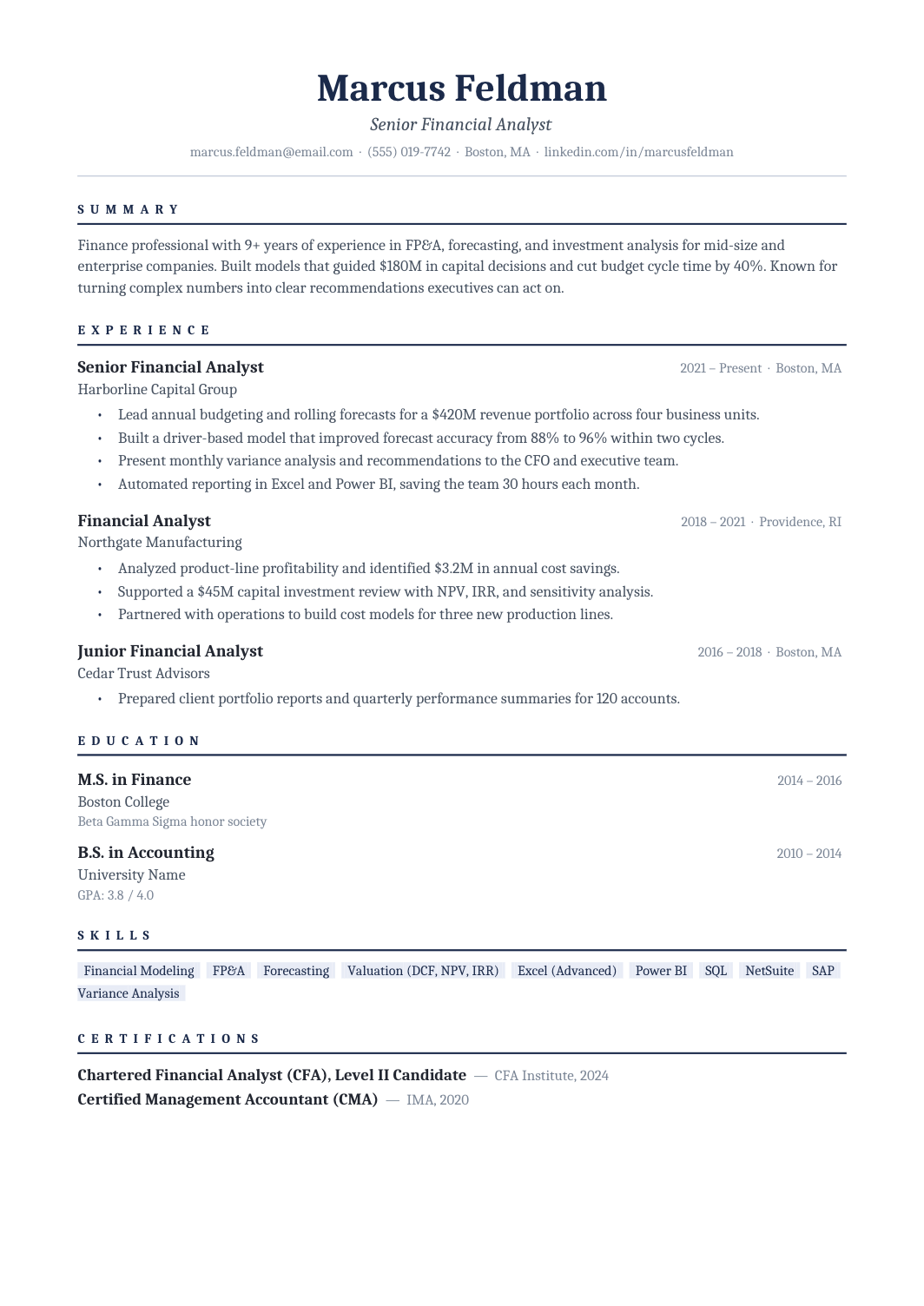
A Cambria one-column resume with navy rules and a clear career timeline, built for corporate finance, treasury and controllership roles where the reader expects polish and numbers.
 FREE
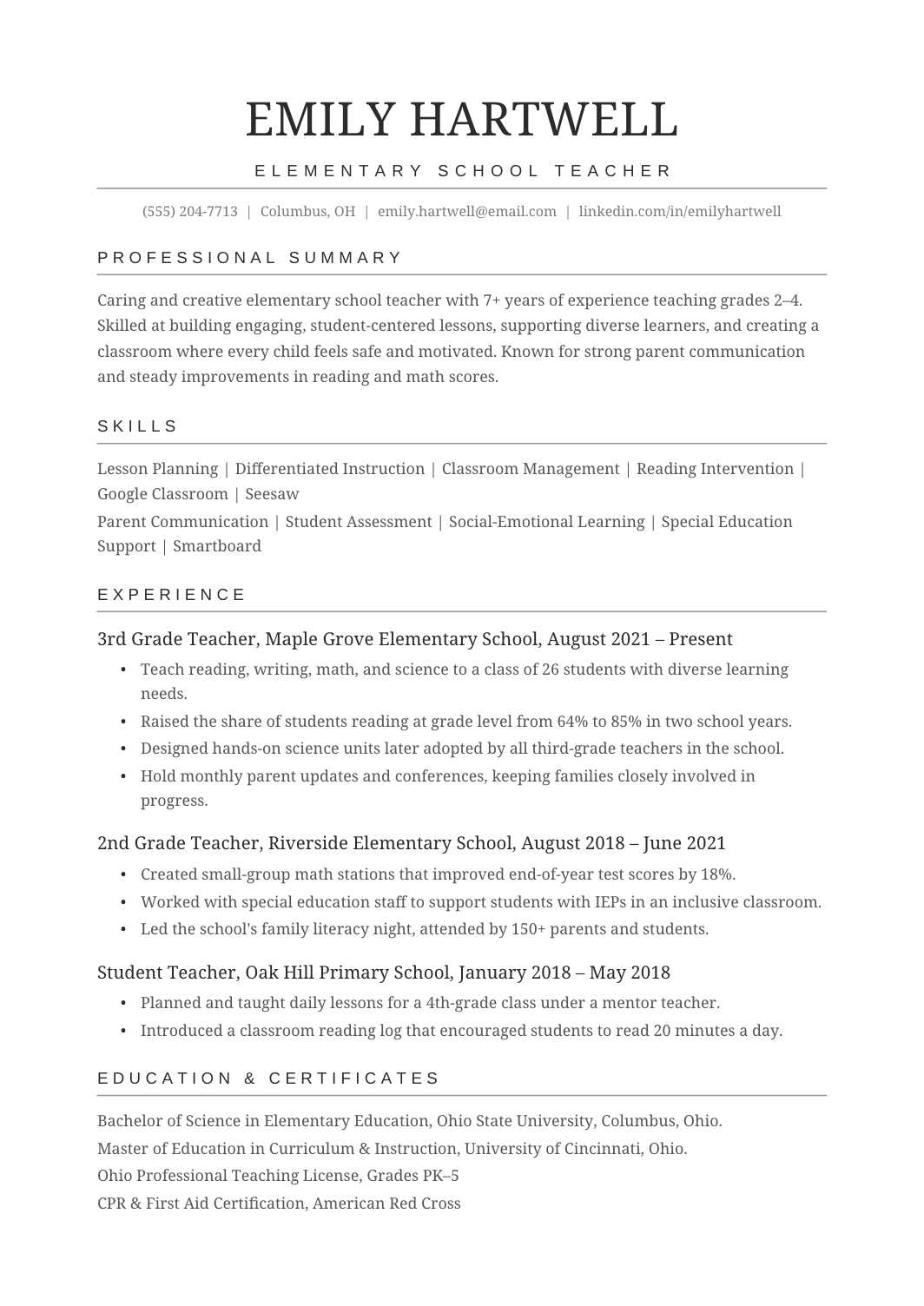
A straightforward education resume with a certification block, then teaching experience described by grade, subject, class size and student outcomes.
 FREE
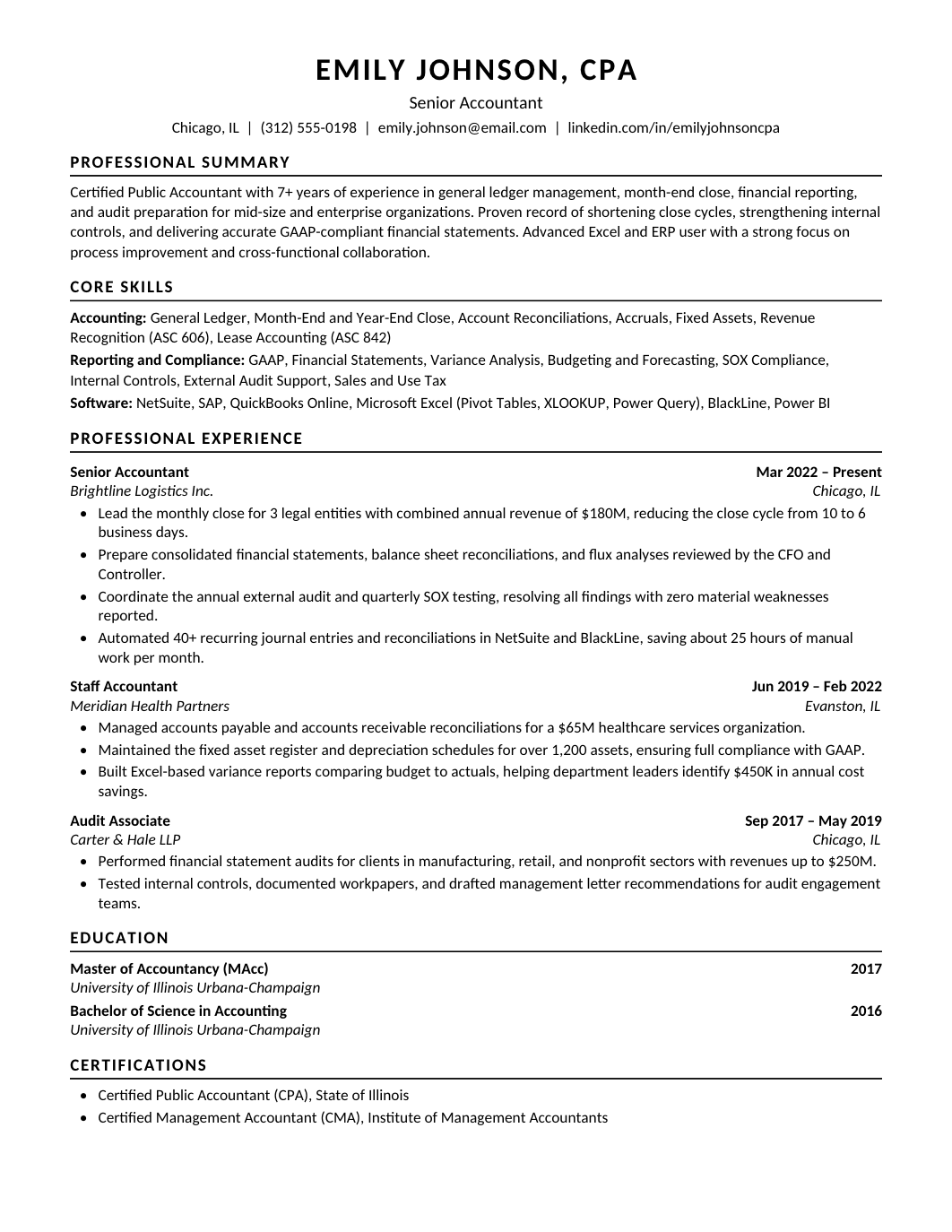
A single-column resume for staff and senior accountants, with CPA status near the top and bullets about month-end close, reconciliations, reporting and the systems you run them in.
 FREE
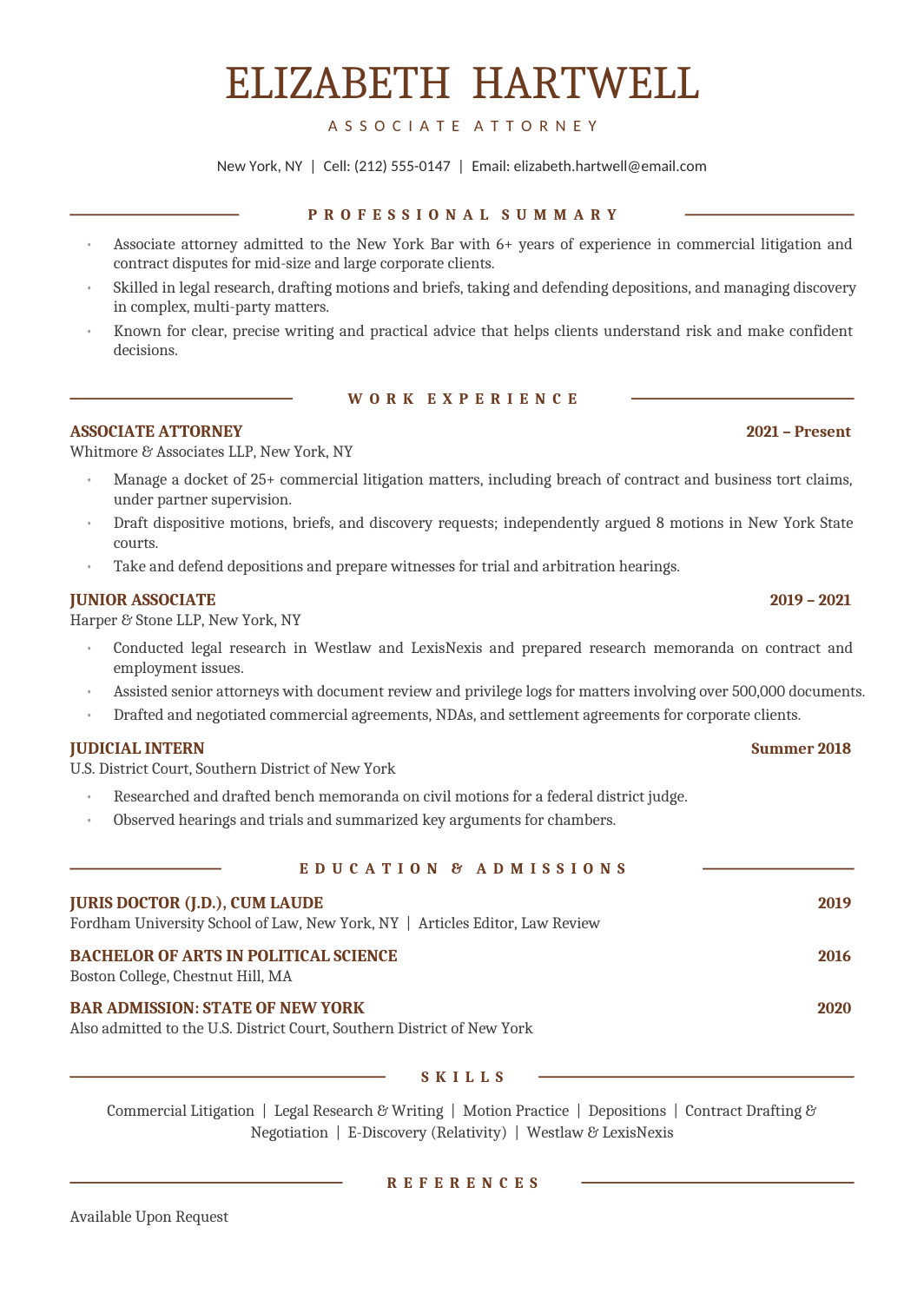
A formal one-column resume for legal professionals outside the traditional firm track: in-house counsel, compliance, contracts, legal operations and support.
 FREE
A general-purpose resume for technical roles that don't fit a single job title: field engineers, technicians, implementation specialists, support engineers and people whose work spans several systems.
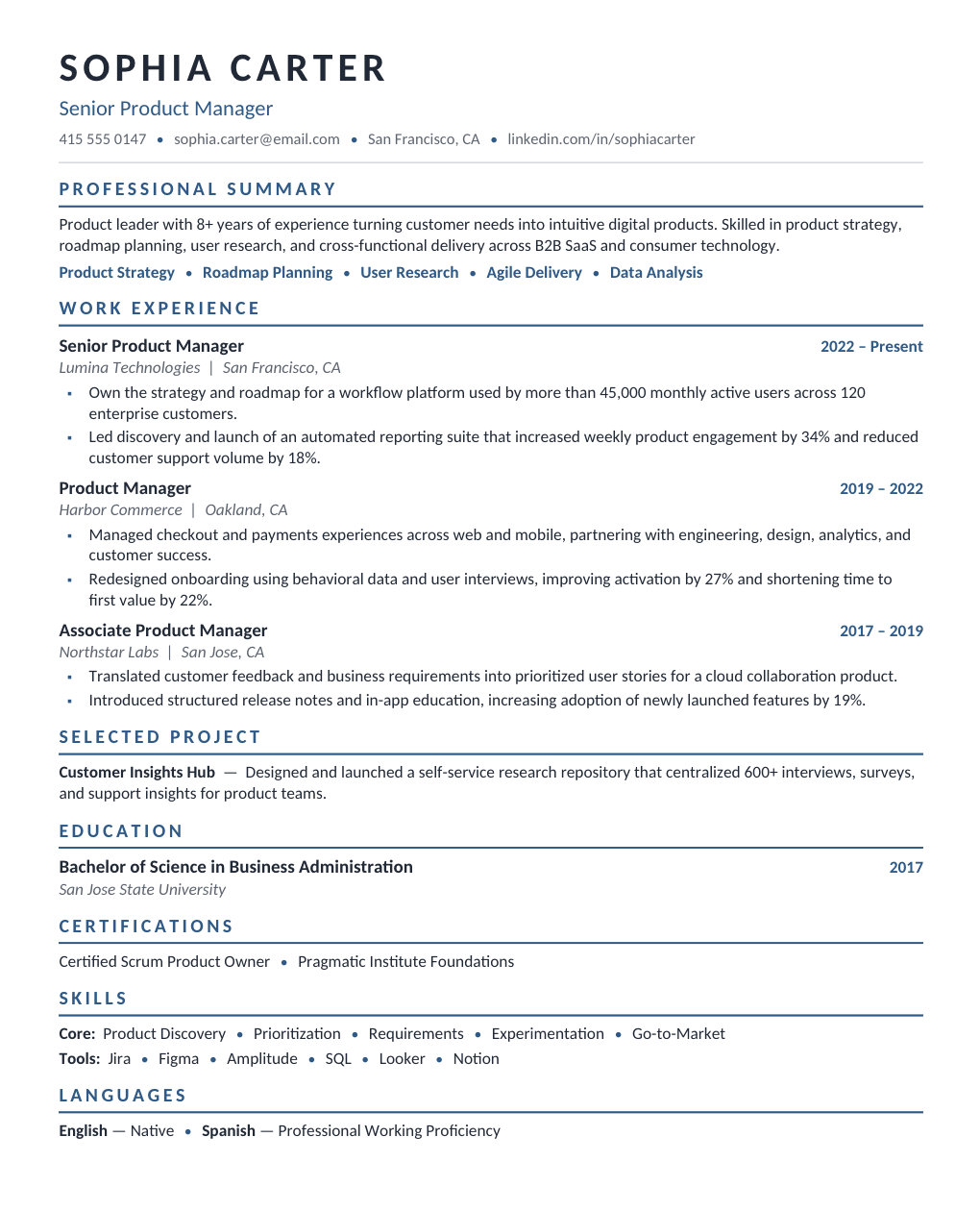 FREE
A restrained one-column design with Calibri text, blue section headings and thin divider lines.
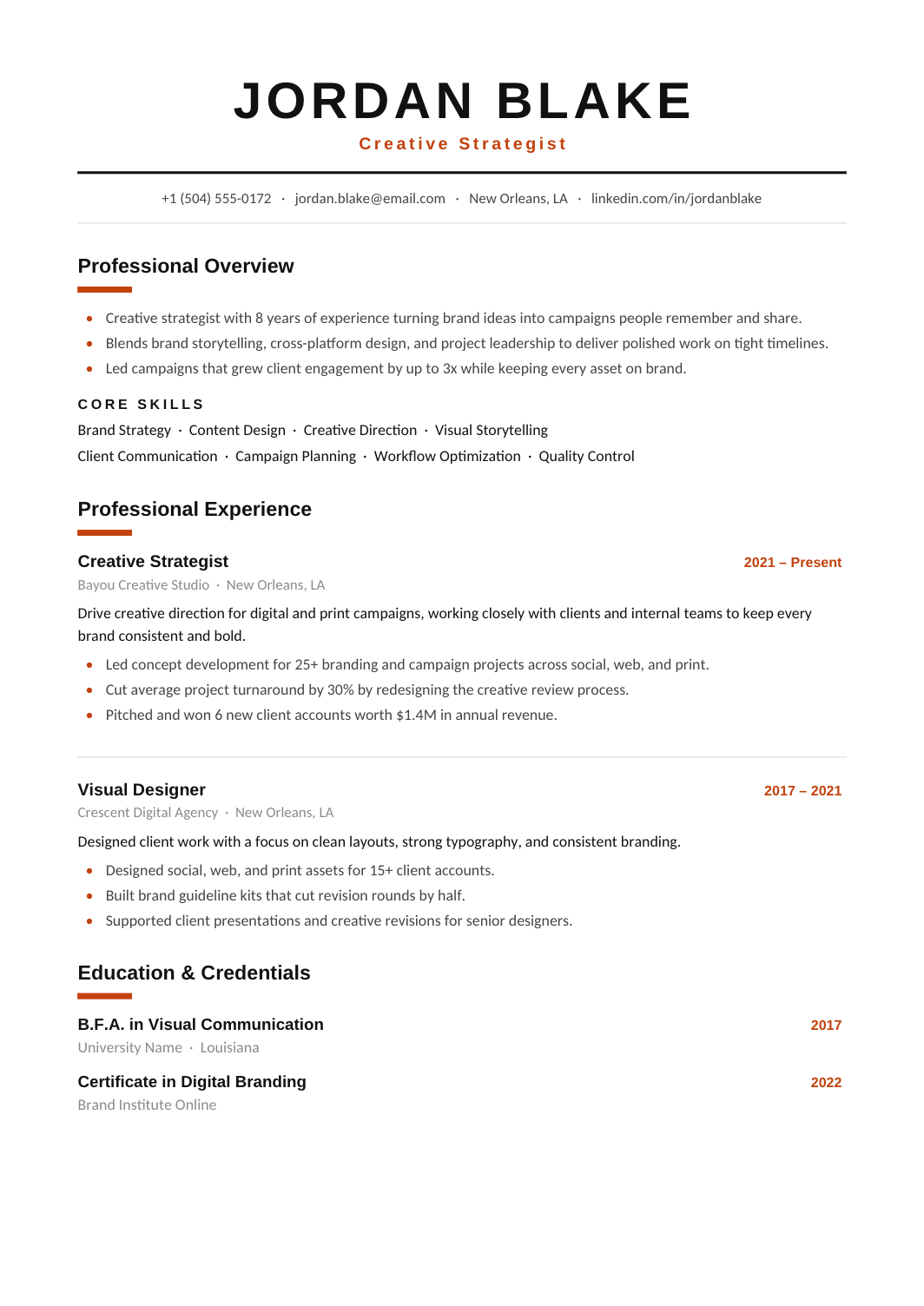 FREE
A one-column layout with a centered name, orange accents and stronger heading contrast than the other modern designs, for people who want the page to have some energy.
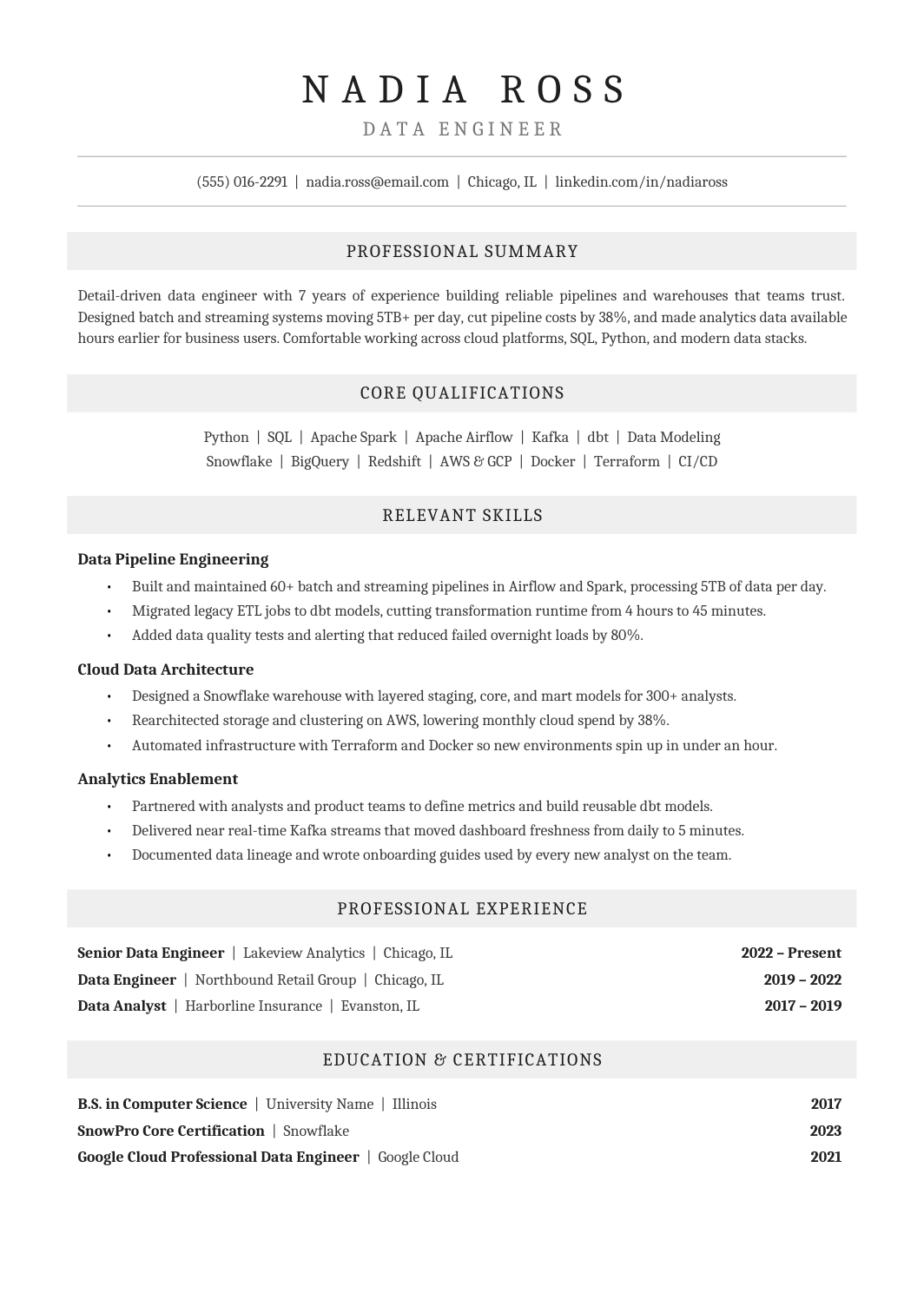 FREE
A Cambria one-column resume with centered headings on pale gray bands, grouped skills and a tidy employment record, for conservative industries.
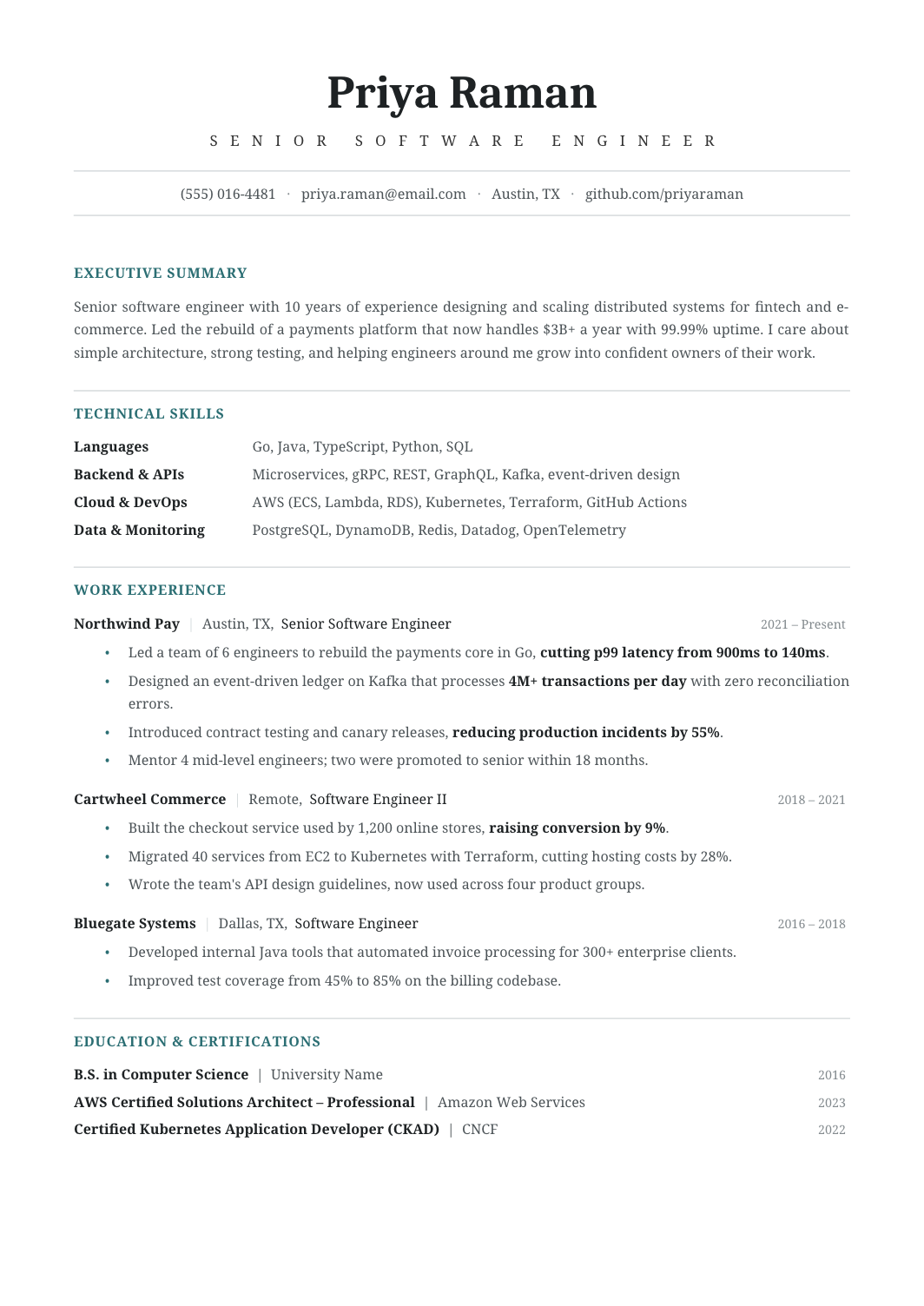 FREE
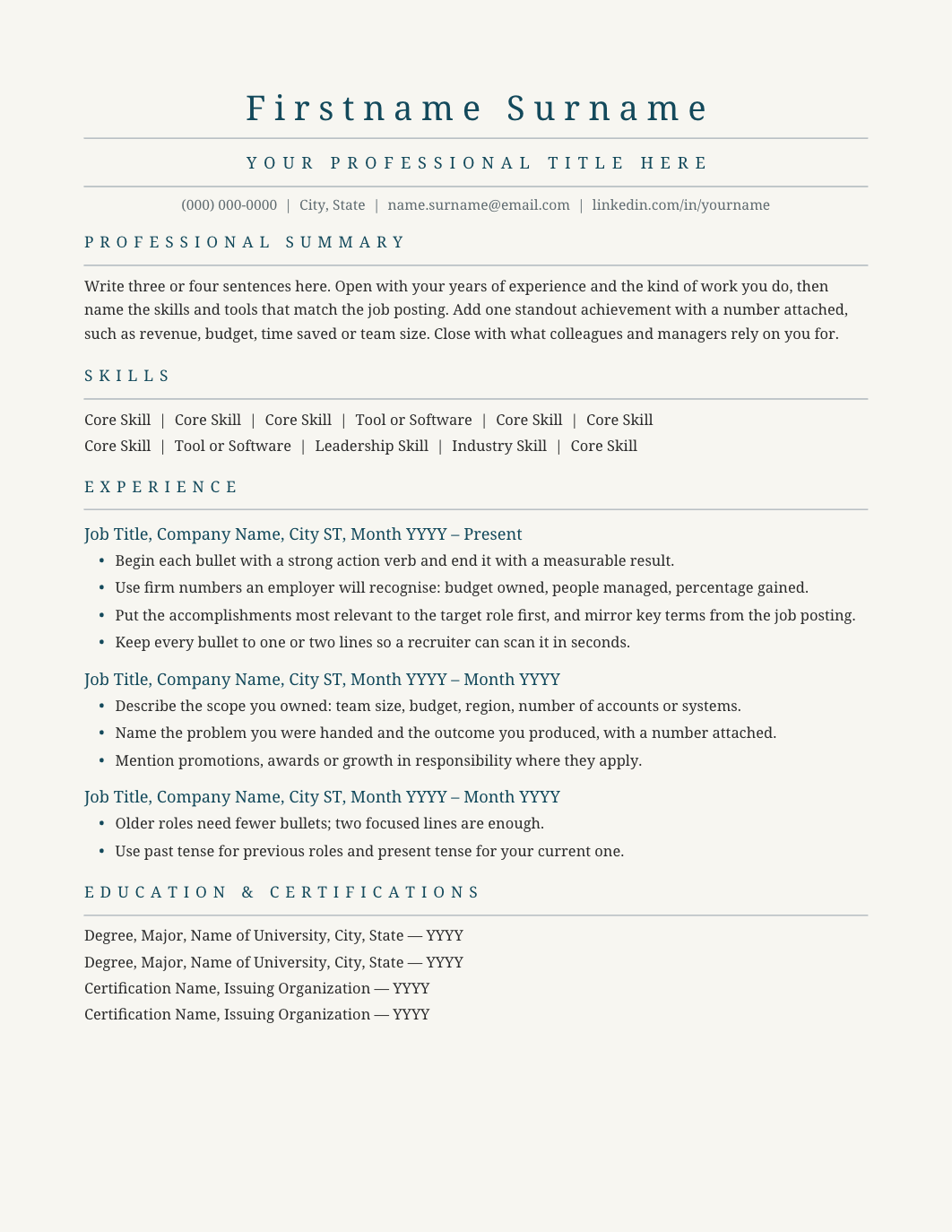
A neutral one-column layout designed to work for almost any role and level: standard sections, moderate spacing, no industry-specific styling.
 FREE
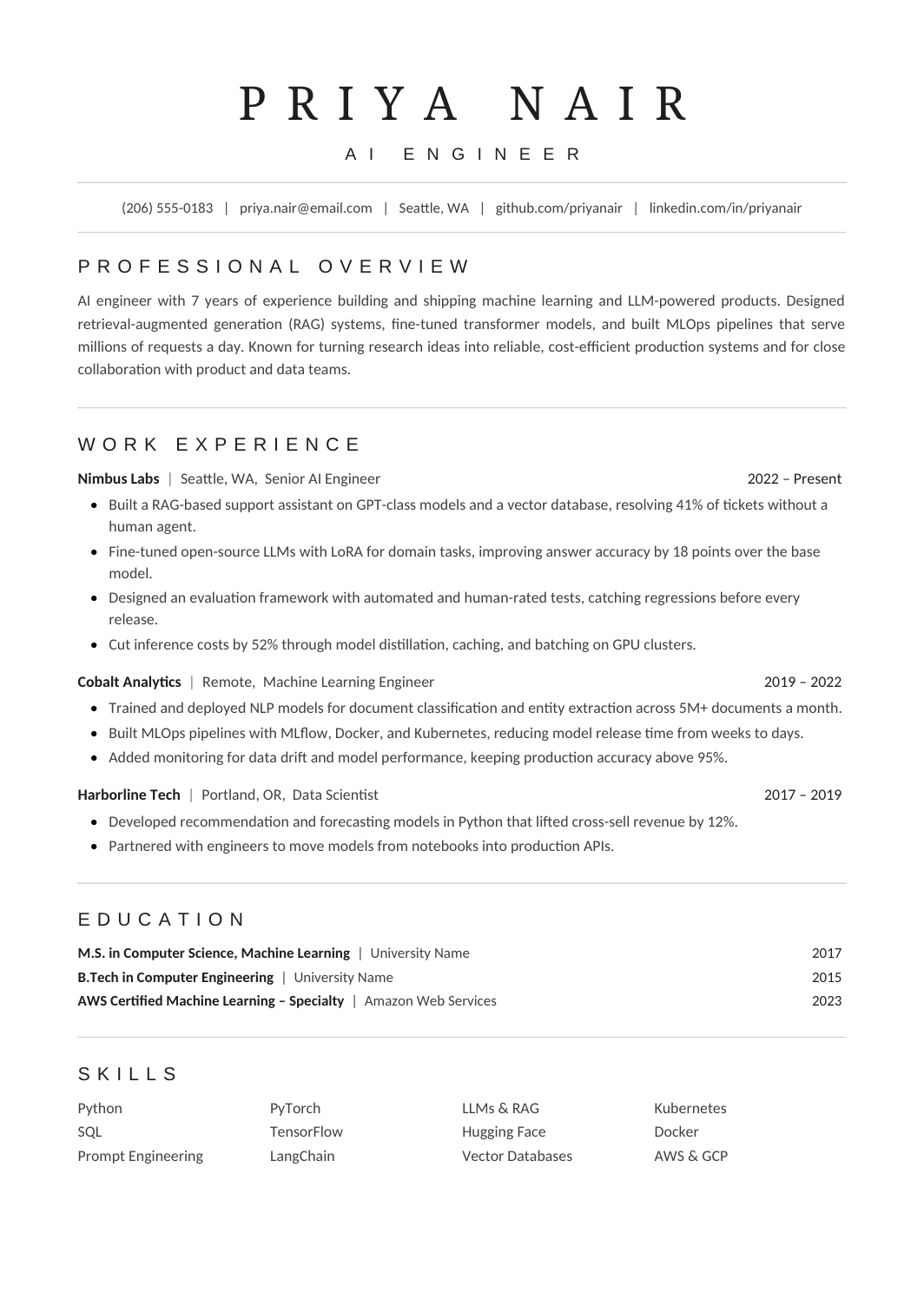
A one-column resume with slightly more generous spacing than the plainest layouts, keeping the reading order simple while giving each section room.
 FREE
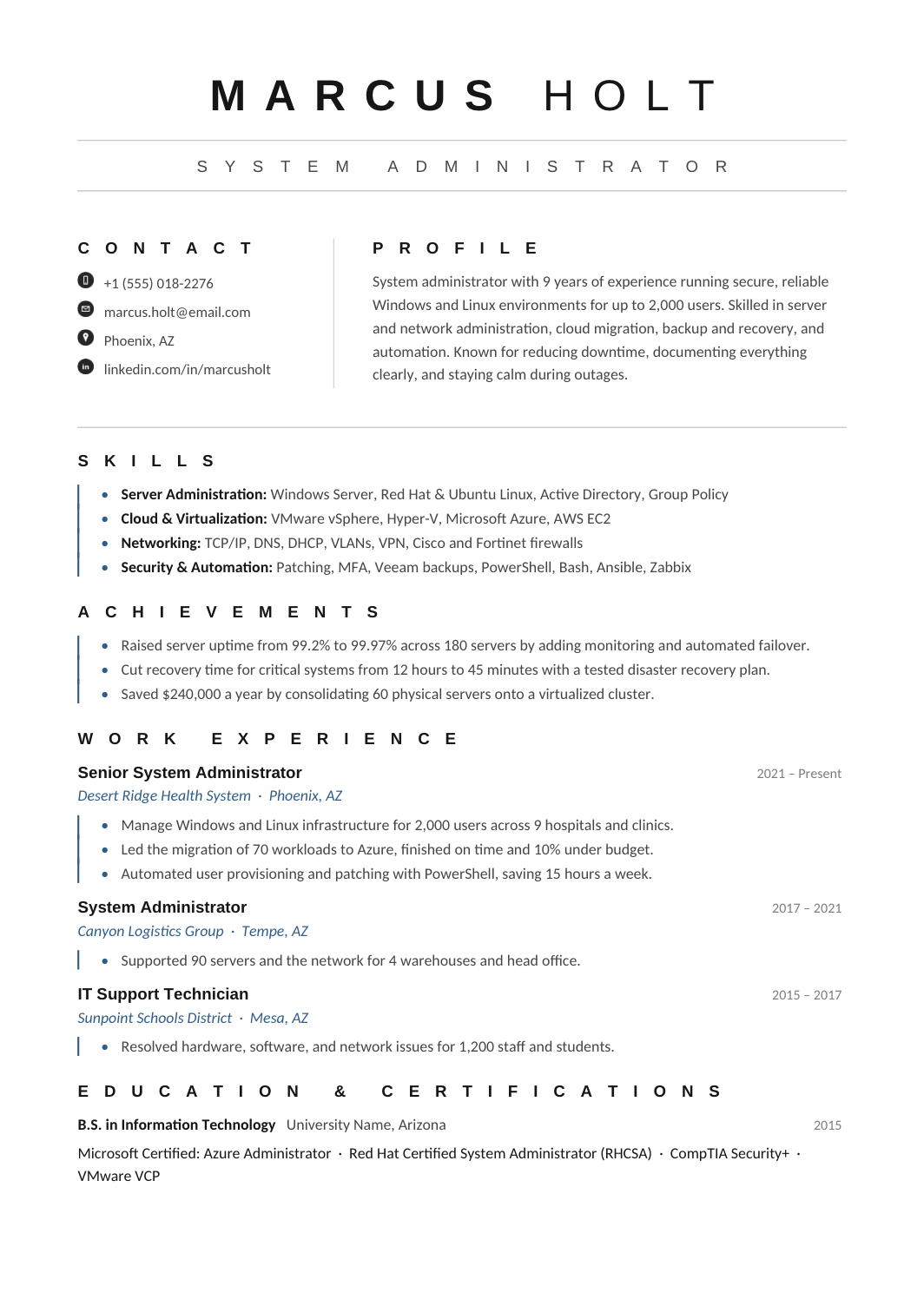
A one-column resume tuned to fit a complete work history on one page without shrinking the type: compact spacing, grouped skills, standard headings.
 FREE
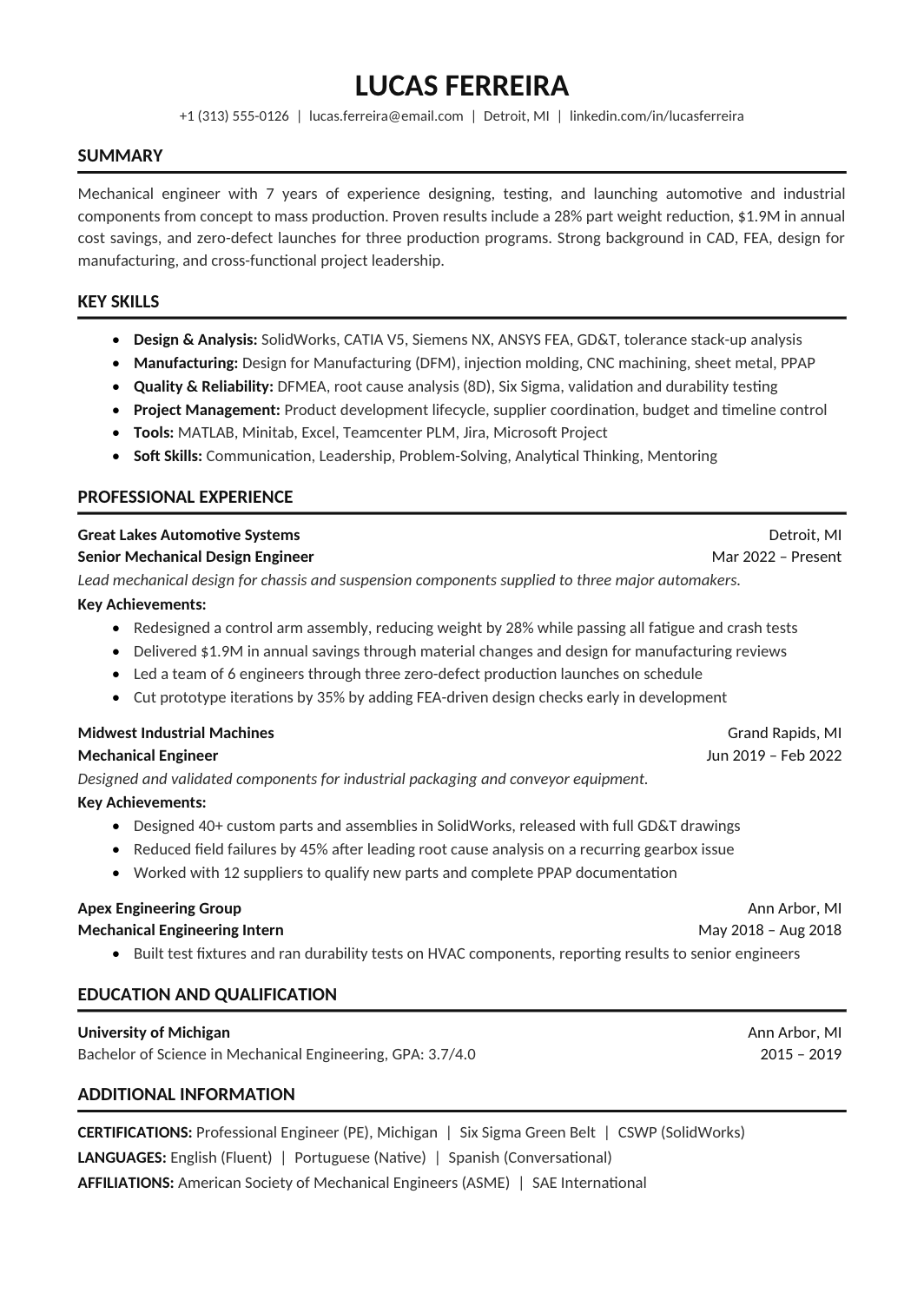
A blue-accented one-page resume with grouped technical skills, an achievements block and a clear chronology, for engineers and IT professionals who want a touch of color.
 FREE
A one-column Calibri resume with bold ruled headings, a grouped skills block and room for detailed experience bullets and credentials.
 FREE
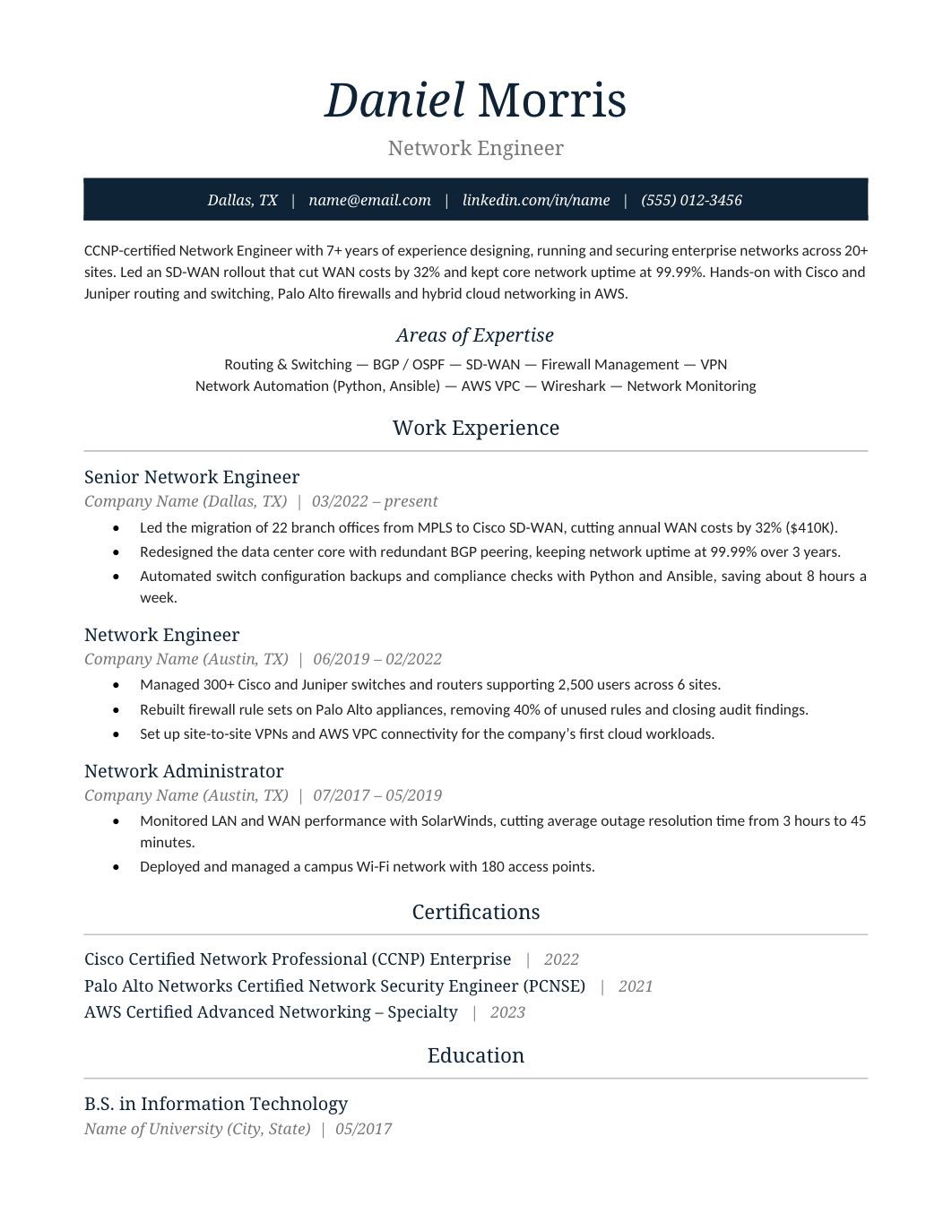
A polished one-page design with serif headings and a navy contact band under the name, for applicants who want a refined page in a conservative field.
 FREE
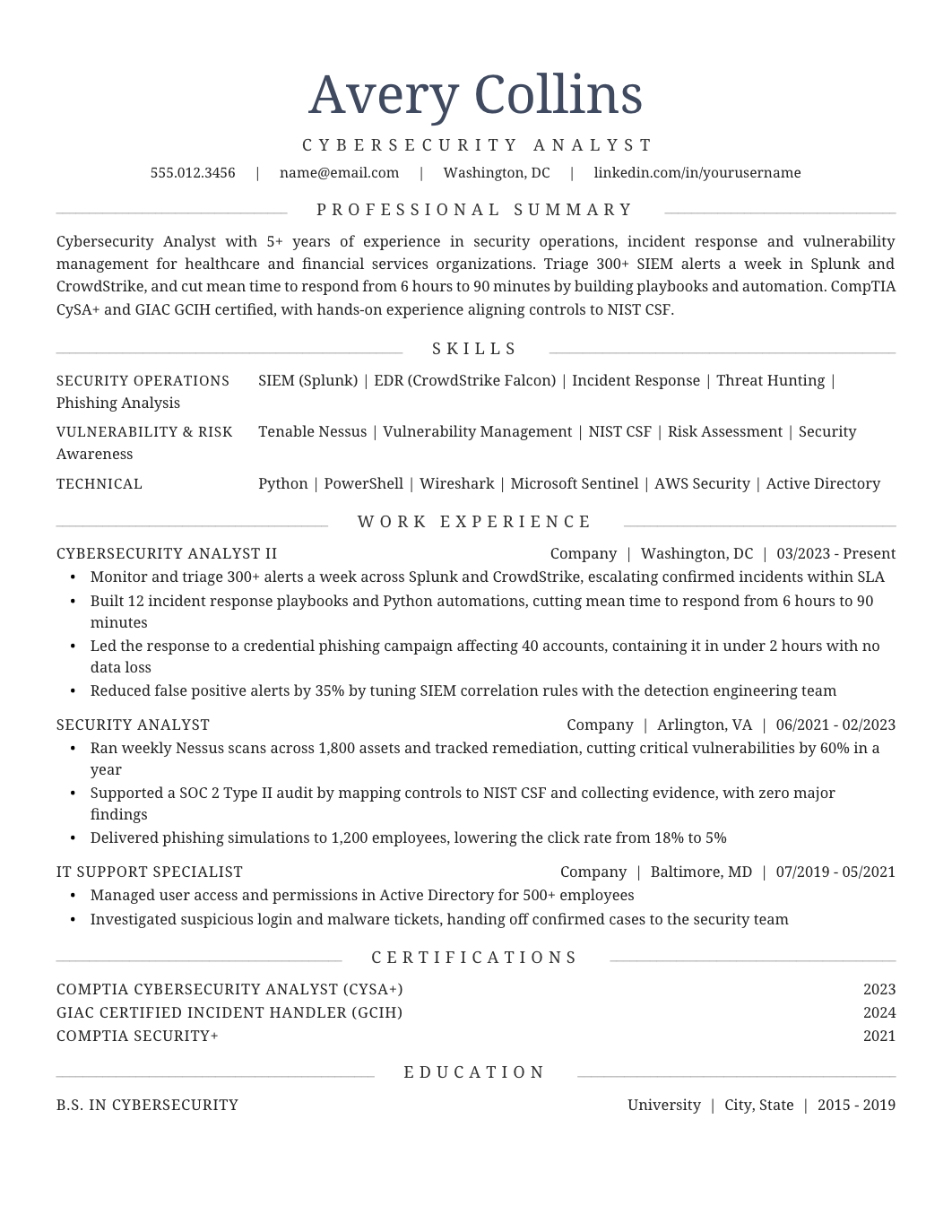
A one-page Georgia layout with centered headings, thin rules and the standard professional sections, for formal fields.
 FREE
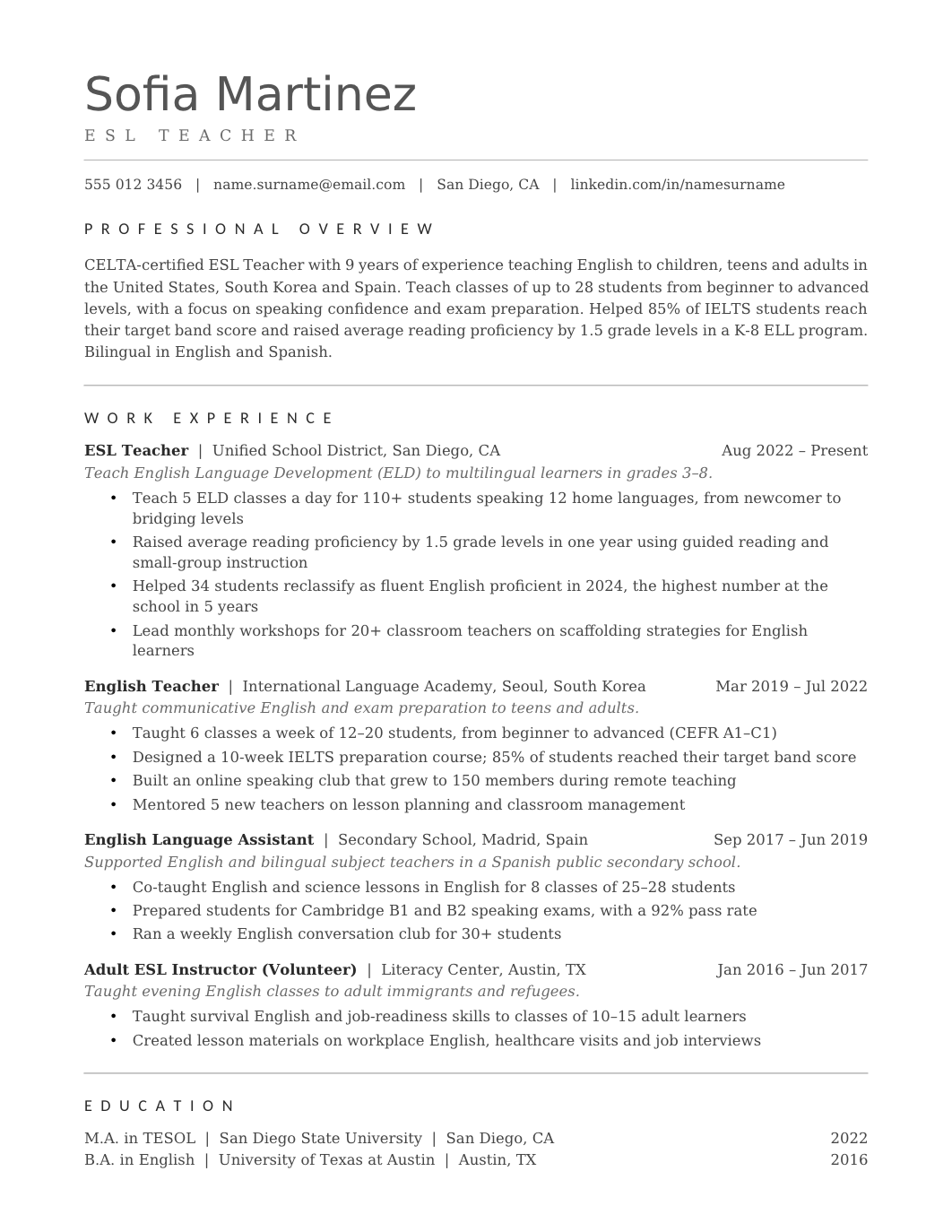
A two-page layout that gives each role room: title, employer, dates and four or five bullets, in strict reverse-chronological order.
 FREE
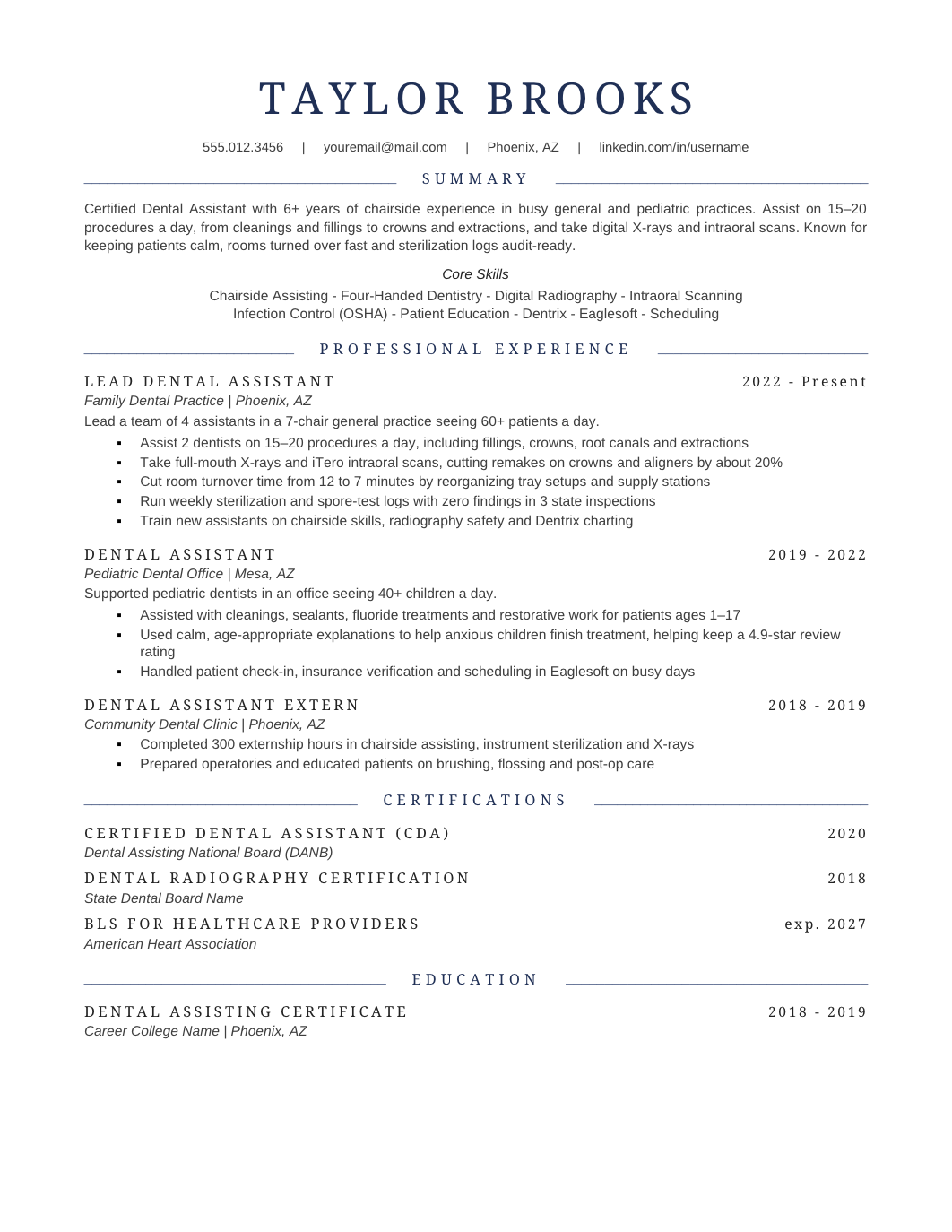
A one-page US Letter layout with navy accents, Georgia headings and Arial body, for a professional resume with a little color.
 FREE
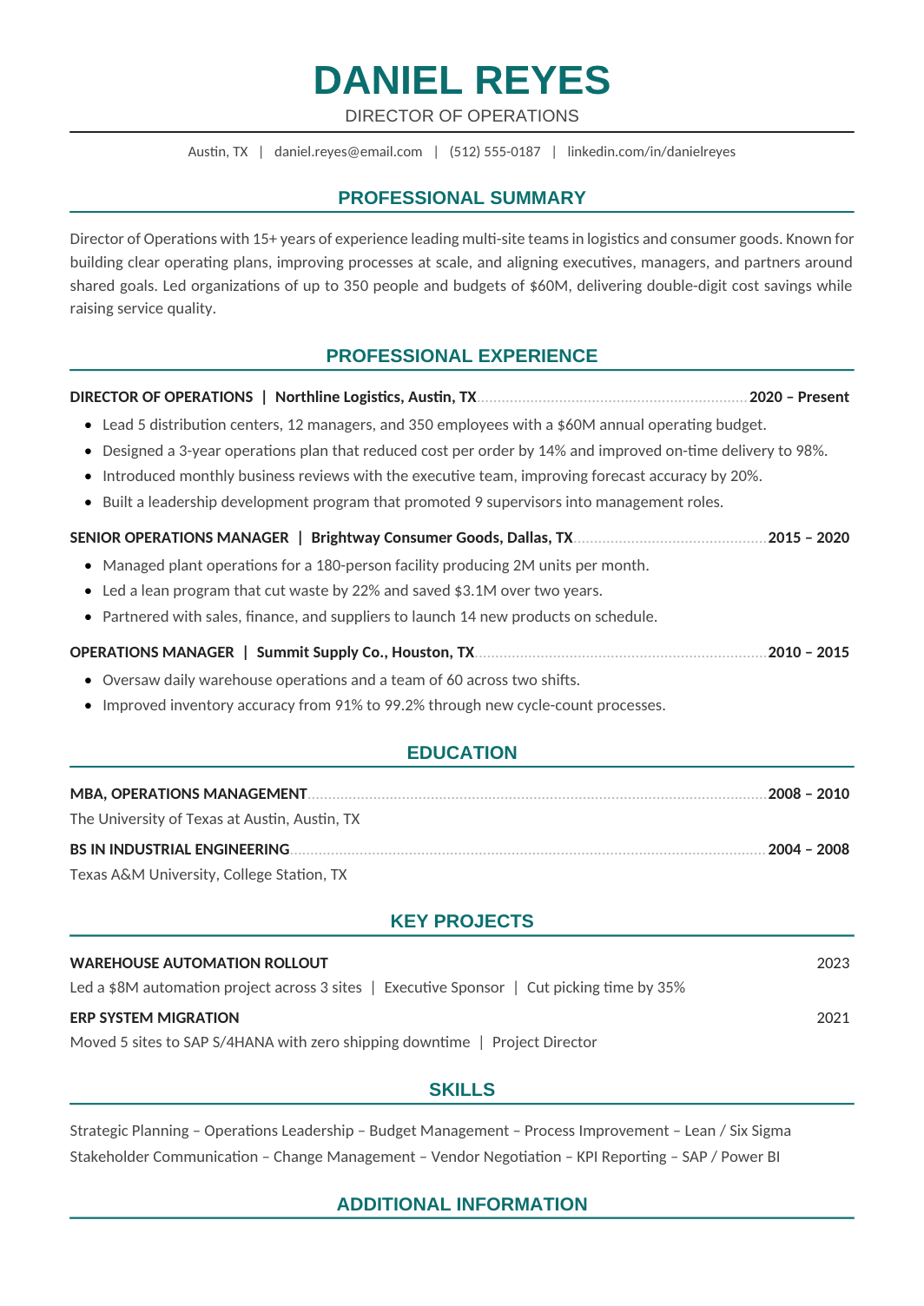
A one-page A4 resume with teal headings and a one-column structure, written for leaders who need parser-safe formatting without looking like a junior applicant.
Every section sits in the same flow, so nothing gets read out of order or dropped. It's also the easiest structure to edit: adding a role pushes everything down without breaking alignment. The One Column Resume and Single Column Resume are the plainest versions. The Classic Resume adds bold ruled headings, and the Centered Serif Resume uses a centered name and thin dividers for a more formal look. If parsing is the priority, all of the ATS resume templates are one-column too.
The trick is horizontal alignment: job title on the left, dates on the right, consistent indent for bullets. The Traditional Resume uses gray heading bands for that, and the Universal Resume is a neutral layout designed to work across industries. If you'd like skills and contact details out of the main flow, compare the two-column resume layouts.
The Product Manager Resume, Sales Resume and Teacher Resume all use one-column layouts with role-specific content, which makes them useful references for section order and bullet style.
It's conventional, which is what most readers want. Good typography and strong bullets matter more than columns.
Yes, for up to about eight to ten years of experience. Beyond that, the two-page one-column templates are more practical.
Either directly under the summary if they're central to the role, or after experience if the history is stronger.