 FREE
Two-Tone Professional Resume
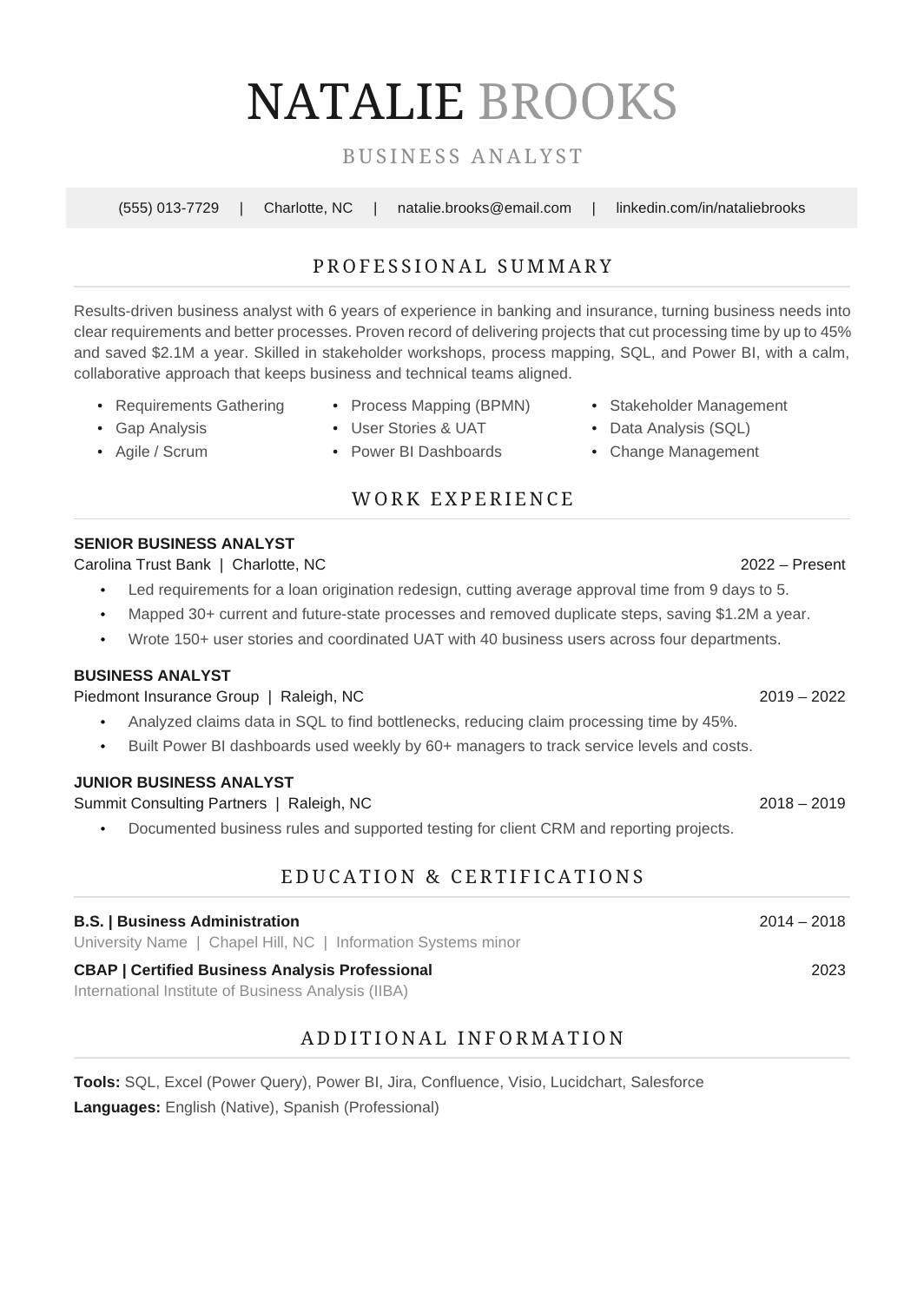
A polished one-column format with a two-tone name, a gray contact band, centered serif headings and grouped skills above a chronological history.

The standard resume format: work history listed from your current role backwards, with education and skills after. Recruiters read it fastest, and applicant tracking systems parse it most reliably. Use it whenever your recent experience is your strongest argument.
FREEA polished one-column format with a two-tone name, a gray contact band, centered serif headings and grouped skills above a chronological history.
 FREE
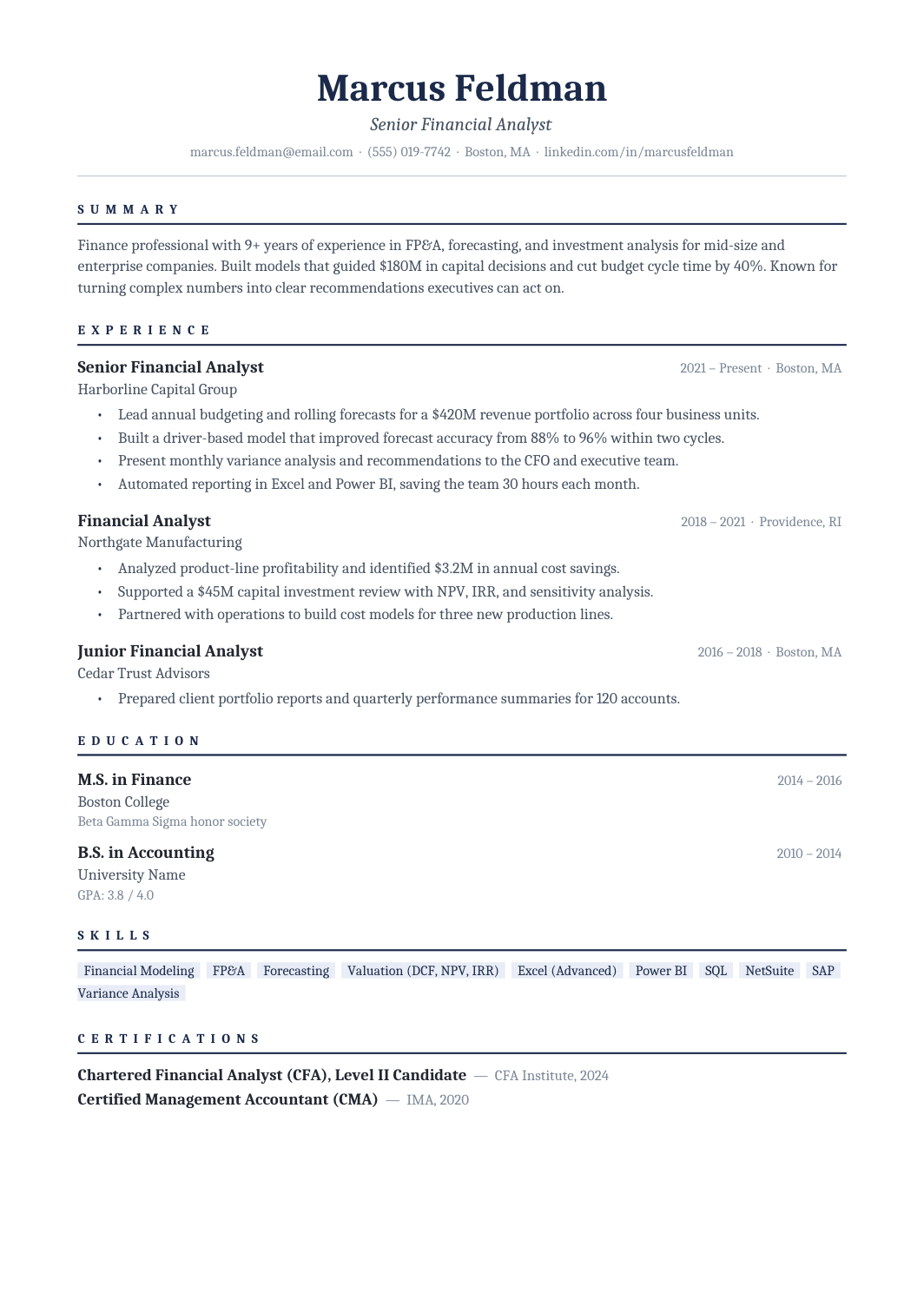
A one-column Cambria resume with navy rules and restrained skill labels: conservative enough for finance and legal applications, structured enough to pass any parser.
 FREE
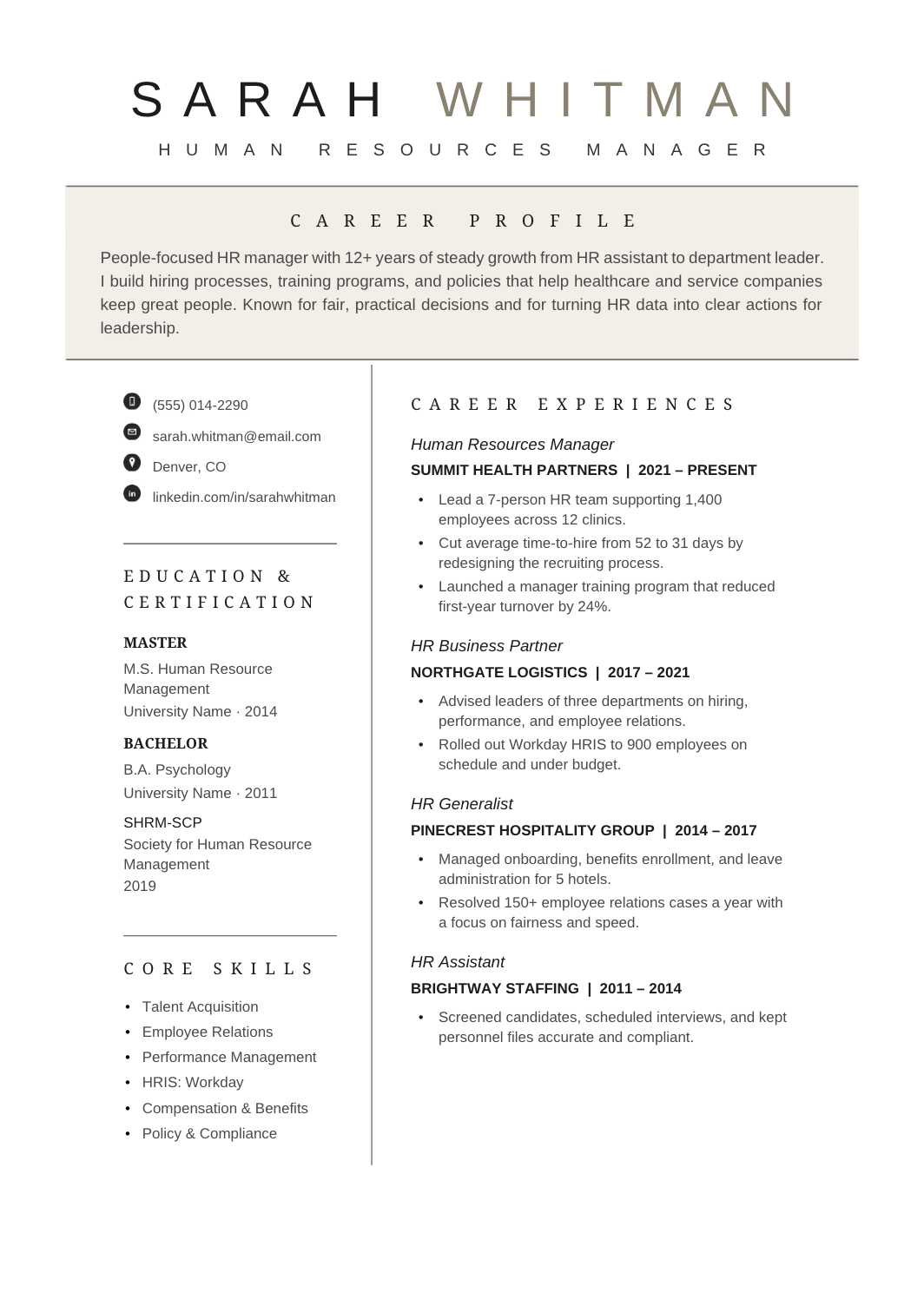
A two-column resume in the most-recent-first order almost every employer expects, with a summary, experience, education and skills in that sequence.
 FREE
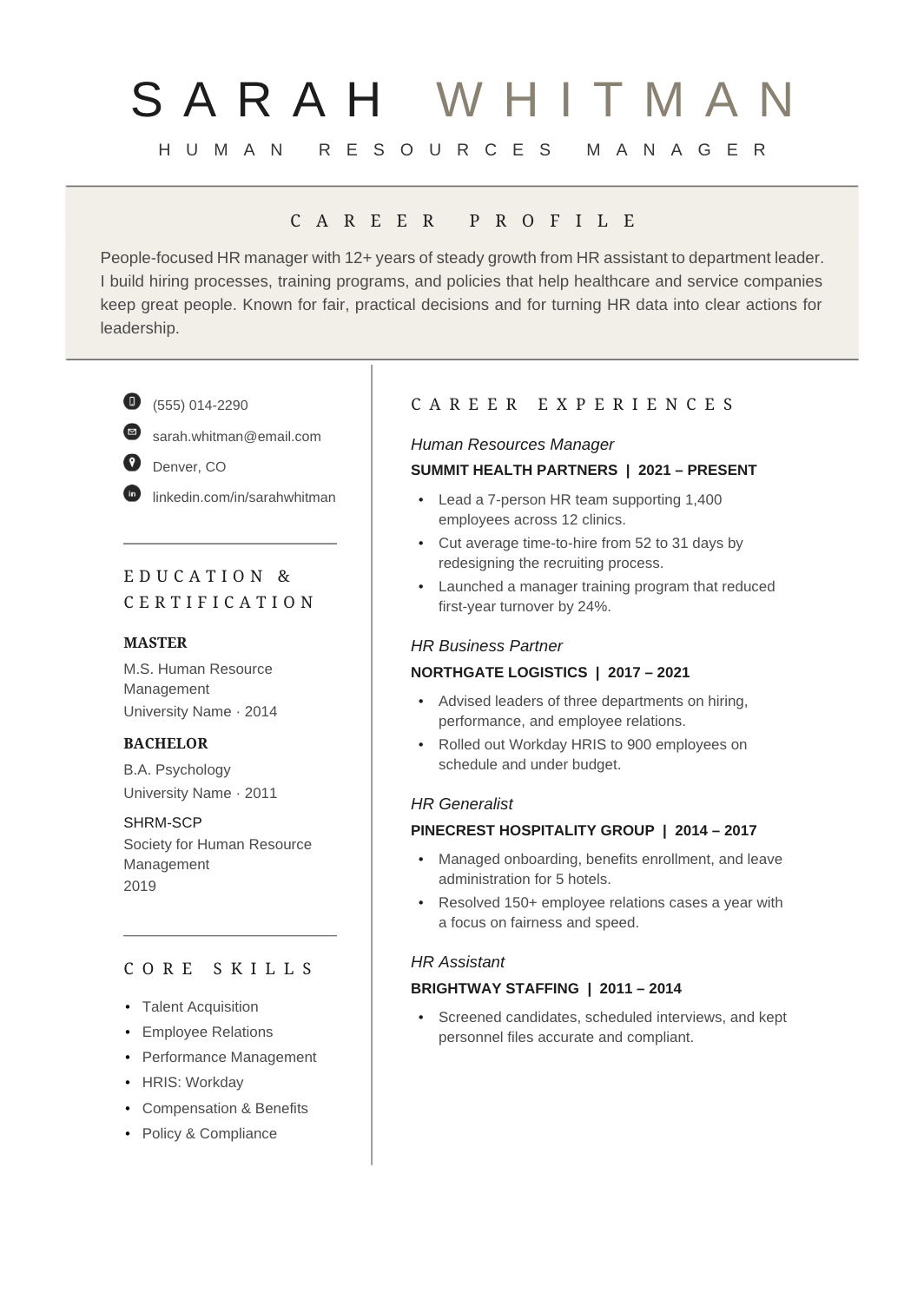
The warm-neutral version of the timeline layout: taupe accents, a vertical experience timeline and clean sections, for a softer look than navy or black.
 FREE
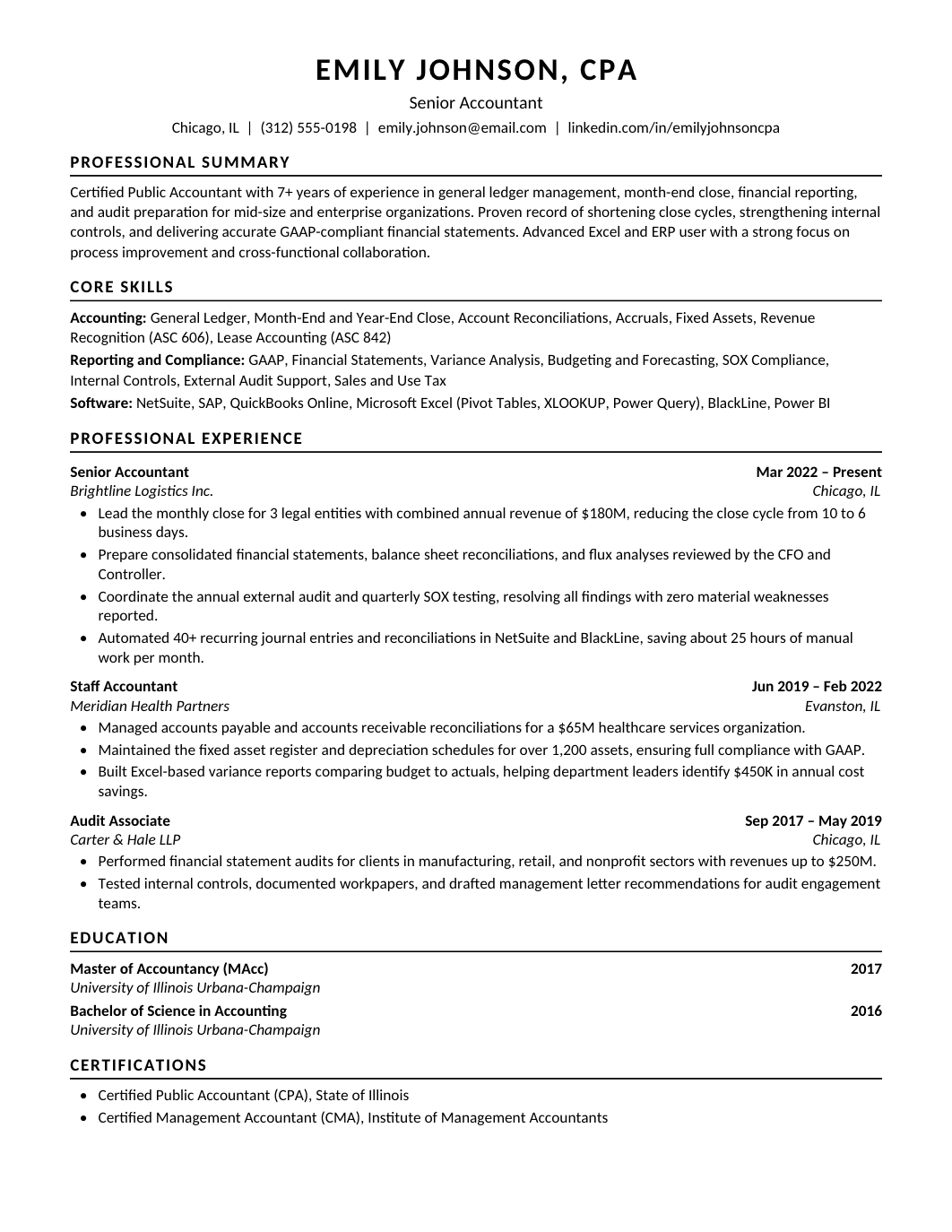
A single-column resume with standard section names and a straightforward reading order.
 FREE
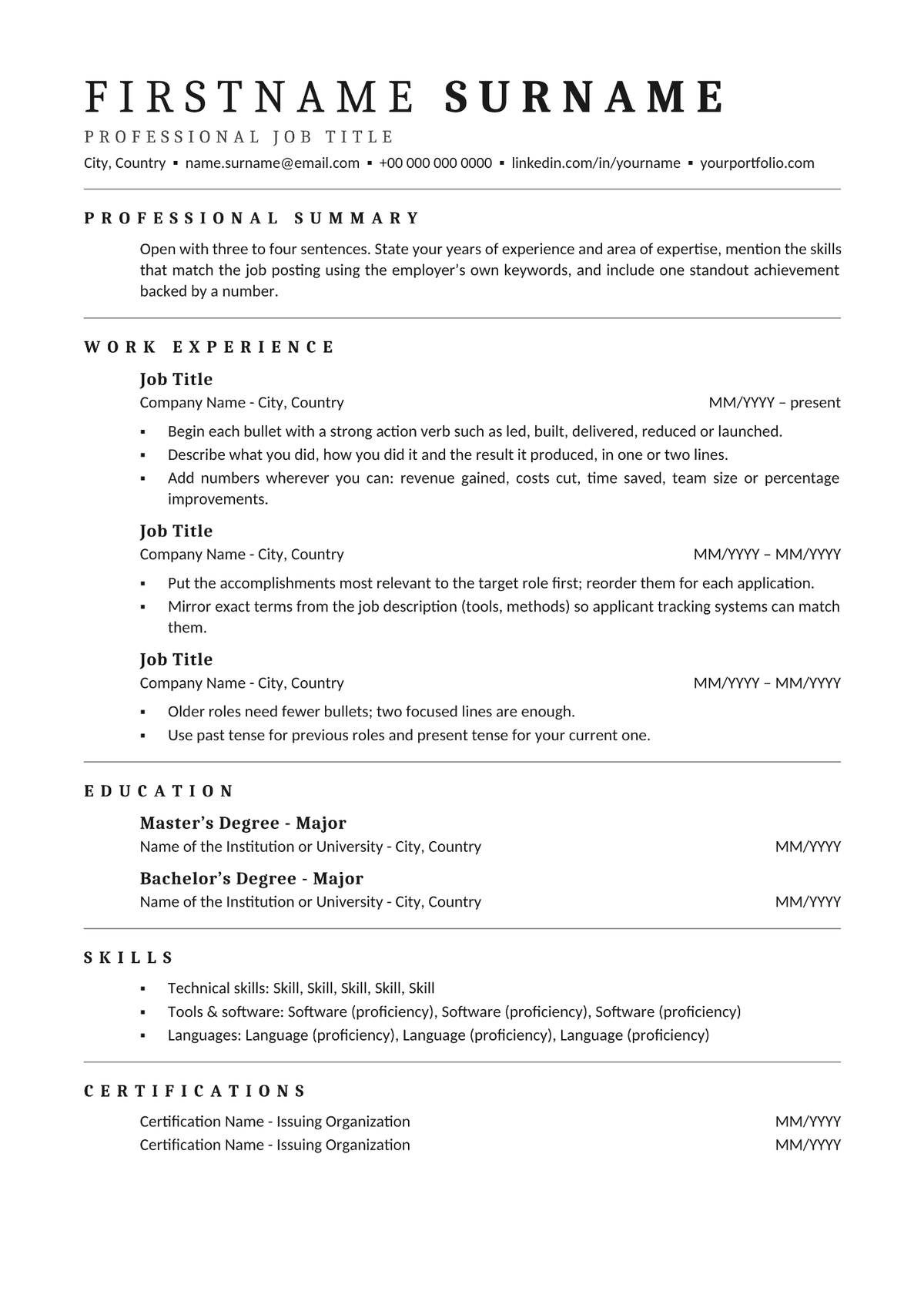
A black-and-white one-column resume with serif headings and thin rules, leaving most of the page to experience.
 FREE
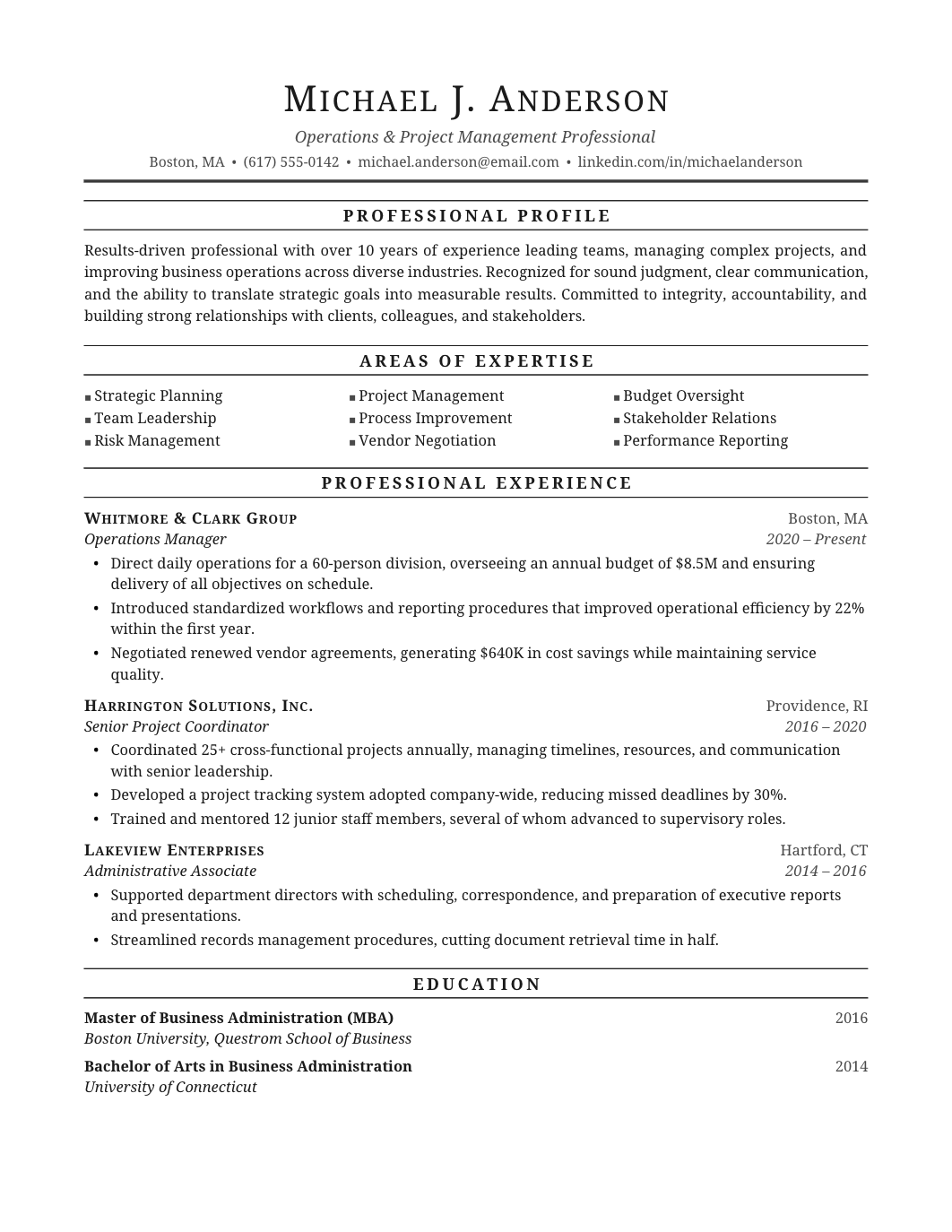
A traditional single-column format with understated type and a clear chronological structure, for applicants who want a resume that looks like it has always looked.
 FREE
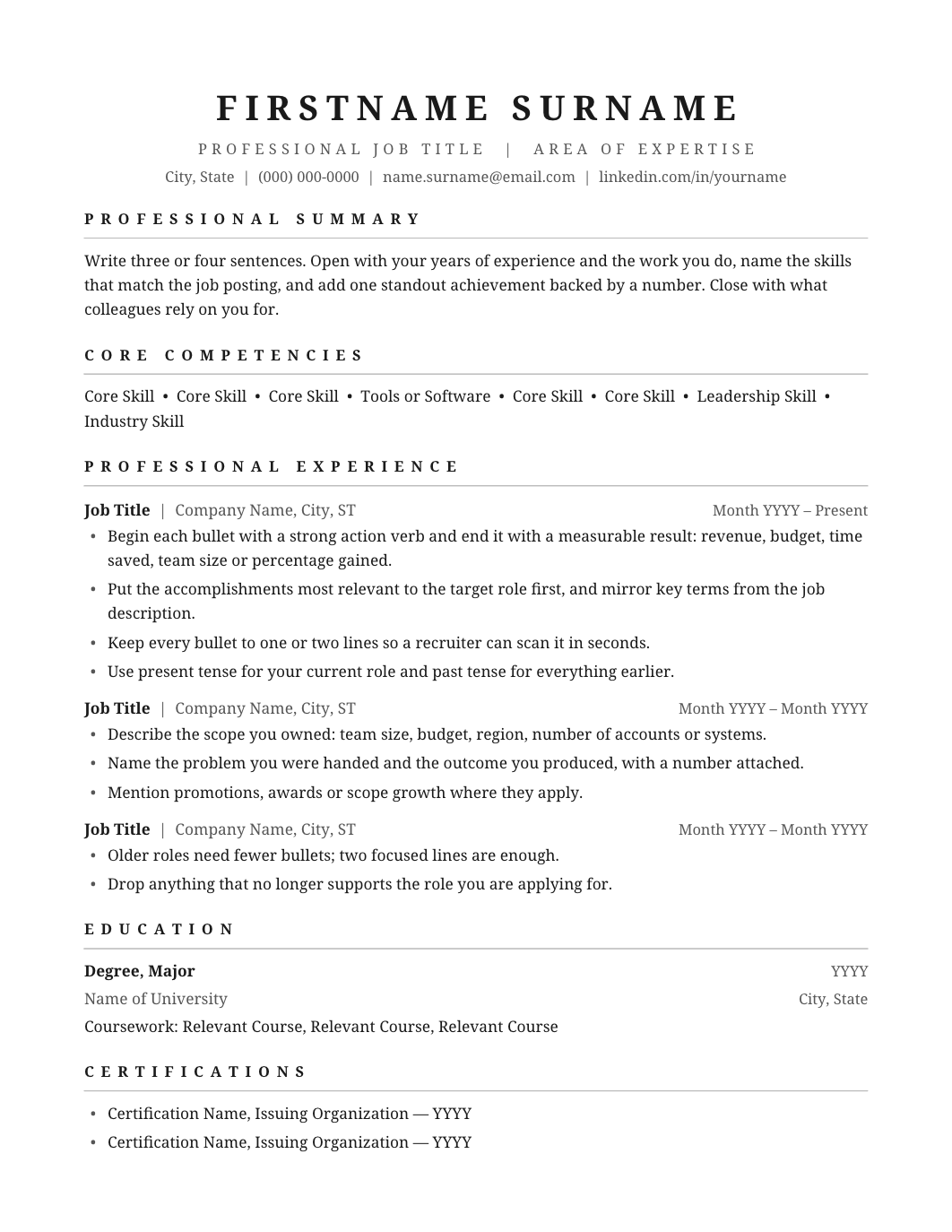
A compact one-page layout with plain headings, enough structure to scan and no decoration to maintain.
 FREE
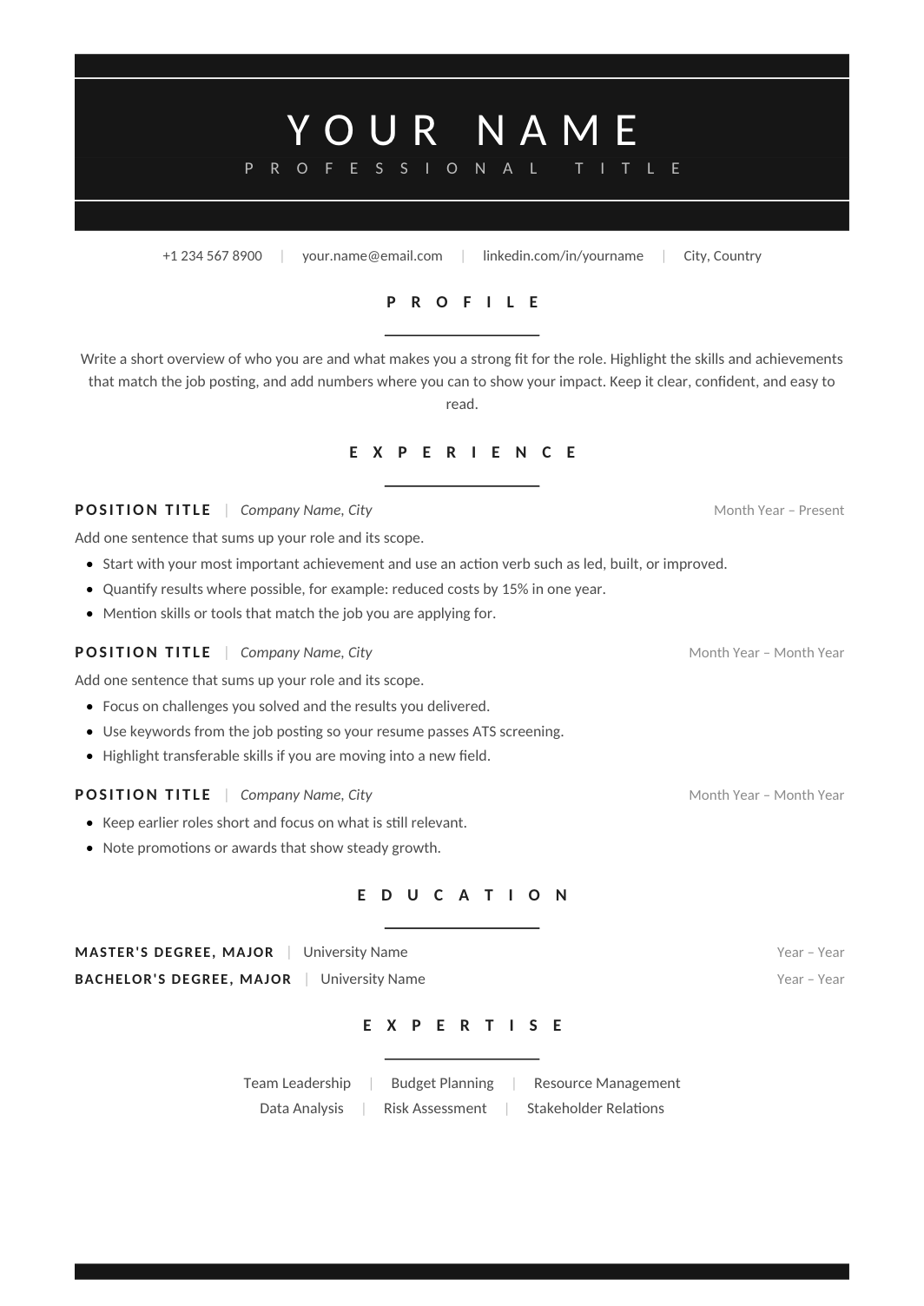
A pared-back black-on-white design with typographic headings, generous spacing and no rules or color.
 FREE
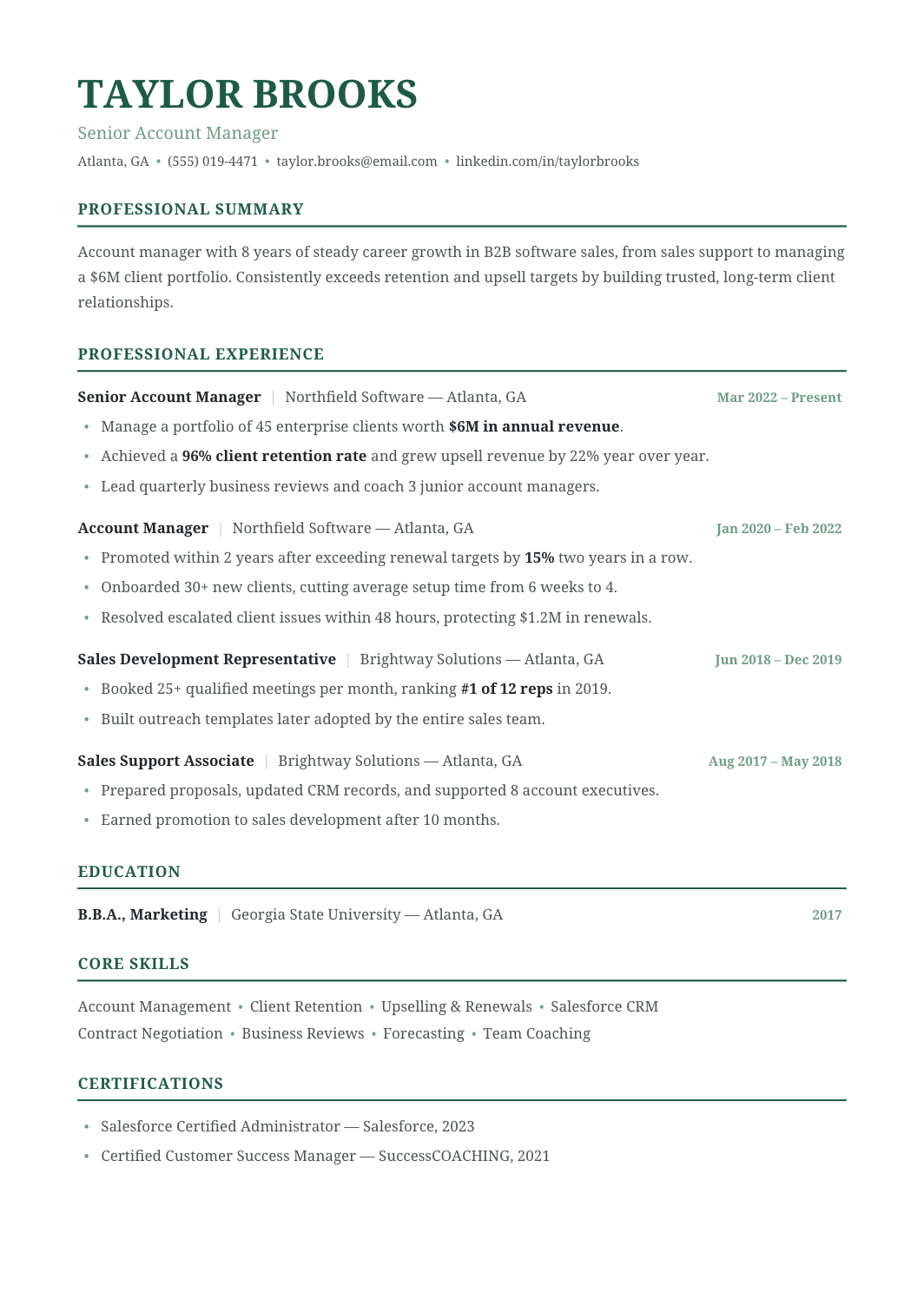
The standard format: a short summary, then work history from your current role backwards, then education and skills.
 FREE
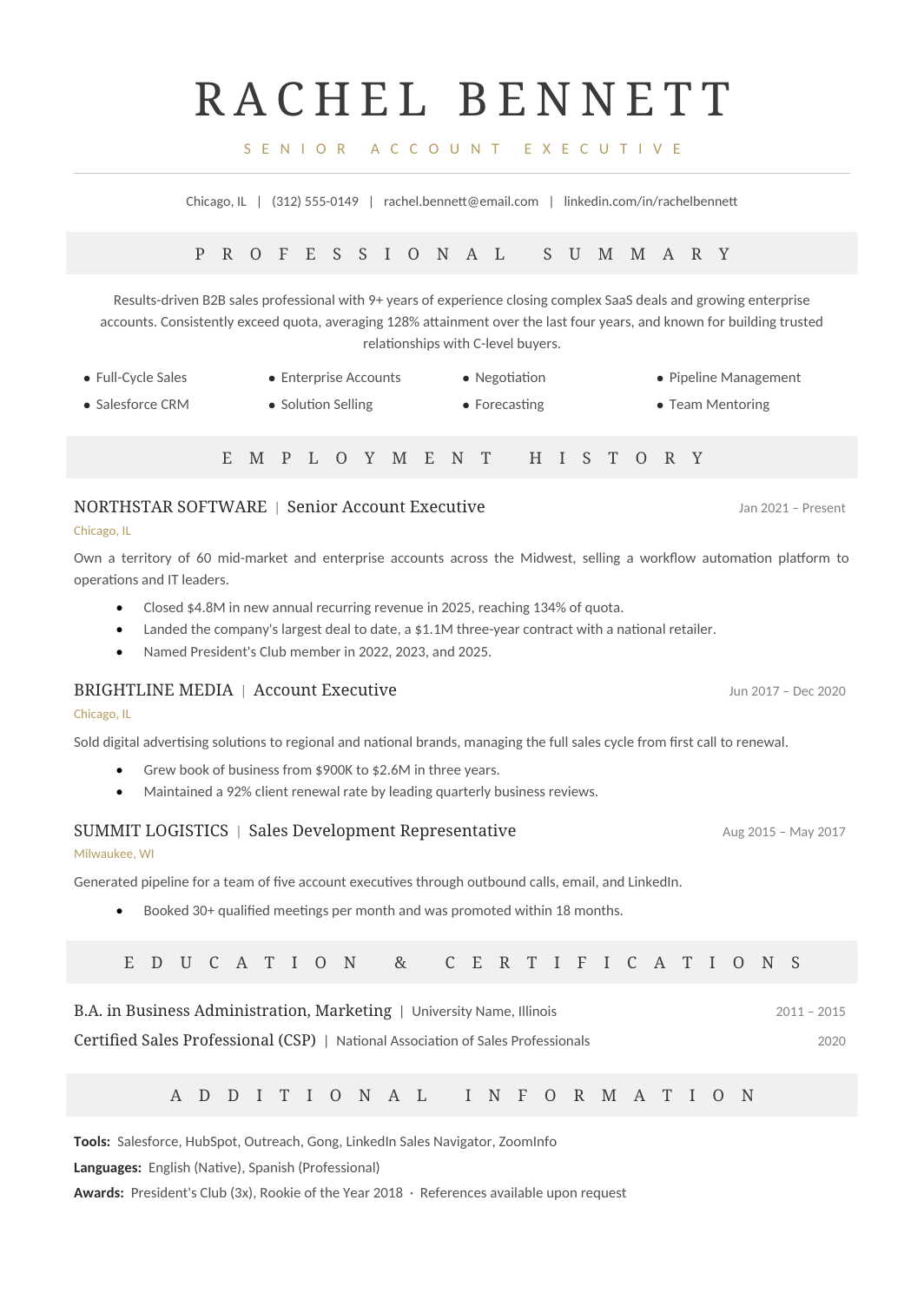
A one-column resume for sales professionals where the first bullet of every role is a number: quota attainment, revenue closed, rank on the team.
 FREE
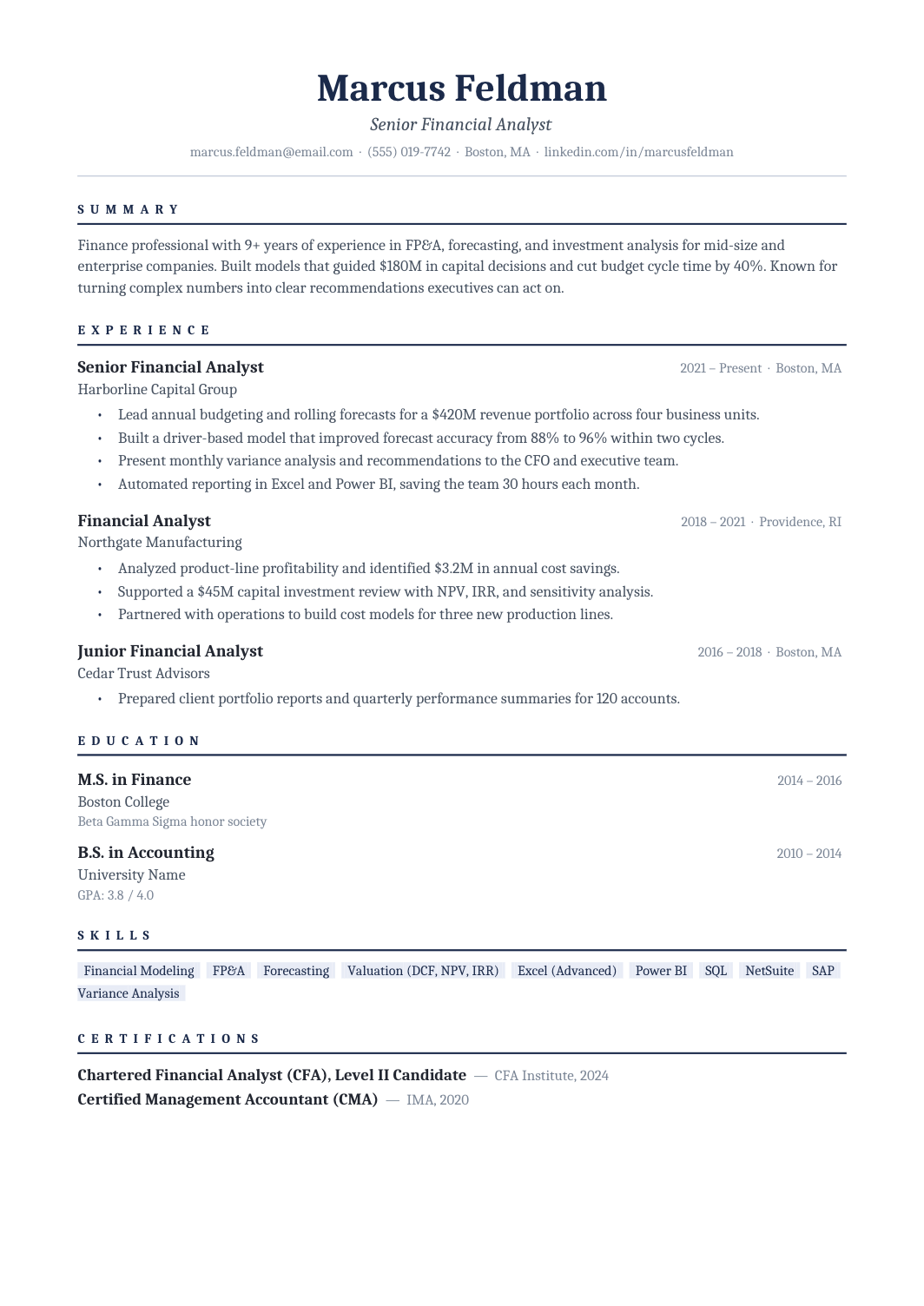
A Cambria one-column resume with navy rules and a clear career timeline, built for corporate finance, treasury and controllership roles where the reader expects polish and numbers.
 FREE
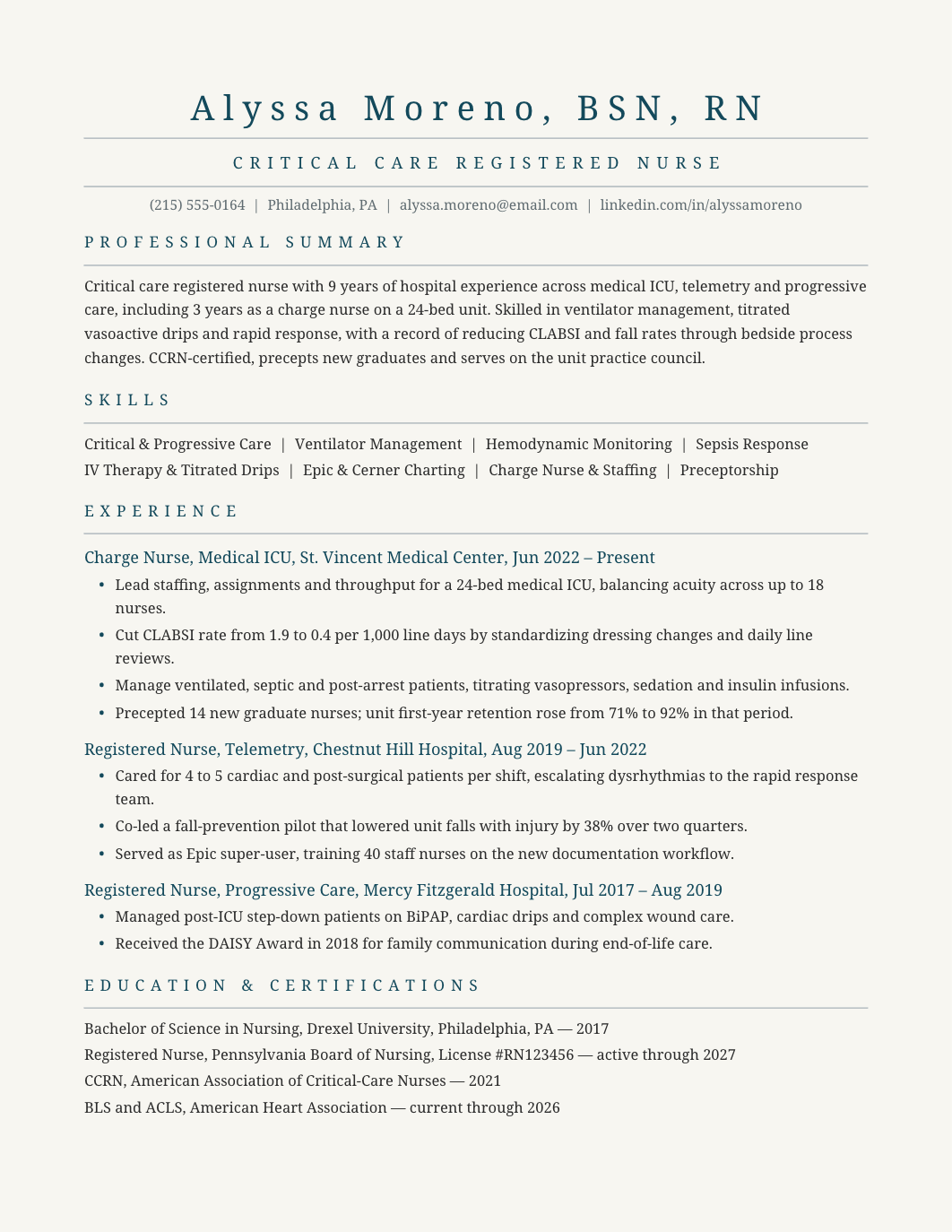
A one-column clinical resume with sections for experience, skills, education and certifications.
 FREE
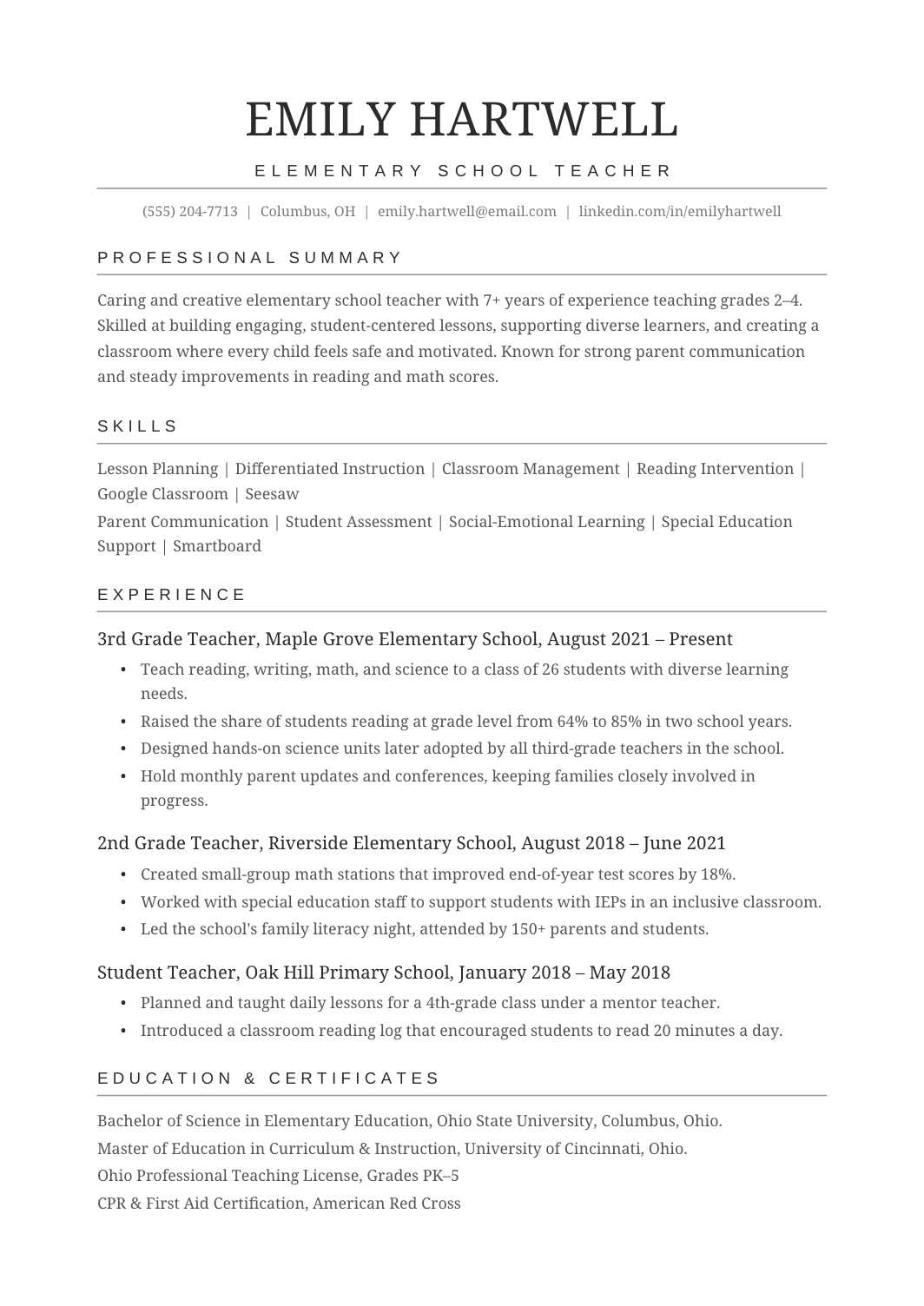
A straightforward education resume with a certification block, then teaching experience described by grade, subject, class size and student outcomes.
 FREE
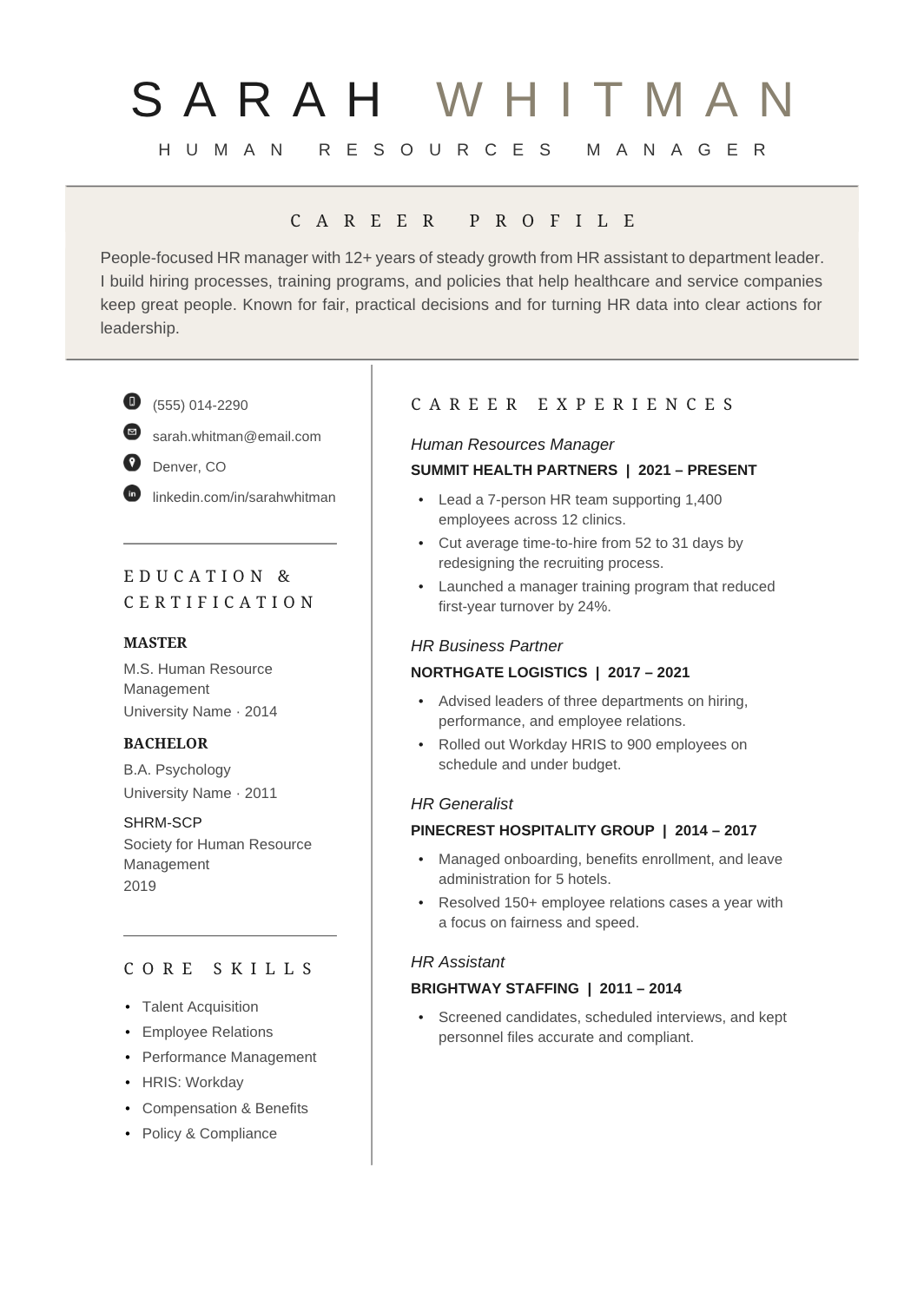
A two-column resume for HR generalists and business partners, with systems and certifications in the sidebar and bullets about headcount supported, programs run and outcomes in the main column.
 FREE
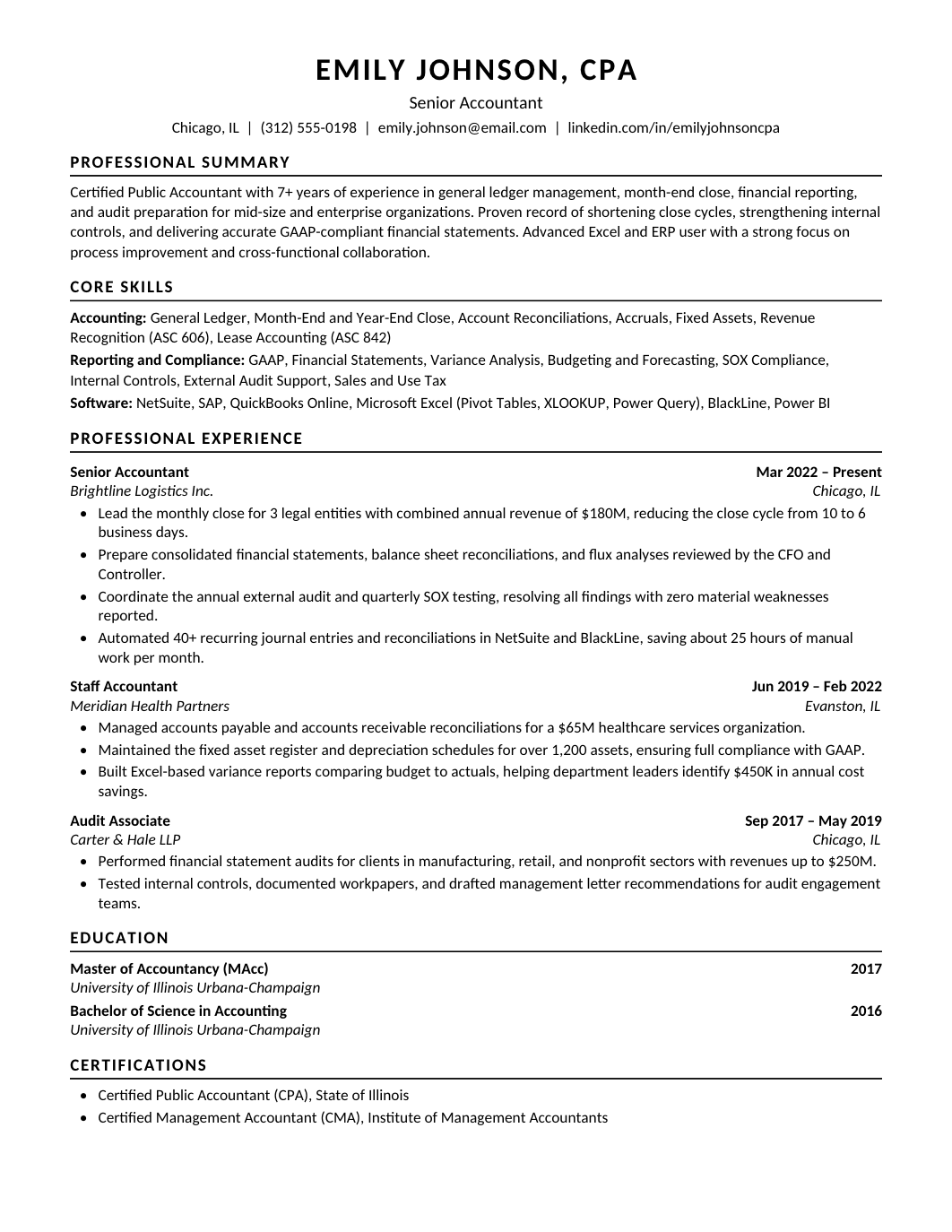
A single-column resume for staff and senior accountants, with CPA status near the top and bullets about month-end close, reconciliations, reporting and the systems you run them in.
 FREE
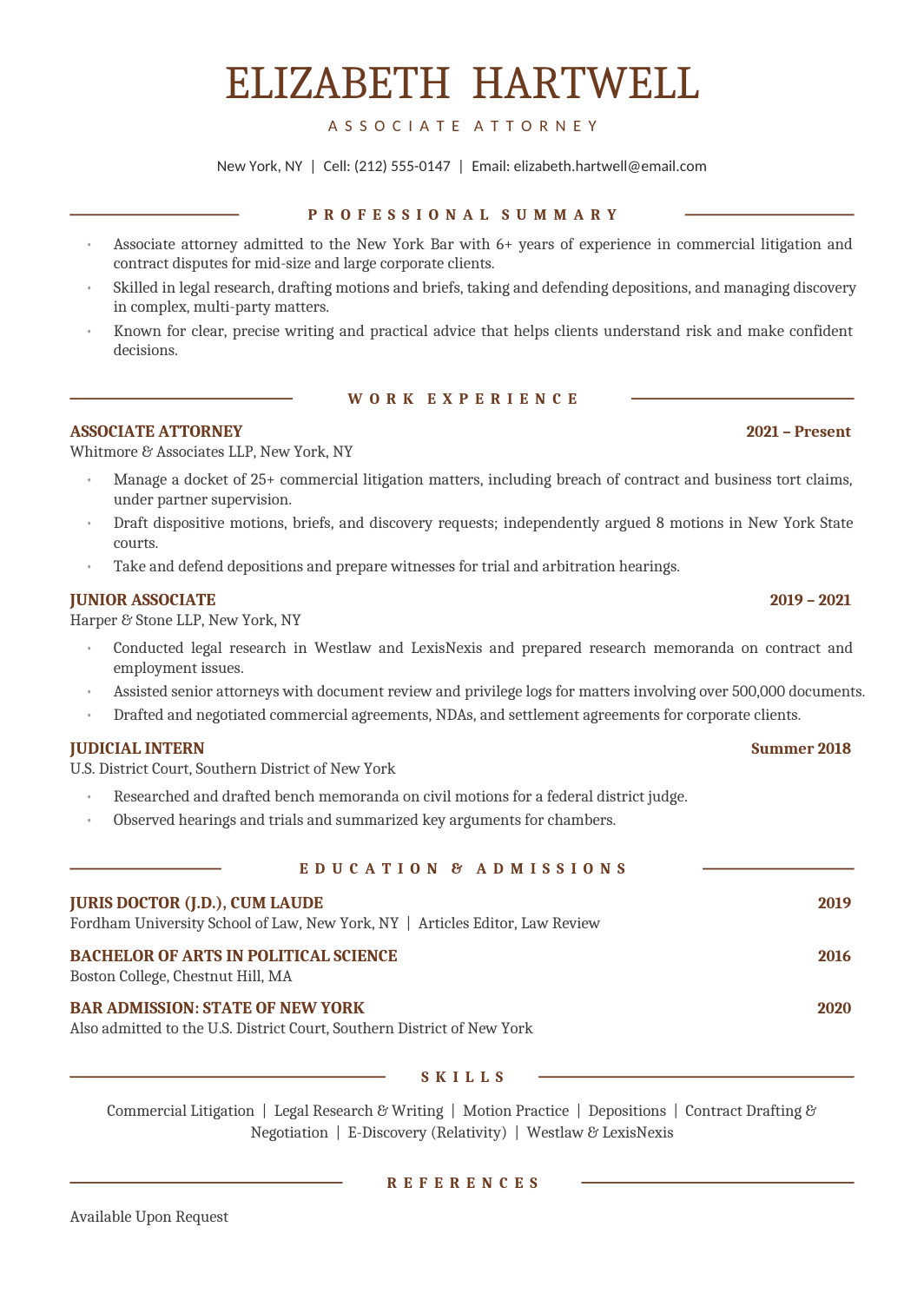
A formal one-column resume for legal professionals outside the traditional firm track: in-house counsel, compliance, contracts, legal operations and support.
 FREE
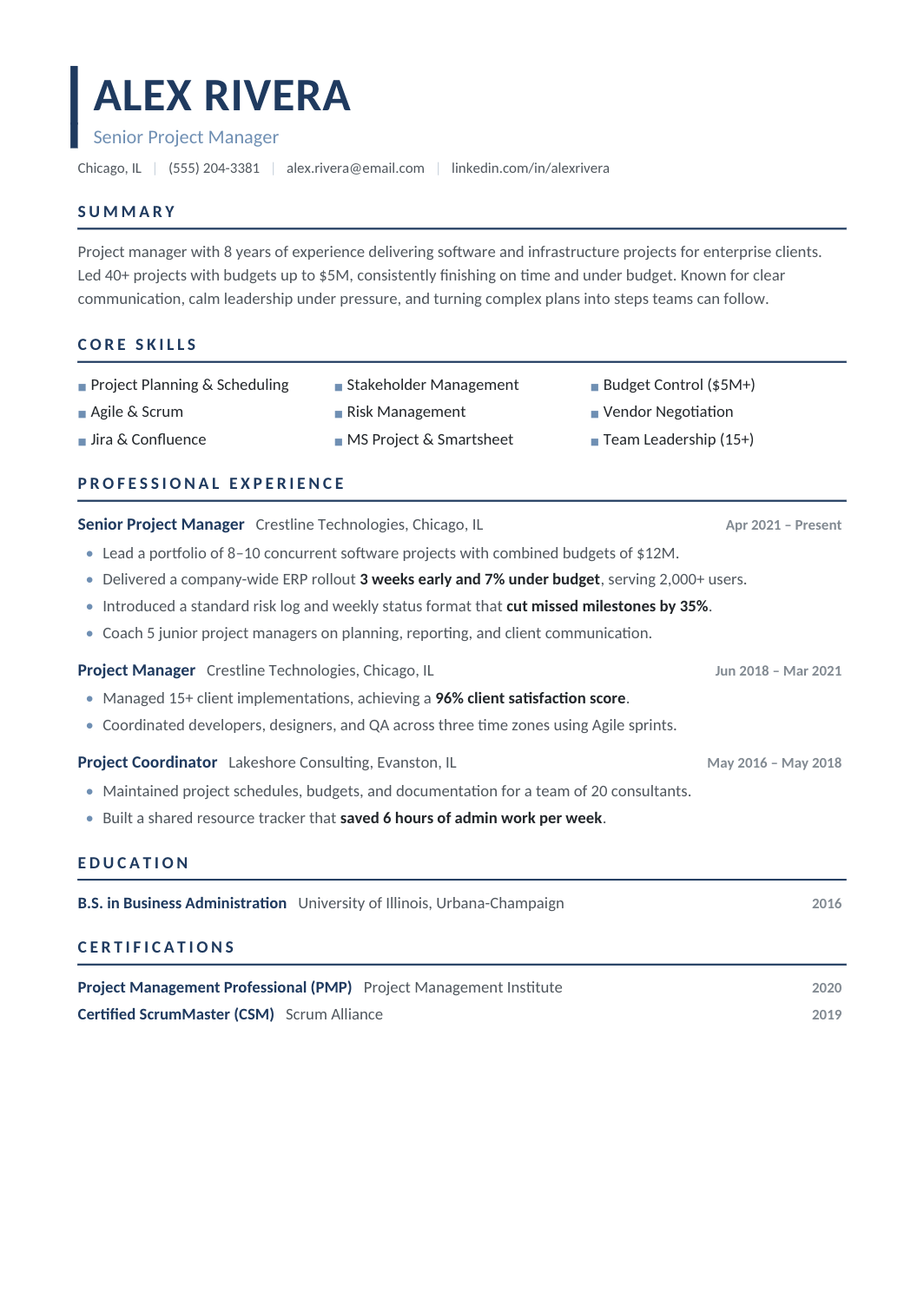
A general-purpose resume for technical roles that don't fit a single job title: field engineers, technicians, implementation specialists, support engineers and people whose work spans several systems.
 FREE
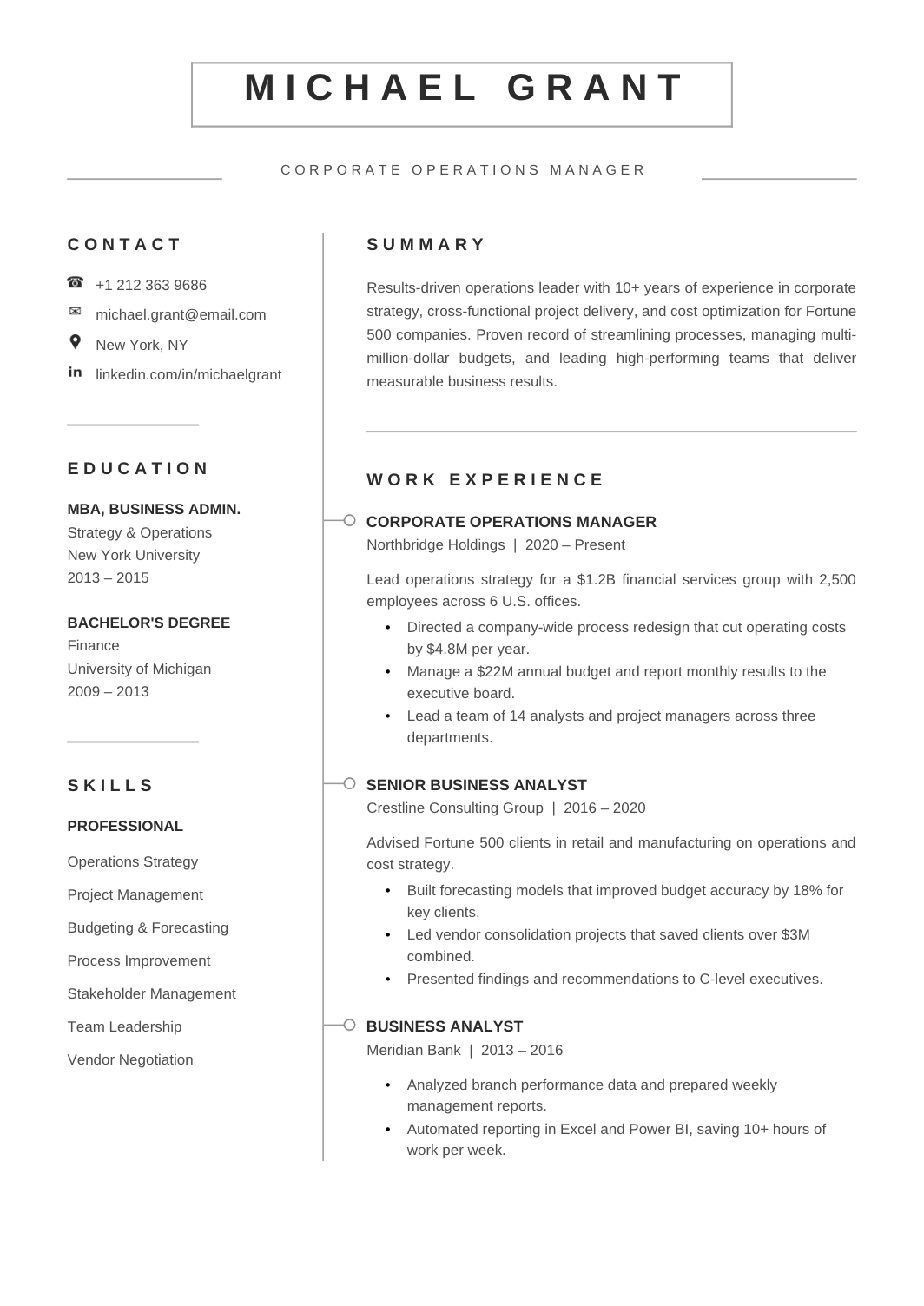
A formal two-column resume for mid-to-senior professionals at large organisations, with credentials, expertise and languages in the sidebar and a broad experience column for leadership and business achievements.
 FREE
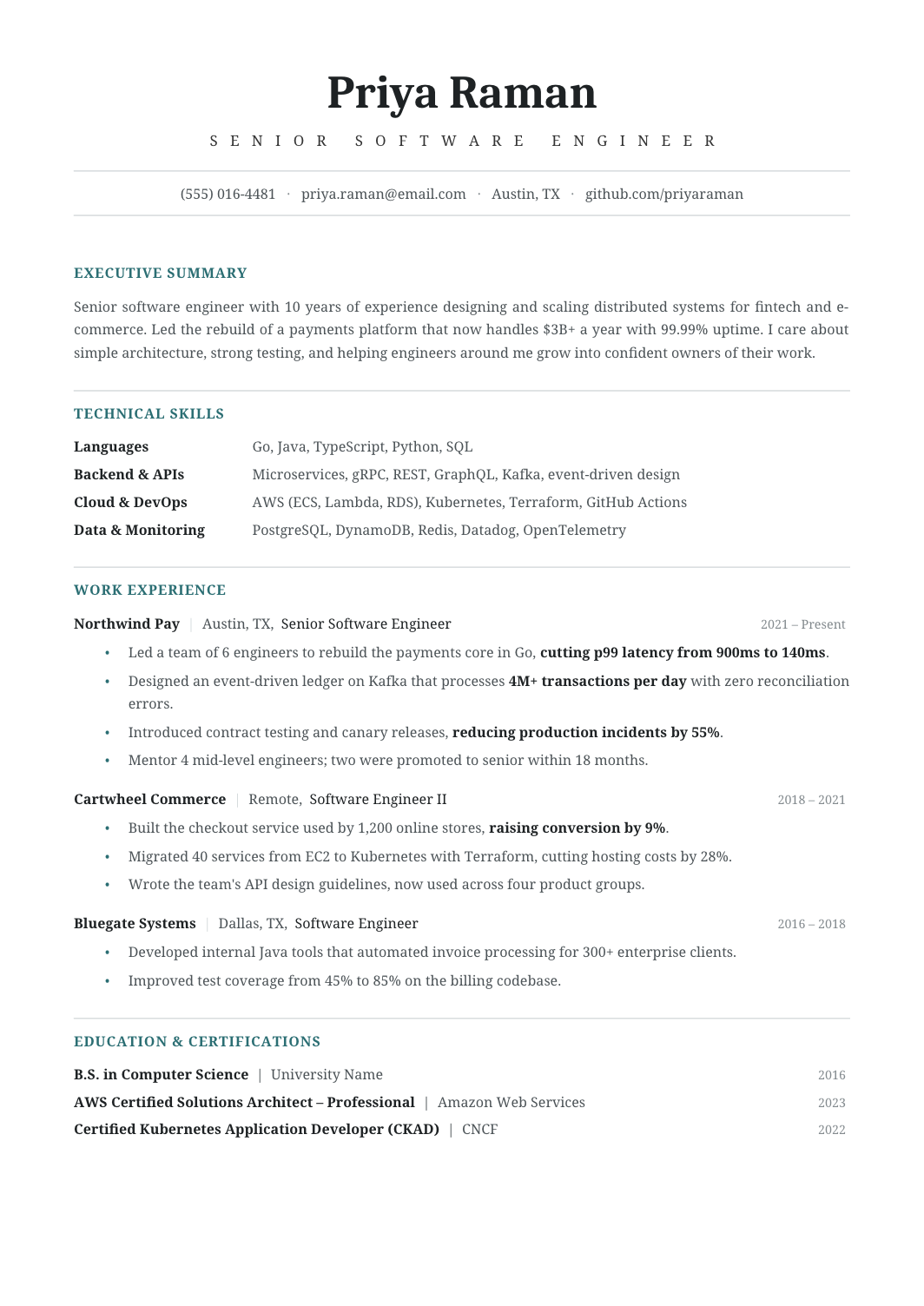
A neutral one-column layout designed to work for almost any role and level: standard sections, moderate spacing, no industry-specific styling.
 FREE
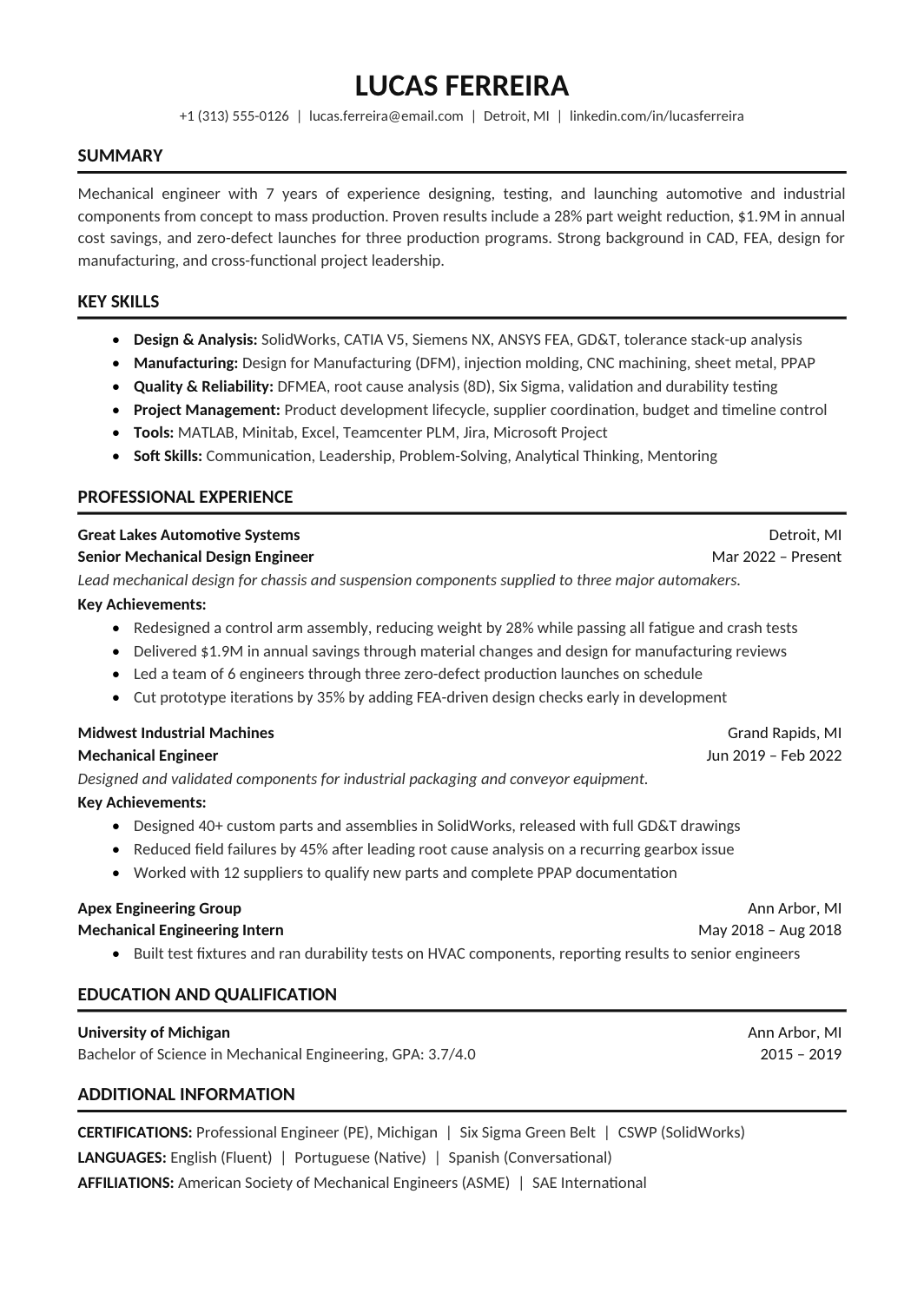
A one-column Calibri resume with bold ruled headings, a grouped skills block and room for detailed experience bullets and credentials.
 FREE
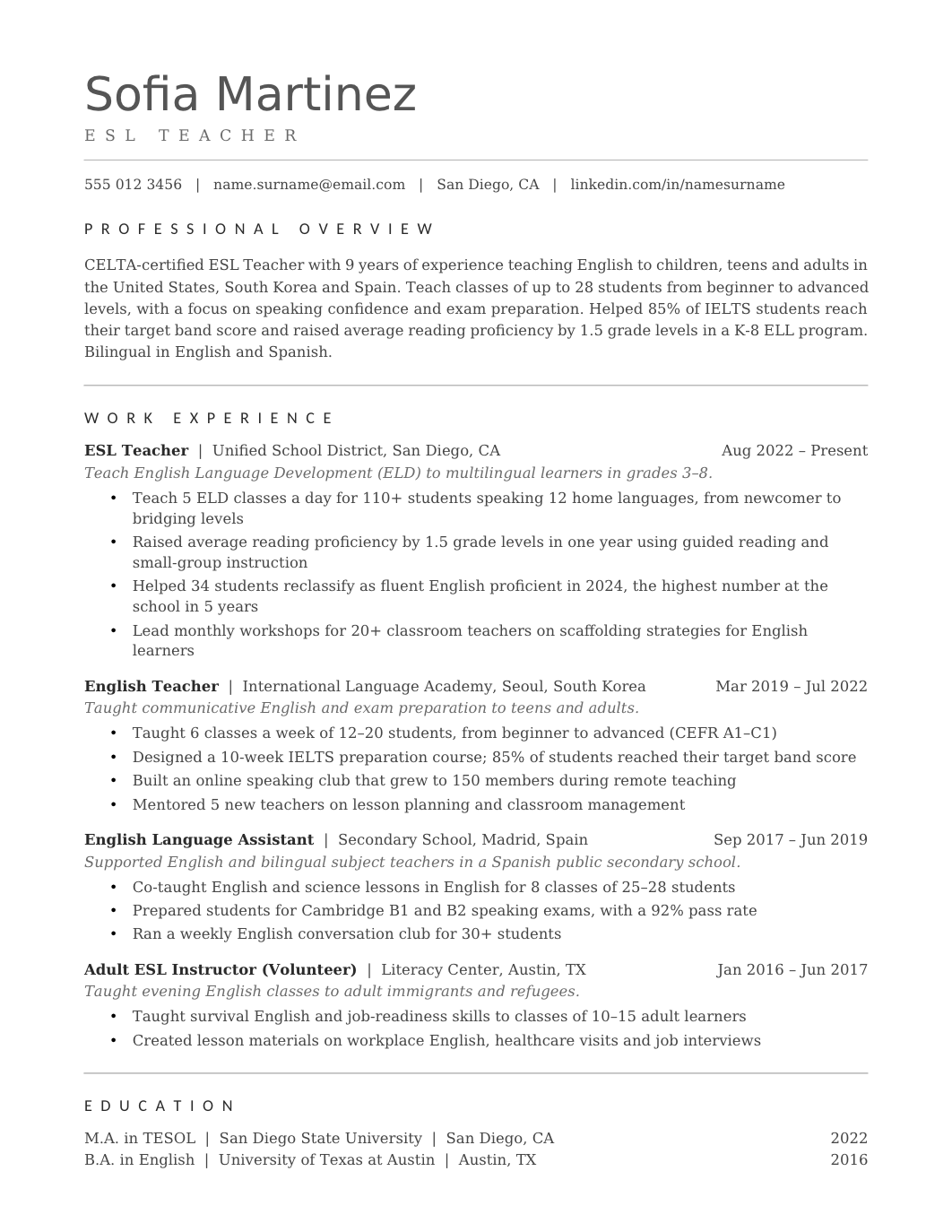
A two-page layout that gives each role room: title, employer, dates and four or five bullets, in strict reverse-chronological order.
 FREE
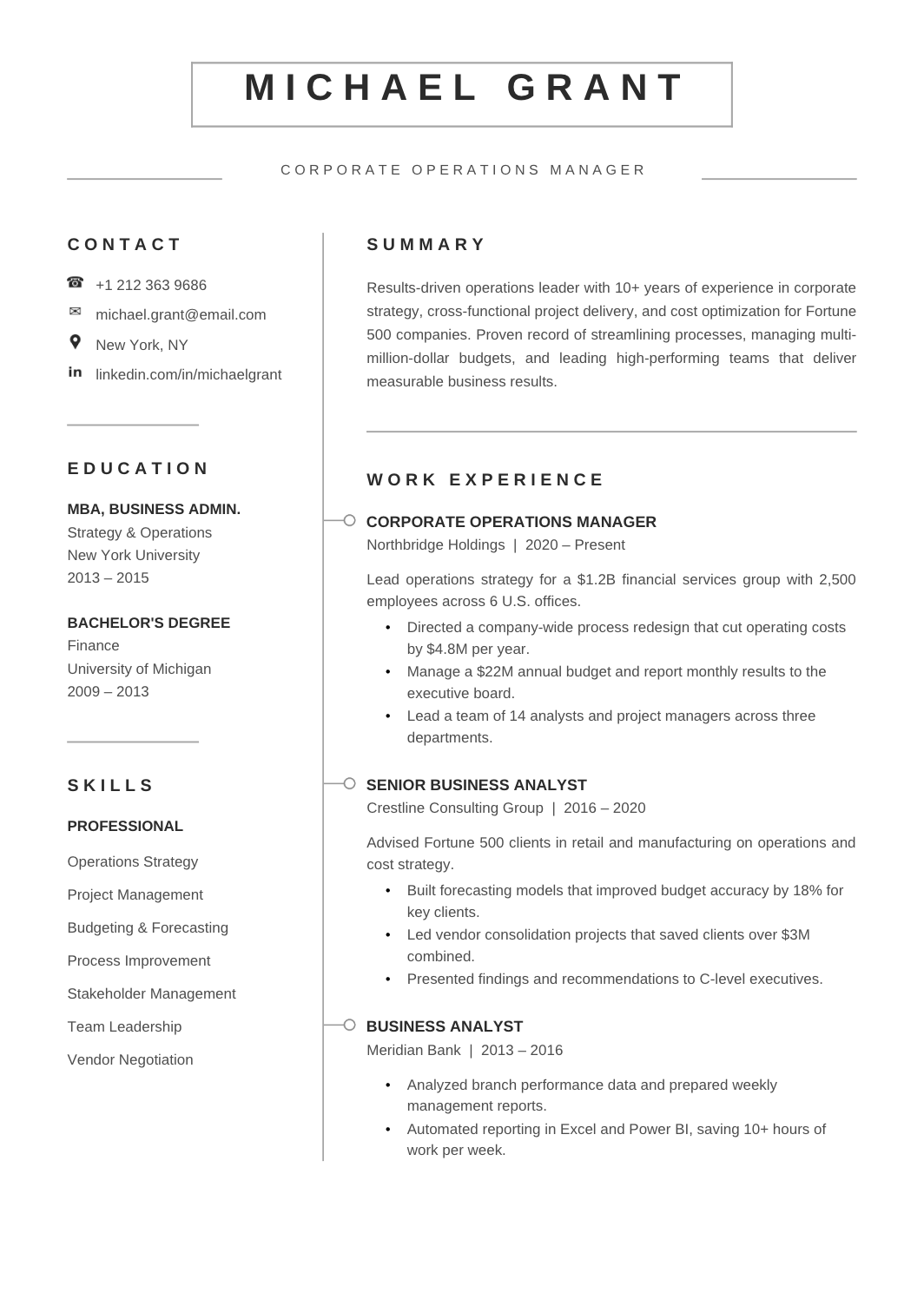
A one-page A4 resume with a framed header and a vertical timeline down the experience section, so career progression is visible at a glance.
Employers want to know what you're doing now and what you did before that, in that order. The Chronological Resume and Reverse Chronological Resume are the plain versions. The Professional Chronological Resume stretches to two pages for longer careers. If you'd like the history shown visually, the Timeline Resume and Taupe Timeline Resume draw the sequence down the page.
Gaps, frequent short roles, or a change of field make a strict timeline harder to read. In those cases the functional resume layouts or the hybrid structure in the career change templates let skills lead. For everyone else, chronology plus strong bullets is enough; the job-tailoring guide shows how to sharpen the bullets for each application without changing the order.
The Accountant Resume, Operations Manager examples and Registered Nurse layouts all follow a strict reverse-chronological order and are useful for seeing how dates, titles and employers are aligned.
Ten to fifteen years in detail. Earlier roles can be a single line or left off.
Months and years. Year-only dates can look like they're hiding a gap.
In practice, yes. 'Chronological resume' almost always means most-recent-first.