 FREE
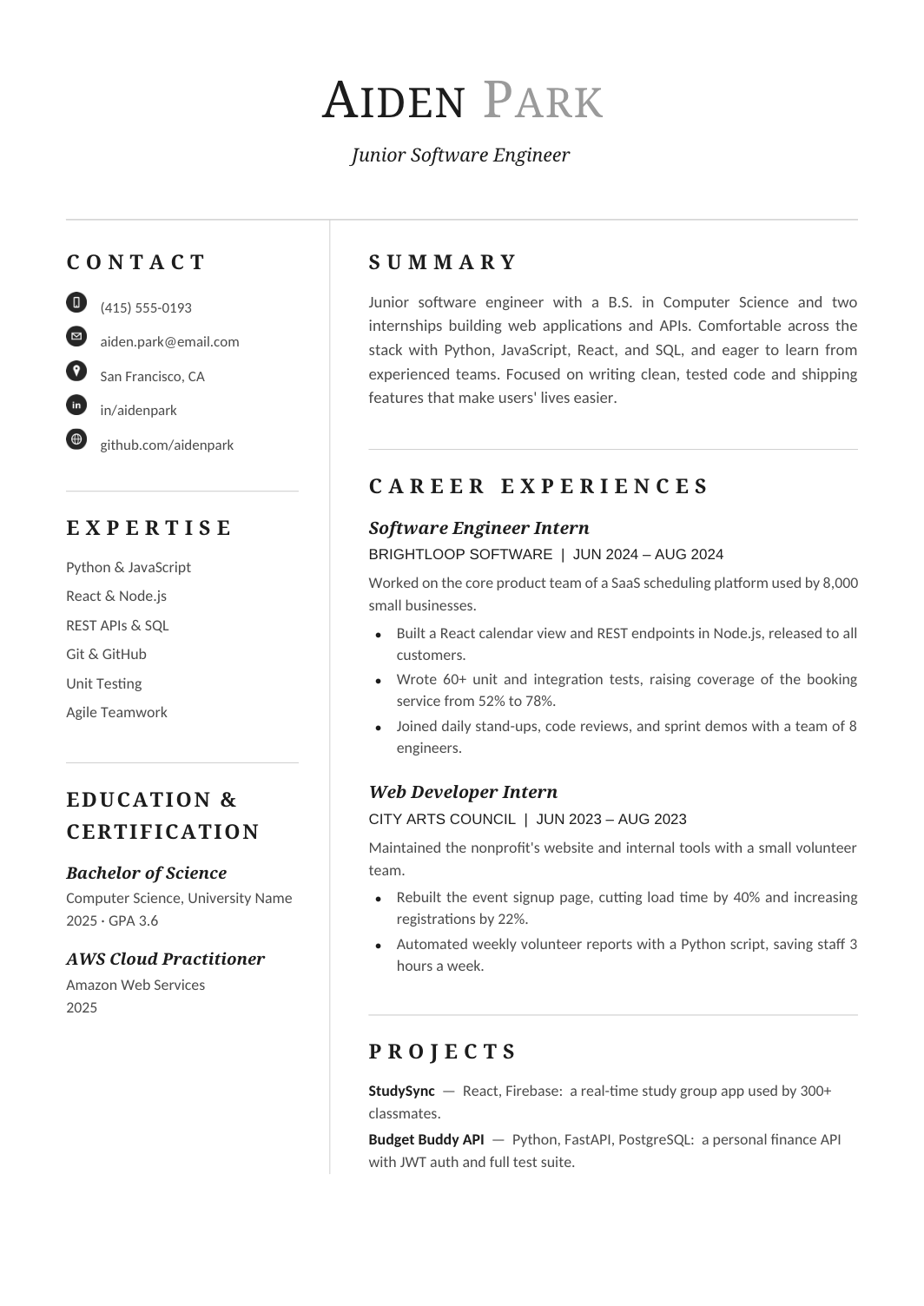
Graduate Split Resume
A two-column resume for recent graduates, with education, skills and certifications in a sidebar and internships and projects filling the wider column.
 FREE
A two-column resume for recent graduates, with education, skills and certifications in a sidebar and internships and projects filling the wider column.
 FREE
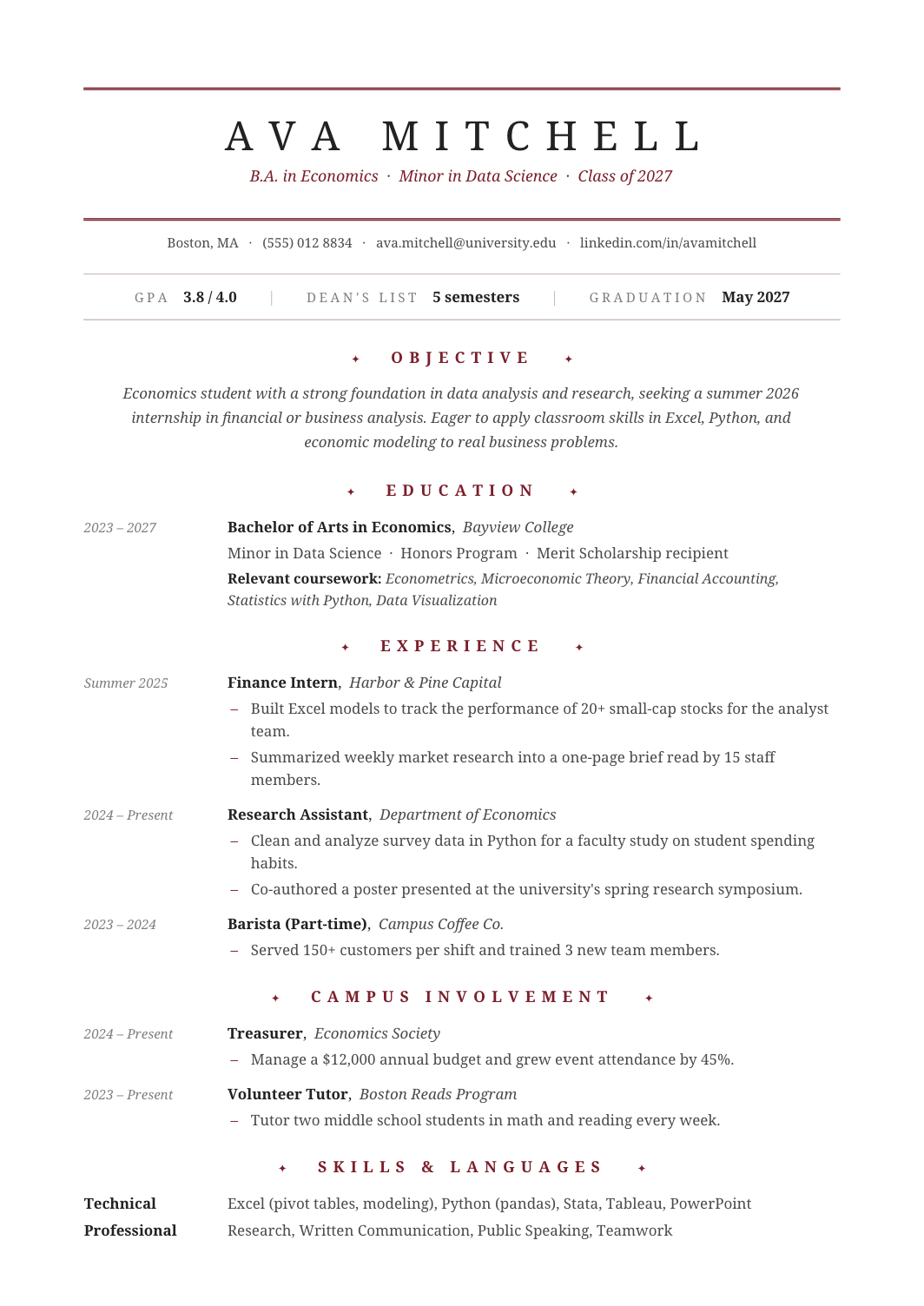
A one-page resume for current students, with education, relevant coursework and projects first, then internships, campus roles and part-time work.
 FREE
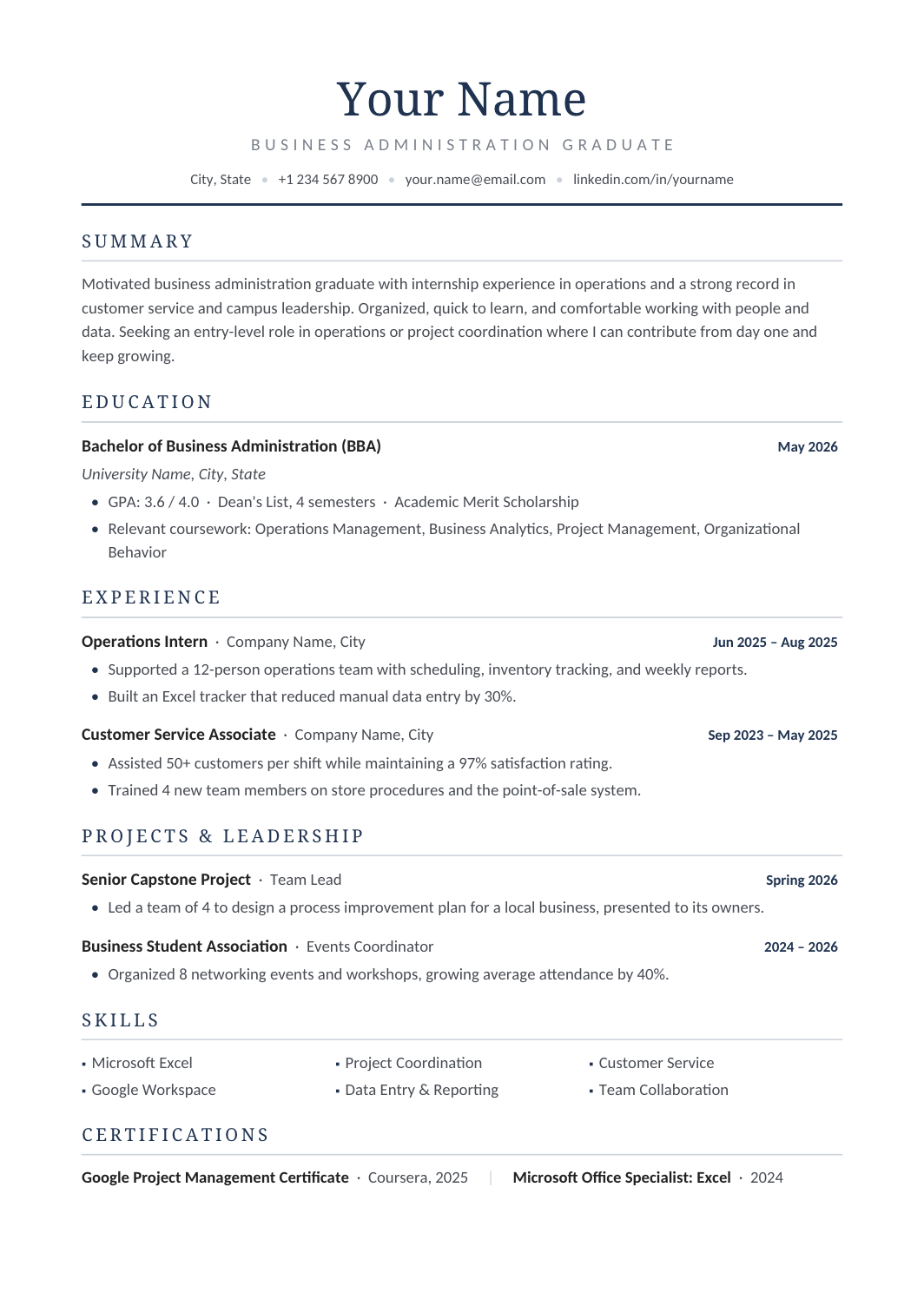
A flexible one-column resume for the first one to three years of a career, where education is still relevant and experience is short but real.
 FREE
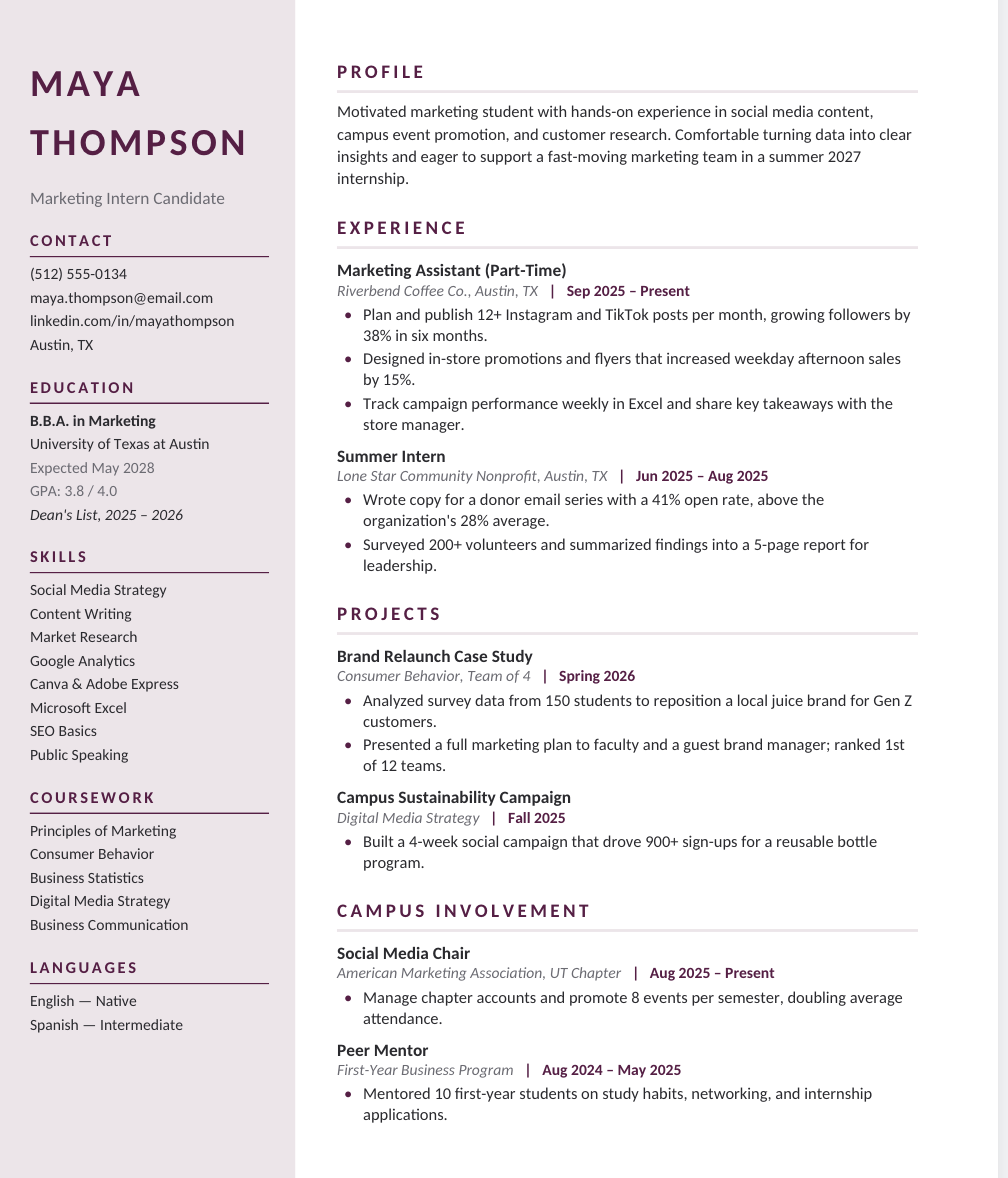
A one-page resume for internship and co-op applications, where projects and coursework carry the page and any work experience supports them.
 FREE
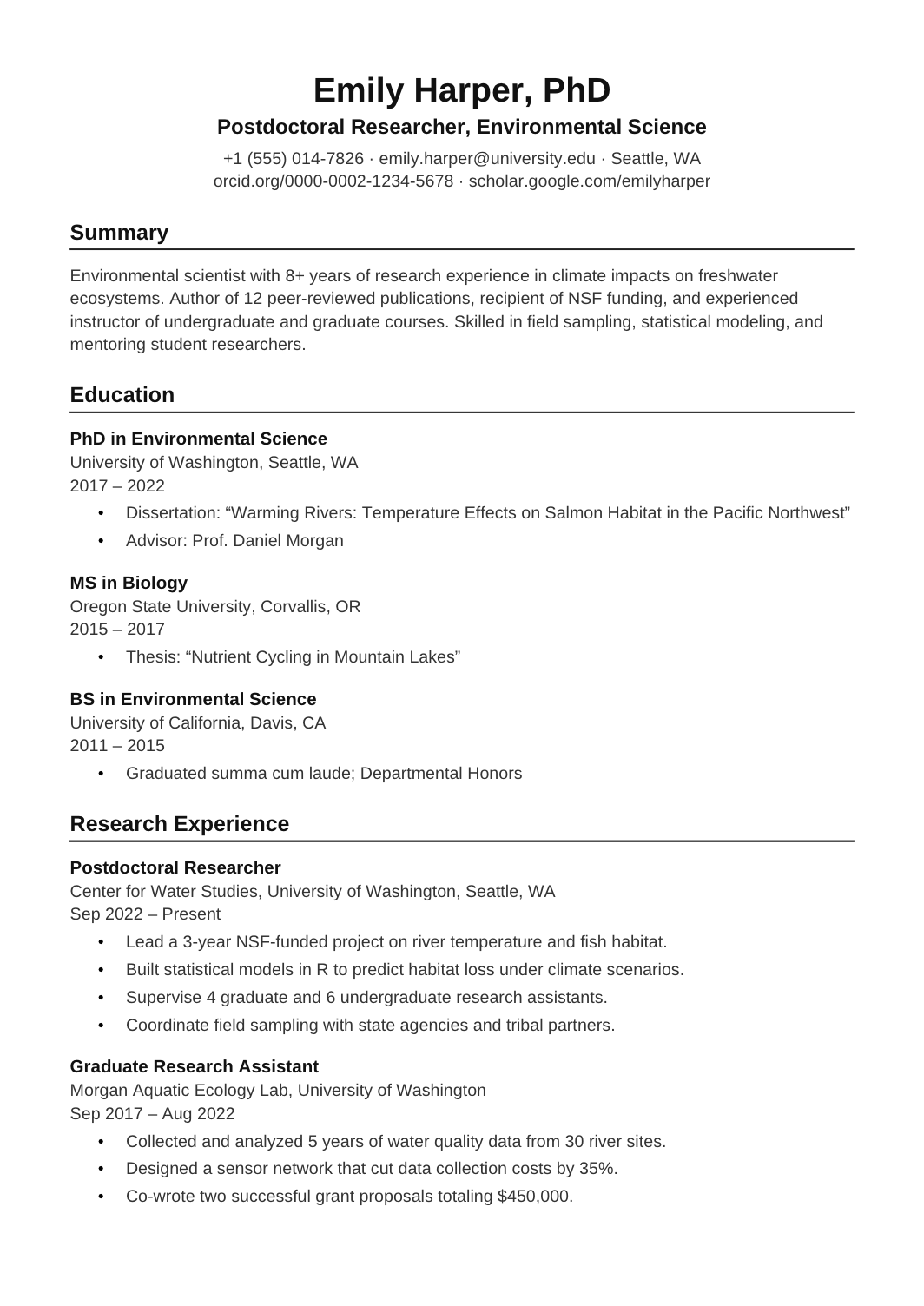
A long-form CV for faculty, postdoc and research applications, with no page limit and sections for education, positions, publications, presentations, grants, teaching, service and references.
Education goes first while you're still studying: degree, school, expected graduation, and any relevant coursework or honors. Projects and internships come next, then part-time work and campus involvement. The College Student Resume follows this order in one column. The Graduate Split Resume moves skills and education into a sidebar so internships and projects fill the main area. If you're applying for a specific internship, the Internship Resume is the direct fit, and the internship resume templates category has more.
Group skills by type (languages, tools, lab methods), give projects a one-line result, and quantify campus roles where you can: members managed, budget handled, events run. The free resume-building guide walks through this for people writing their first resume. Once you graduate and have a job or two, the entry-level resume layouts shift the emphasis back toward experience.
For a healthcare program, the Nursing Student Resume shows how to present clinical rotations. Computer science students can look at the Junior Software Engineer Resume for project-led structure. The Harvard Resume follows the format many university career centers recommend.
Include it if it's 3.5 or higher, or if the employer asks. Otherwise leave it off.
Yes, four to six relevant courses is useful for internships and first jobs. Drop it once you have professional experience.
Yes, almost always. A college resume rarely needs a second page.